Polarizing light
Putting a polarizing filter between the sunlight and your eyes (or your camera) reduces glare and increases color saturation. In the image below the left side had no filter while the right side had a polarizing filter.
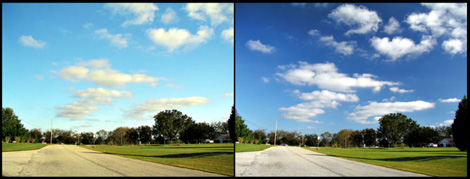
Effects of Polarizer (Image by PiccoloNamek)
Polarized Sunglasses
Polarized sunglasses are for me one of life’s joys. They make the world just a little bit better. Reducing glare reduces eye strain while driving. When you are on a dive boat you can see what is underwater much more easily. And the sky is bluer with better defined clouds.
Polarized sunglasses tend to be more expensive than regular sunglasses and like with most optics you tend to get what you pay for when it comes to quality. I am a fan of Oakley’s polarized sunglasses which manage to combine high optical quality with light weight.
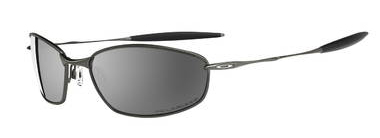
Oakley Polarized Whisker Titanium (image from Oakley.com)
Polarizing filters for your lenses
Putting a polarizing filter on the front of your camera will have the same effect as polarized sunglasses. It will reduce glare and increase color saturation. It will also halve the amount of light that reaches the film or sensor in your camera which means that you will be using a slower shutter speed. (As a polarizer is usually used in landscapes longer shutter speeds are not an issue if you are already using a tripod.)
Polarizing filters come in two main types circular and linear. You need a circular polarizer if you are using an autofocus camera or TTL metering.
As polarizing filters tend to be thicker than regular filters there are also regular and wide versions. Wide versions are specially designed to be thiner so that there is less chance of mechanical vignetting when you are using a wide-angle lens.
Polarizing filters also come in different sizes to match the diameter of your lens. This means that you may need to buy several polarizing filters of different sizes if you have lenses of different diameters. I often use a polarizing filter with my standard and wide-angle lenses but rarely with the telephotos.
Numerous companies produce polarizing filters, again you tend to get what you pay for. I use Kenko’s Vernier polarizing filters, their Japanese web site is here.

Kenko Circular Polarizer Wide Vernier
One interesting thing to note is that when using a polarizing filter on wide-angle lenses the level of polarization may be uneven across the frame leading to bands of darker and lighter areas. Sometimes that effects are unwanted but sometimes it can add to a shot.
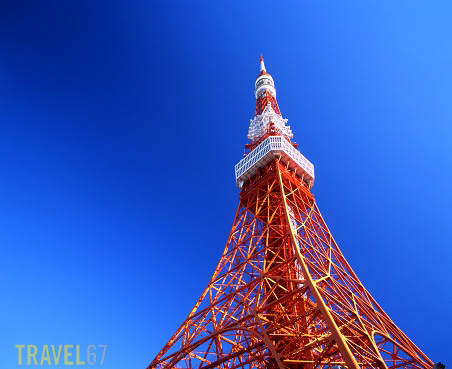
Wide angle shot of Tokyo Tower using polarizing filter.
 TRAVEL 67 : Chris Willson Photography
Pingback: Polarize your views Chris Willson's Blog | POLAROID SUNGLASSES
Great post. Have to say your little guides into aspects of photography are my personal favourites of yours 🙂