This is an almost impossible question to answer without knowing all the details. But here’s some general advice
1) A lens that fits your type of camera, both brand and sensor size. A Canon lens won’t fit on a Nikon / Pentax / Sony camera. A lens designed for a smaller sensor won’t work on a camera with a larger sensor.
2) A lens that fits the type of photography you want to do. If you’re a birdwatcher get a long telephoto lens. If you’re into bugs get a macro lens.
3) You get what you pay for. But like most things the relationship between cost and performance is not linear.
My brother asked this question recently so I can share the answer I gave him.
About a year ago he bought his first digital SLR camera, a Nikon that came with two kit lenses a 18-55mm and a 55-200mm. He wanted a new lens to broaden his horizons (Insert pun about buying wide angle lens here.) and help improve his photographic skills.
I recommended that he should get Nikon’s 50mm f1.8.
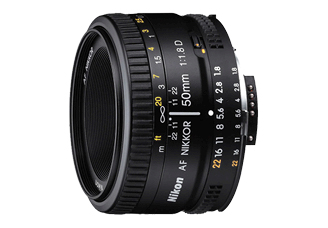
AF NIKKOR 50mm f1.8 (Image by Nikon)
Why?
Price: There are other 50mm prime lenses by Nikon, but the F/1.8 will give him the most bang for his buck. ( f/1.8 $120, f/1.4G
  $350, f/1.2 $650) Nikon’s f/1.2 50mm is actually an older manual lens, Canon has a modern L series autofocus 50mm f/1.2 with a list price of US1800.
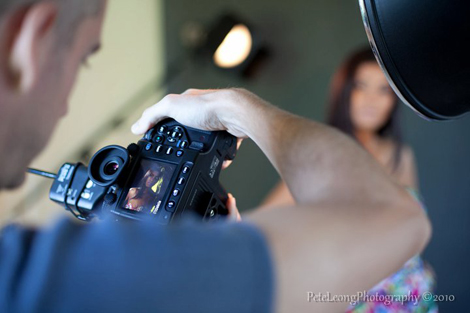
Utility: A fast, bright lens that can open up to 1.8 will allow him to experiment with shallow depth of field. I think he will really enjoy shooting portraits with this lens.
Weight: Put the 50mm on the camera, leave the bulky zooms at home, and you have a great lightweight system. You’re more likely to take the camera with you if it isn’t a burden.
Simplicity: By removing the ability to zoom, it simplifies the process of taking a photograph allowing you to concentrate on other aspects. Focus, aperture, composition. It’s a good way to hone your skills.
Full frame lens: It’s not important now, but if my brother ever buys a full frame Nikon body he can still use this lens.











 TRAVEL 67 : Chris Willson Photography