Latest Posts

Visions of Japan on YouTube

Over the last couple of weeks I have been sorting out a slideshow for my exhibition that will be projected on to a wall where a single picture would normally hang. It allows me to show far more images than would otherwise fit in the gallery.  The slideshow I have created for Cotonoha lasts 30 minutes and has images changing every 25 seconds.

 I also created a 7 minute version with images changing every 5 or 6 seconds that also has some wonderful background music. The piece is Sakura by Yokoh and is played by my friend Eduardo Terre on the classical guitar. The music came from a live recording of one of his concerts. It has been a bit of an exhausting experience learning how to create a slideshow, add music, convert formats etc, but finally both the long and short versions are now complete. The long version is ready to be shown at the gallery, and the short version is now up on YouTube.  Enjoy.

Eduardo, I am humbled by your talent.

Tokyo Rockabilly

A fantastic new video appeared on MTV yesterday. The group is Peter Bjorn and John (Yes they are from Sweden) and the song is Nothing to Worry About.   What is brilliant is that the video follows a day in the life of a Tokyo Rockabilly.

These guys can usually be found on Sunday afternoons beside Yoyogi Park, just around the corner from the teenagers dressed in cos-play costumes. Just as in the video, they are jiving, line dancing, combing their hair and hanging out.

 On Friday, I am going to give a little talk at my exhibition about taking photographs. One of the things I will mention is communication. By speaking a little of the local language, you can start conversations with interesting people.

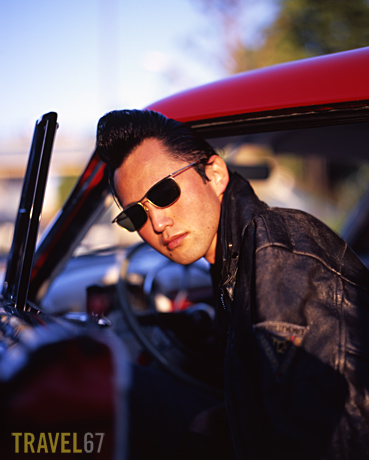
When I saw the Rockabillies, rather than just snapping a shot from a distance, I went over and had a chat with some of the guys. I was able to get them to pose for some shots, and then found out which of them was the owner of the American classic car parked close by.  The sun was low in the sky, going into the “golden hour”, and I was able to get a few photographs some of which are now personal favorites.

Tokyo Rockabilly

Tokyo Rockabilly


Tokyo Rockabilly

Tokyo Rockabilly

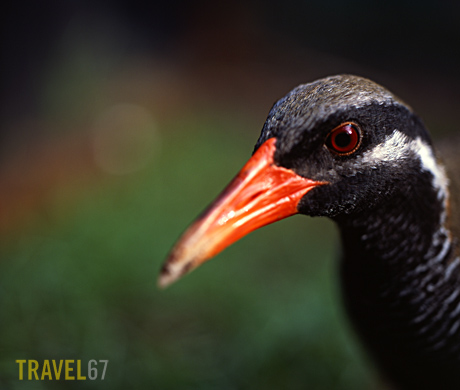
Okinawa Rail (Gallirallus okinawae)

The Okinawa Rail is an endangered bird that is endemic to the northern part of the Okinawan main island. They are both rare and shy, which makes getting photographs of them tricky.

Luckily last year I was given access to the birds at the  breeding center in Kunigami. I was able to get so close to some of the birds I was using a macro lens and getting my fingers pecked.

Okinawa Rail adult (Gallirallus okinawae)

Okinawa Rail adult (Gallirallus okinawae)

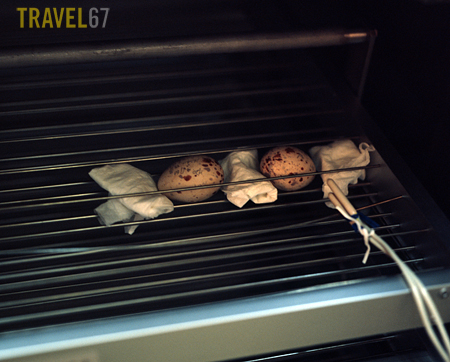
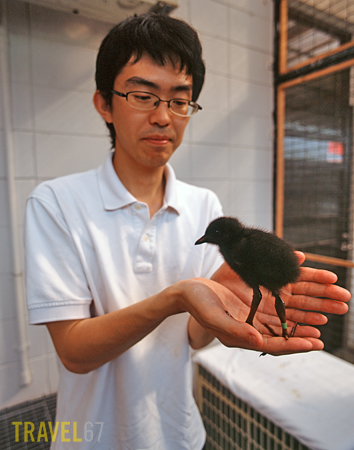
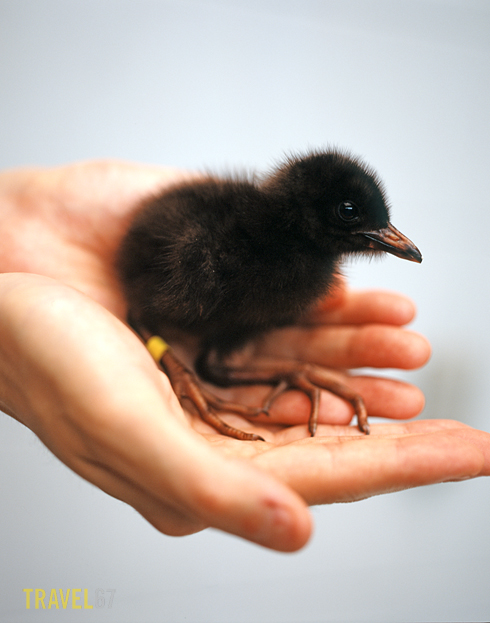
Last week my friend Ichiro told me that there were some very young Okinawa Rail being cared for at Nagamine Animal Hospital and I had permission to go and take some photographs.  It was tough to get good shots – small dark birds in a dark room on a cloudy day. In the end I got some interesting shots which will hopefully become part of a larger photo feature on the efforts that are going on to try and save the species from extinction.

Okinawa Rail eggs in the incubator

Okinawa Rail eggs in the incubator

Veterinary staff member with young Okinawa Rail

Veterinary staff member with young Okinawa Rail

Okinawa Rail chick (Gallirallus okinawae)

Okinawa Rail chick (Gallirallus okinawae)

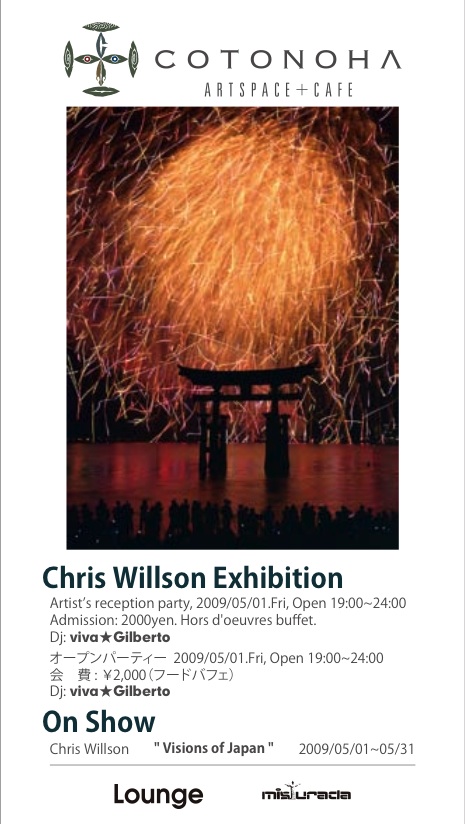
Visions of Japan Exhibition at Cotonoha

cotonohaFor the whole of May an exhibition of my photographs will be showing at Cotonoha Artspace + Cafe  in Ginowan, Okinawa.

Cotonoha is a new gallery  / cafe in Okinawa that was created  by Daryl Mitchell a.k.a. Mitch and his wife. Mitch has done a great job on the gallery and strives to produce the best in every aspect of his work. The food, interior design and ambiance are all first rate.

Check out the Cotonoha website to find out more.

cotonoha-flyer-image-1

There will be a reception on May 1st with a buffet, music, and lots of interesting people. Rather than a lecture I thought I would tell a few anecdotes about taking photographs in Japan. Hopefully these anecdotes will be amusing, a surprising number are about men’s bottoms.

My photographs are going to be on display for the entire month, and  Cotonoha will be open from 2pm till 11pm except  Mondays. The limited edition prints that are on sale through my website will be available for purchase along with open editions of smaller  A4 sized prints. 

I won’t be at the exhibition everyday, but if you are planning on coming (and would like to chat) let me know when and I’ll try my best to make it down there to meet you.

Cotonoha Artspace + Cafe Okinawa

Map to Cotonoha Artspace + Cafe, Okinawa

Buying a Car in Japan – Stage 2

Once you have chosen the car you need to do some paperwork…

First the car dealership takes a photocopy of your Japanese driver’s license and, in my case, my gaikokujin toroku shomeisho (certificate of alien registration – a.k.a gaijin card).

You then need to get an inkan (personal seal) made, register it at the city office, then bring the inkan and the inkan toroku shomeisho (certificate of name stamp registration) to the car dealership.

Also bring your gaikokujin toroku genpyo kisai jiko shomeisho (certified copy of registration) which shows your official address.

Fill out the parking application paper, drawing a diagram of your local streets and the exact dimensions of the parking area at your house or apartment. If you are not the owner of the house you must also produce a piece of paper from the housing office with their official stamp to show you have parking permission. Parking applications must be taken to the local police station for processing although your car dealer may do this for you. This is all done to get a shako shoumei (parking space certificate).

Then fill out the ininjo (letter of guarantee) and you are almost done…

unless you are dumping your old car with them, and then you will also need a second ininjo, a second inkan toroku shomeisho and the cars shakensho (vehicle inspection certificate), the  jibai seki hoken (compulsory third-party automobile liability insurance certificate) the road tax certificate, and the recycle fee certificate.

Finally give them a wad of cash to hold the vehicle. The balance will be due when you pick up the car. Now all you have to do is wait for the paperwork to be processed. I am told this can take around a week or longer.

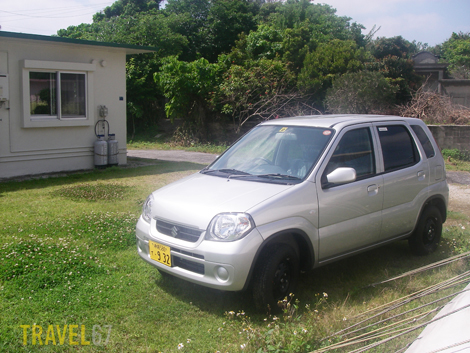
While you wait for your new (or newer) car you may still need to get around, and in my case my previous car no longer has a valid shakensho. I was lent a Suzuki Kei, so for the next few days I will be pootling around the island in this little 660cc car.

The loaner a Suzuki Kei 660cc

The loaner a Suzuki Kei 660cc

After only driving through town and back up the expressway to my home I have discovered some interesting things about these 660cc kei jidosha.

The steering is really light. They are a great city car, able to squeeze through tight spaces. With only a driver there is plenty of power, I imagine it would struggle if there were an extra 3 large passengers but I had no problem accelerating or cruising along the expressway.

However, kei jidosha are limited not only in their engine size but also in their width and length. K-cars must be less than 3.4 metres long and 1.48 metres wide.  There is no regulation for height. The narrow width makes them great when parking or escaping from the police down narrow alleyways, but there is a reason why sports cars are wide and low.  At the extreme end of the spectrum you have 4×4 off-roader K-cars such as the Suzuki Jimny and the Mitsubish Pajero Mini, these look like they are going to roll-over at any moment, and at least one of Seiko’s friends had to extricate herself and her 4×4 k-car from a ditch in Hokkaido. Driving back on the expressway, and with a bit of a sidewind, the Suzuki Kei felt decidedly wobbly. Overtaking trucks caused a sudden change in the wind, making the car skittish. Things are not helped by the fact that the tyres are not much wider than you would find on a mountain bike.

As I do both a lot of expressway driving, and because I don’t ride the bicycle during wind and rain, and as Okinawa is hit by several typhoons each year,  I am now sure I made the right decision of the Swift over the Cervo.

Buying a car in Japan – Stage 1

Stage 1 – Find a car

The first thing you will notice when trying to buy a used car in Japan is that almost nobody sells their own car. Old cars are scrapped or tend to be given away to a friend or relative. Cars that still have some value, are usually traded in when purchasing a new (or newer) model.  

Outside of the foreign community, there seem to be very few private sales.  You don’t see cars with the Japanese equivalent of  FOR SALE signs in the window. Used car magazines and even internet auctions are almost entirely filled with cars being sold by dealers rather than individuals.

Having to purchase from a used car dealer makes things more expensive, but does mean they can help you with Stage 2 – the labyrinthine process of producing and filling out the correct paperwork.

I browsed through the various internet sites and a few cars caught my attention. These are a few of the cars that were of interest, but not quite what I wanted:

Honda NSX

1991 Honda NSX  133,000 km ¥1,980,000

1991 Honda NSX 133,000 km ¥1,980,000

Advantages: Aluminum (The world’s first all-aluminum and aluminum monocoque chassis production car)  so doesn’t rust – perfect for the salty island breezes.  Designed with the assistance of Ayrton Senna. Looks fantastic.

Disadvantages: Almost no luggage space. The cheapest cars are still 2 million yen, and these are high mileage automatics with dodgy black leather seats.  If I wanted an NSX it would have to be the type R which were all manual with non-leather seats, but the cheapest examples are over 5 million yen.

Nissan Skyline GTR
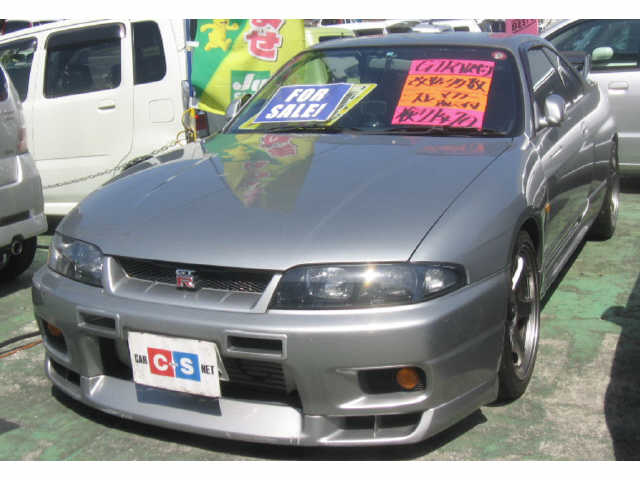
1996 Nissan Skyline GTR 51000km ¥1,750,000

1996 Nissan Skyline GTR 51000km ¥1,750,000

Advantages: Speed and power that make other road users (or other competitors in motorsport)  tremble in its wake. Nicknamed Godzilla, the GTRs  are brutish supercars.

Disadvantages: 80 KPH speed limit on expressways in Okinawa, 50 KPH on main roads. You would never be able to unleash Godzilla. Four wheel drive, four wheel steering, dual turbos, titanium exhaust systems and the like are all fantastic but I’m pretty sure will cost a fortune when they need to be fixed or replaced.

Mitsubishi Lancer Evolution
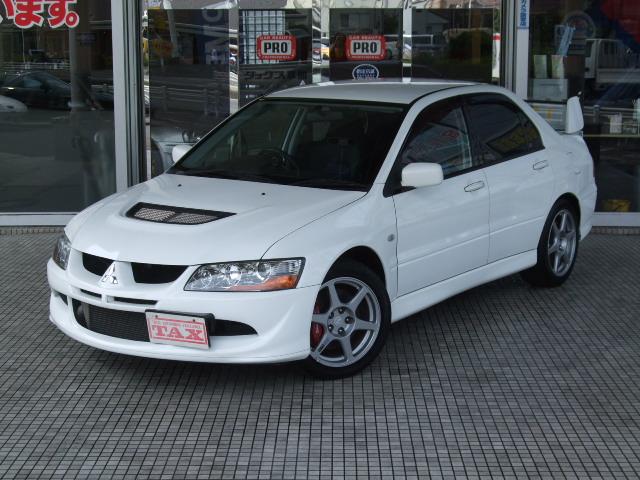
2003 Mitsubishi Evolution VIII GSR 43000 km ¥1,780,000

2003 Mitsubishi Evolution VIII GSR 43000 km ¥1,780,000


Advantages: Rally car thinly disguised as a basic family 4 door sedan. A technological marvel. 

Disadvantages: Rather thirsty. Not too many rally stages in Okinawa. (Would seriously consider this however if I was living in Hokkaido where 4WD and things like Super Active Yaw Control might come in handy.)

Suzuki Cervo
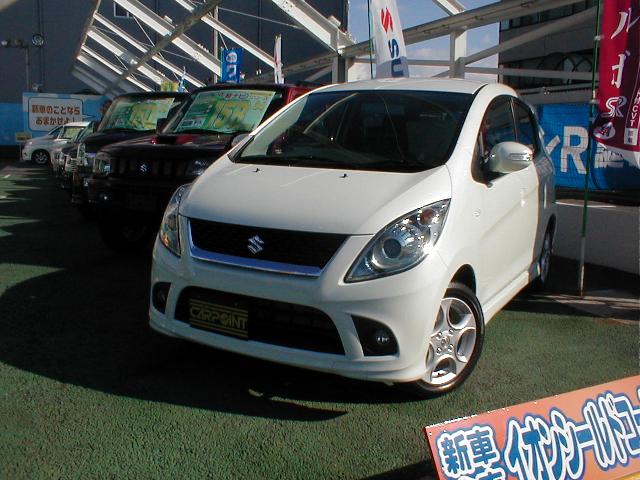
2009 Suzuki Cervo SR 7km  ¥1,550,000

2009 Suzuki Cervo SR 7km ¥1,550,000

Advantages:  A new car and therefore 3 full years before shaken.  66occ engine means it is a Kei Jidosha and will be have cheaper road tax. Turbo charged engine gives it some power  (64PS) while the CVT gearbox means it can do 23 km per liter. Gearbox has a “manual mode” allowing you to select from 7 gears. Small cars are perfect for Okinawa’s narrow streets and tiny parking spaces.

Disadvantages: The small engine means that you would be thrashing it to make any progress. I’d prefer a manual gearbox rather than an  automatic gearbox with a  “Manual mode”.

Finally I found what I was looking for:

Suzuki Swift Sport
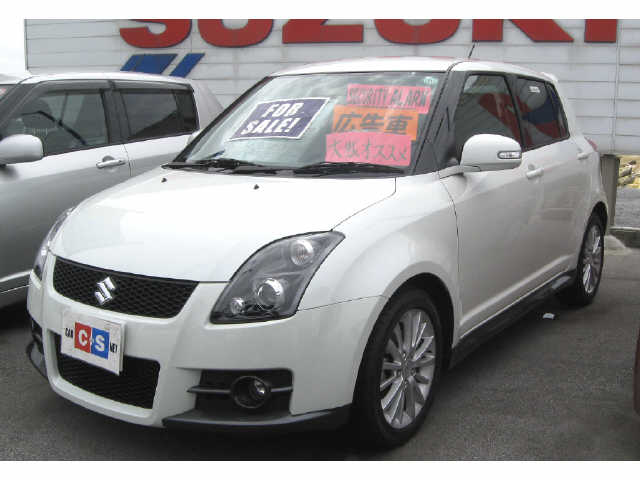
2009 Suzuki Swift Sport 98 km ¥1,650,000

2009 Suzuki Swift Sport 98 km ¥1,650,000

 Advantages: An almost new car. A manual gearbox. Very similar to a Mini Cooper, but without the exorbitant import charges. Fun to drive, but still quite frugal at 15km/L. This car also comes with the Japanese set options of Recaro seats and HID lights.

Disadvantages: The standard Suzuki Swift is perhaps the most common rental car on Okinawa. You may therefore struggle to find your car if you visit the aquarium or Shuri Castle.  The luggage space is quite small when the rear seats are up. Never had a new car before so will probably go through a stage of new car paranoia where I am afraid to let dogs, people or dirt anywhere near it. 

So the decision has been made. Time to move on to stage 2.
Organ Donation Miata to Miata

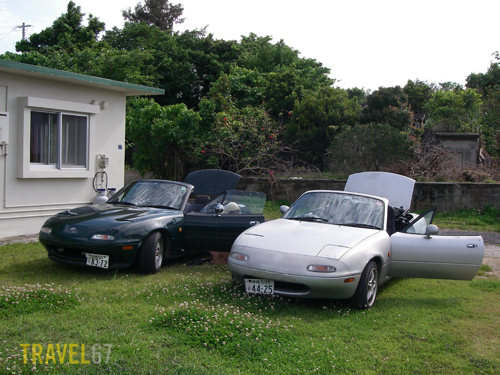
Tomorrow my little Mazda Miata will make it’s final journey down to a garage in Itoman where I shall say goodbye. It is not long for this world, but its passing will allow other Miatas to live long and happy lives.

mazda-miata-surgery-2

This afternoon Keith Gordon of  Ryukyu Underground came over to my house in his  Miata for some open air surgery. The two cars were parked side by side and over the course of the afternoon, the door panels, center console, battery and and a power window motor were transplanted from my little silver roadster to his little green roadster.

mazda-miata-surgery

It was great to help out a friend, and to see some use come for the various still functional parts of the car. I do, however, hope it doesn’t rain tomorrow as my driver’s side window is now permanently open.

Sefa Utaki – World Heritage Site

In 2000, Sefa Utaki, along with Shuri Castle and several castle ruins from the Kingdom of the Ryukyus, was listed as UNESCO world heritage site. Sefa Utaki is the holiest place in Okinawa where the kikeo kimi high priestesses would perform rituals.  There are several places of worship hidden among the trees, but the most famous is at the triangle shaped opening. Water that dripped from  stalactites hanging from the rock faces was thought to be sacred.  Pots were positioned on the ground, and remain today catching the slow drip drip drip of holy water.

Sefa Utaki World Heritage Site Okinawa Japan

Sefa Utaki World Heritage Site Okinawa Japan

Tourists rather than priestesses are the main visitors to Sefa Utaki now. I had to wait a while before I could get a tourist free wide angle shot.

Sefa Utaki World Heritage Site Okinawa Japan

Sefa Utaki World Heritage Site Okinawa Japan

A second chance

When I get a roll of film back from processing, I use a loupe and lightbox to check the images. I then scan the best shots, sleeve, label and file them away in humidity controlled cabinets.  Bad shots get thrown in the trash, but there are quite a few which are either too similar or don’t quite make the grade for some reason. These get put in a big box, and pretty much forgotten about. Occasionally when putting new shots in the box I spot an old rejection and on further inspection decide is deserves a scan.


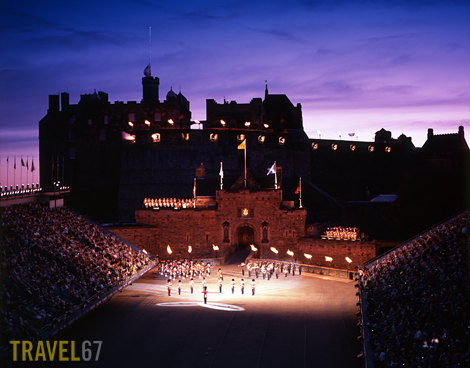
Edinburgh Tattoo

Edinburgh Tattoo


This shot is from the amazing Edinburgh Tattoo. I had a press pass so that I could get right up above the spectators among the floodlights as well as taking shots at ground level. Initially I think the movement in the Union flag on the top of the castle was the reason I rejected the image, but on further inspection I think the shot still works. You can even see the muzzle flash from the cannon in the top left of the castle.