Latest Posts

Okinawa Mountain Rescue Team Leader

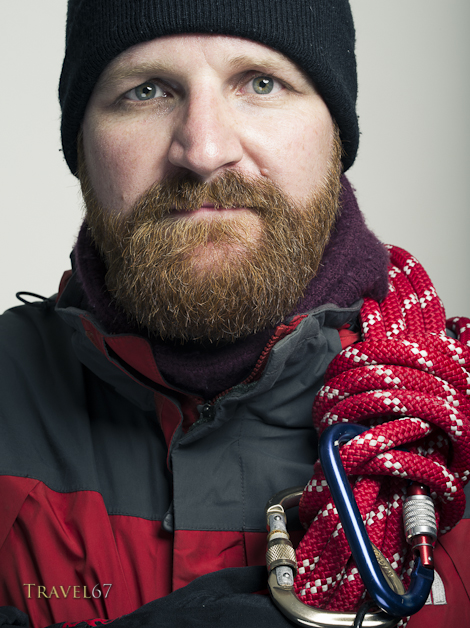
Adam - Okinawa Mountain Rescue Team Leader

Adam – Okinawa Mountain Rescue Team Leader

Trained in high altitude medicine and glacier rescue techniques, Adam is the leader of the Okinawa Mountain Rescue Service. He has yet to receive his first call, but when that blizzard hits he’ll be ready.

Pentax 645D
HD PENTAX-D FA645 MACRO 90mmF2.8ED AW S

Lighting – White background. Beauty dish powered by Profoto Pro-7a as the main light . Square softbox front and low as fill. 2 small zoom reflectors aimed at background (powered by Profoto compacts). Strobes triggered with PocketWizards.

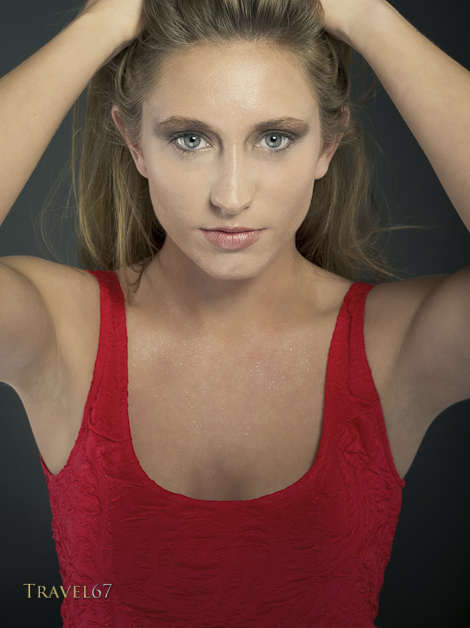
In the Studio – Alexis

Alexis in Red - 645D with 90mm lens

Alexis in Red – 645D with 90mm lens

An image from this week’s shoot. A chance to work with a great new model Alexis, and to test out both the 90mm lens for the 645D camera , along with its little brother the new K5IIs.

Model – Alexis Jacoby
MUA – Felicia Lee

Pentax 645D
HD PENTAX-D FA645 MACRO 90mmF2.8ED AW S

Lighting – Charcoal grey background. Gridded Beauty Dish powered by Profoto Pro-7a as the main light . Square softbox front and low as fill. 2 medium size strip softboxes behind that were adding rimlight (powered by Profoto compacts). Strobes triggered with PocketWizards.

Off Camera Flash Workshop – January 19th & 20th 2013

Off Camera Flash Workshop Image by Robert Mallon

Off Camera Flash Workshop 2012. Image by Robert Mallon

Off Camera Flash Workshop

Move your flash away from your camera to create more natural images or to give your photographs a drop of magical light.

January 19 & 20 2013 1PM to 6PM
Class Size: Max 12  Location: Ishikawa, Uruma City, Okinawa (Maps and pins will be sent out)
Instructors: Pete Leong & Chris Willson

Price US$150   To book a place on the course please email me on chris(at)travel67.com I will send you a paypal request for the class fee. Payment secures your place on the course.

Off Camera Flash with Wedding Photographer Pete Leong

Off Camera Flash with Wedding Photographer Pete Leong

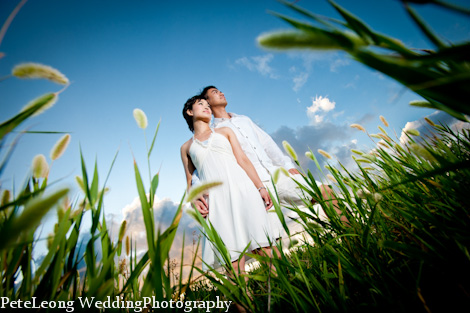
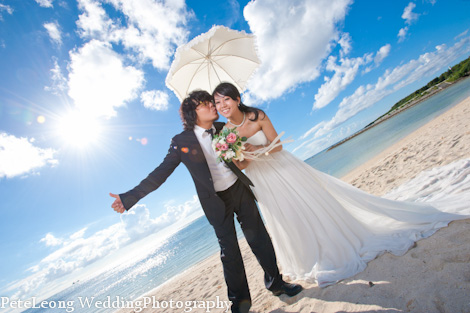
Pete uses off camera flash everyday as an wedding photographer. He can use it to overpower the sun, and create flattering light for the bride and groom. He’s very good a what he does, and a great person to learn from.

Off Camera Flash with Wedding Photographer Pete Leong

Off Camera Flash with Wedding Photographer Pete Leong

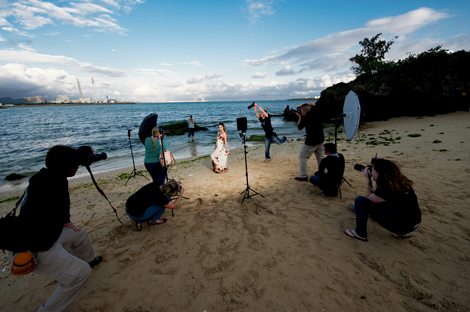
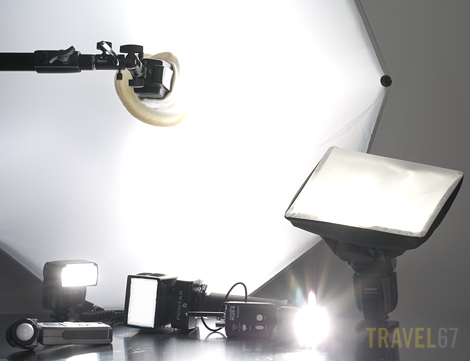
On the first day we will talk about the different types of strobes and how to get the most out of them on and off camera. The second day we will move from TTL to manual flash control, and from wired to wireless triggers. At the end of the weekend we will hit the beach and Pete will give a short masterclass in location lighting with a model.

Let there be light - Take that flash off your camera

Let there be light – Take that flash off your camera

Students should have their own digital SLR camera. If you have a flash please bring it along, but it is not necessary for the course.  We will have plenty of gear for everyone to play with test out.

Off camera flash

Off Camera Flash with Travel Photographer Chris Willson

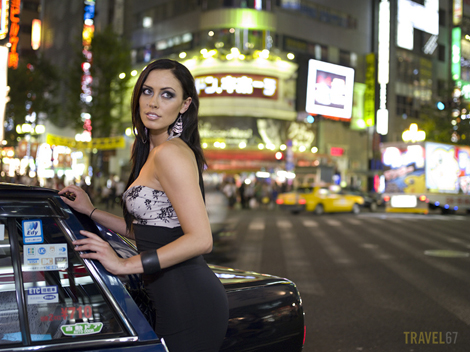
For me, off camera flash is a useful tool that allows me to get editorial shots that would have otherwise been impossible. There’s a flash and either a trigger or cords kept in my travel bag so that I always have the option of bringing my own light to the party.

Ginza 4-chome

Off Camera Flash with Travel Photographer Chris Willson

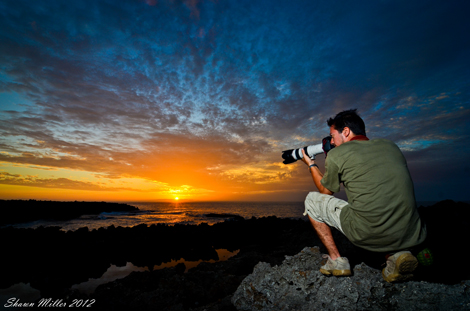
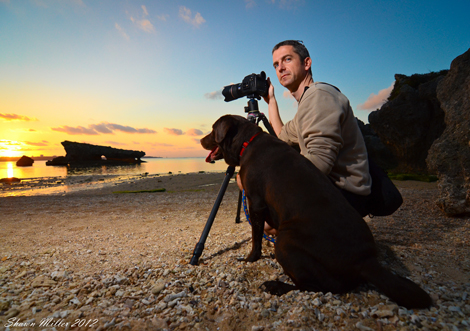
And here are a couple of images of Pete and I, taken with off camera flash by Shawn Miller. Shawn attended the OCF workshop last year and now creates amazing images with that extra splash of magical light.

Pete Leong by Shawn Miller

Pete Leong by Shawn Miller

Chris & Bear by Shawn Miller

Chris & Bear by Shawn Miller

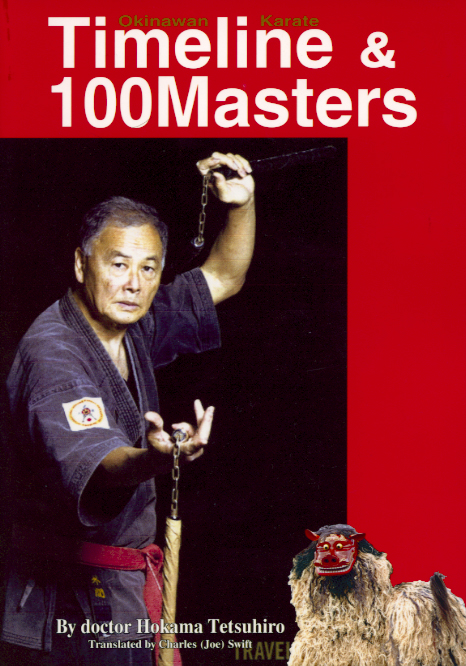
On the bookshelf – Okinawa Karate Timeline & 100 Masters

Okinawa Karate Timeline & 100 Masters by Hokama Tetsuhiro

Okinawa Karate Timeline & 100 Masters by Hokama Tetsuhiro

Hokama-sensei, one of the karate masters I shot a few months ago asked if he could use some of the portraits of him in the latest printing of his book on karate. The book is actually two books combined, the first part is a history of Okinawa karate, the second part is biographies of 100 karate masters. It has been translated into English and is available for 3,000 yen at either the Okinawa Prefecture Karate Museum in Nishihara or at the Dojo Bar in Naha.

Unfortunately Hokama sensei wasn’t aware that the karate portraits I’d posted on the web, were not the full resolution images. This means that my photos in the book are a little pixelated and watermarked, but we’ll sort out things for the next print run.

Hokama-sensei, however, was delighted with how it came out, and I now have my own signed copy for the bookshelf. Osu.

On the Bookshelf – Portraits

I love shooting portraits. In the studio or on location. Friends or strangers. In exotic lands or in the backyard. I like the fact that  each portrait is unique, and if you can get  eye contact,  you’re staring into a person’s soul, capturing for eternity a brief moment of connection.

When it comes to photography books, once again the eyes have it. I thought I’d show some recent additions to my bookshelf that are focused on portraits. It’s probably not a coincidence that the cover of each book has the subject staring directly into the camera.

In Focus National Geographic Greatest Portraits

In Focus National Geographic Greatest Portraits

In Focus: National Geographic Greatest Portraits and Portraits are filled with immersive images taken all over the world. The National Geographic book spans more than a century with shots by a wide range of staff photographers. Portraits is solely by Steve McCurry (whose work also features in the Nat Geo book). The blurb about McCurry’s book sums up things nicely:

Compelling, unforgettable and moving, McCurry’s images are unique street portraits: unstylized and unposed snapshots of people that reveal the universality of human emotion. 

Although some of the earlier pictures in National Geographic were staged, the majority of images in both books are shots of unposed strangers captured with natural light. The photographs allow us to step into the lives of others. Into the living room of an Irish family, into the Siberian hospital, or onto the flooded streets of Java.

Portraits by Steve McCurry

Portraits by Steve McCurry

In  contrast, there are the books of Portraits by Testino and Rankin. Both are  filled with A-listers that spend their lives in front of the camera.  In Mario Testino: Portraits he pays particular attention to his muses Diana, Madonna, Paltrow and Moss.
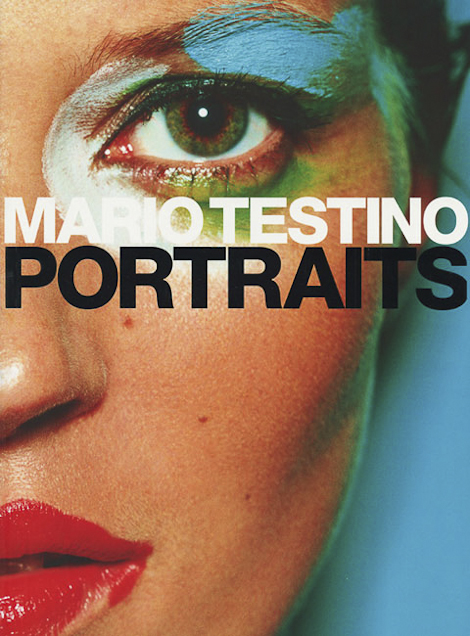
Mario Testino Portraits

Mario Testino Portraits

Portraits by Rankin is likewise filled with actors, models, musicians and royalty.  If you cringe at our celebrity obsessed culture, these aren’t the books for you.  Photographers, however, can still enjoy, or at the very least study, the way they control light and try to show the personality of the subject through the image.
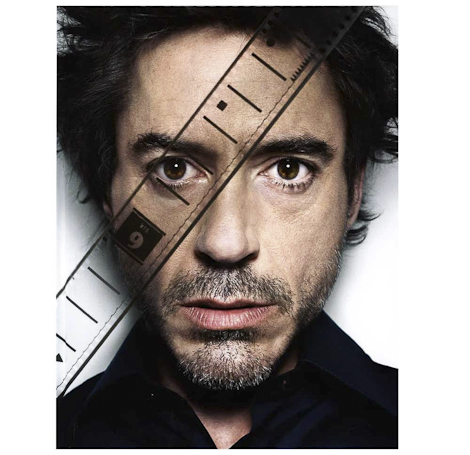
Portaits by Rankin

Portaits by Rankin – A Stark Choice?

What I hadn’t checked when selecting these books on Amazon is their size.  The  National Geographic book actually comes in two versions small
(6 inches wide) and medium (10 inches wide). I purchased the smaller one and found the visual impact of both it and the McCurry book to be hamstrung by their limited dimensions. Images in both books were smaller than a full page in a National Geographic magazine. They are both great value for money, but McCurry’s images looked so much better when printed large in another of his books South Southeast.  Rankin’s book at  10 x 13 inches and Testino’s book at 11 x 15 inches are  able to impress the reader with the sheer scale of the images. Of course content is king, but sometimes bigger really is better.
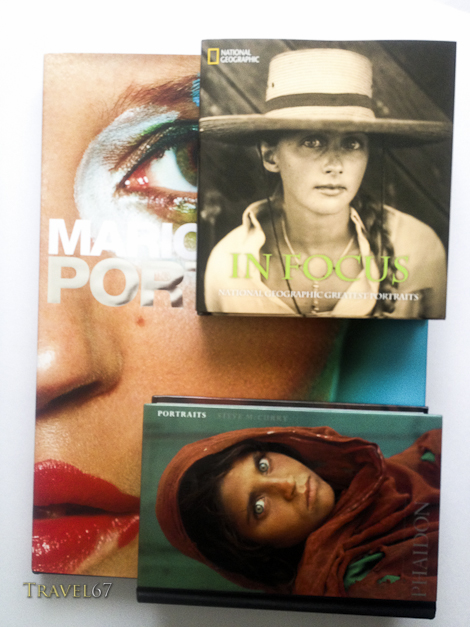
Portraits Big and Small
Portraits Big and Small

Photography Fundamentals Workshop

Fundamentals Workshop - December 2012

Fundamentals Workshop – December 2012

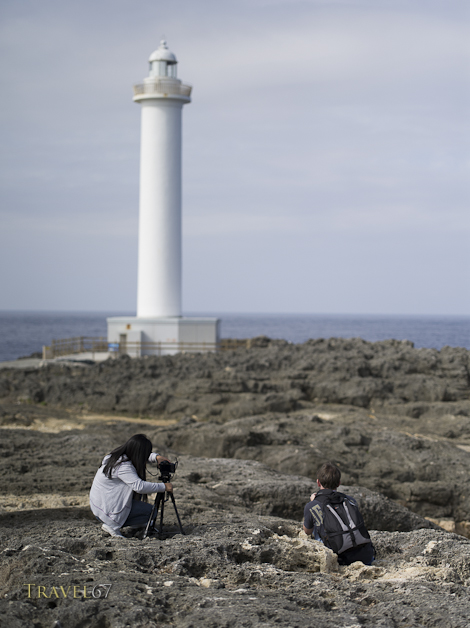
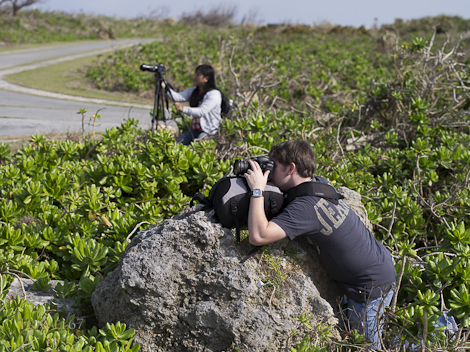
Just spent a great weekend with Lian and Kevin teaching December’s Photography Fundamentals Workshop. On Saturday we covered theory, discussing equipment, exposure, composition and workflow. On Sunday we took what we’d learned out into the field and practiced photographing people at Ryukyu Mura and then landscapes at Cape Zanpa.

_6452582- blog 470 new

Lian and Kevin composing their shots.


Coming Workshops

Off Camera Flash Workshop

Move your flash away from your camera to create more natural images or to give your photographs a drop of magical light.

January 19 & 20 2013 1PM to 6PM
Class Size: Max 12  Location: Ishikawa, Uruma City, Okinawa
Instructors: Chris Willson & Pete Leong

Price US$150

Photography Fundamentals Workshop

Move beyond the auto modes by understanding your equipment, controlling exposure & depth of field, and composing images.

February 2 & 3 2013 10AM to 6PM
Class Size: Max 4   Location: Ishikawa, Uruma City, Okinawa
Instructor: Chris Willson

Price US$250

Visiting Fushimi Inari Taisha

I’ve been to Fushimi Inari Taisha in south east Kyoto several times. I took one of my most popular images there, a simple geometric photograph of the orange torii gates winding up the mountain.

Fushimi Inari Shrine (Pentax 67II Film Camera)

Fushimi Inari Shrine (Pentax 67II Film Camera)

On my recent trip I wanted to get some new images, this time showing a Japanese person visiting the shrine. Of course I could just photograph tourists milling around, but I decided to be a little more proactive. I met up with model Mari and photographer Keith at Kyoto Station, and we took the local train to Fushimi Inari.

Visiting Fushimi Inari Shrine

Visiting Fushimi Inari Shrine

It was fortunate I wasn’t even attempting a shot similar to the one I’d taken before because the shrine was packed with people. Luckily we could find gaps in the crowds to get some decent images. The image stabilization function on the new 90mm lens added an extra bit of stability which was useful, and the wide aperture gave a nice limited depth of field in the portraits.

Visiting Fushimi Inari Shrine

Visiting Fushimi Inari Shrine

Fushimi Inari shrine is dedicated to a fox god so there are numerous fox statues, fox shaped ema (prayer tablets), and of course souvenirs. The ema were particularly interesting as visitors were able to sketch features on the fox heads. Clearly some foxes had been drawn by anime fans.

Visiting Fushimi Inari Shrine

Visiting Fushimi Inari Shrine

Hopefully picture editors will like the images next time they’re looking for shots of the shrine. A big thanks to Mari and Keith for a great morning.

Visiting Fushimi Inari Shrine

Visiting Fushimi Inari Shrine

Eriha the Maiko

Eriha the Maiko

Eriha the Maiko

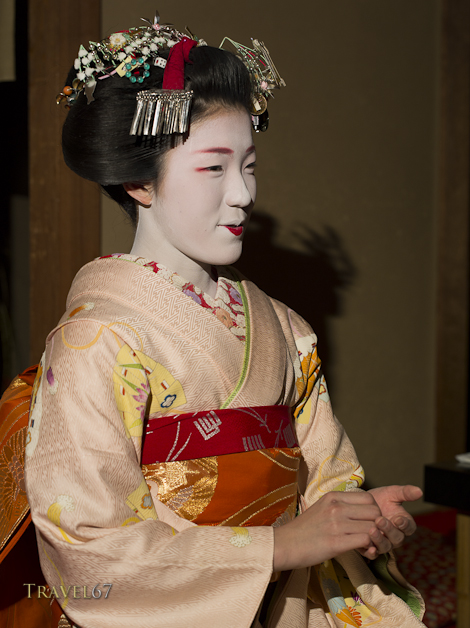
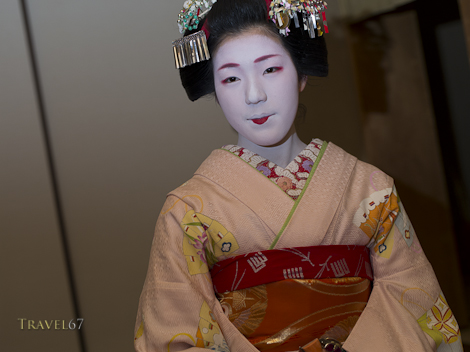
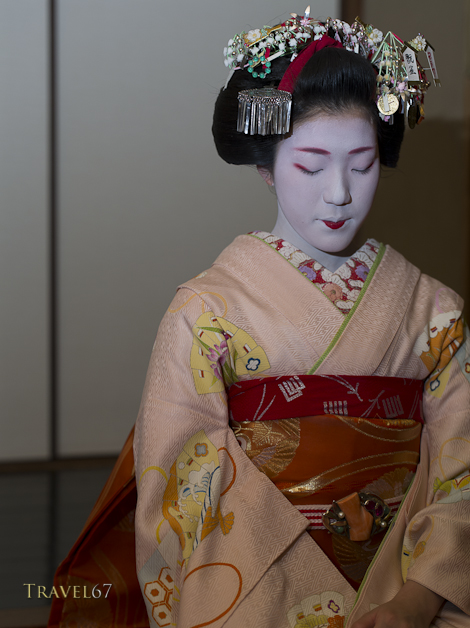
Eriha is a 17 year old maiko in the Gion district of Kyoto. Only her lower lip is painted red which shows this is in her first year in the profession. I was told that it normally takes three years as a maiko, before the girl become a geiko (geisha). As a young maiko her pinkish kimono and her hair ornaments were  youthful and cute, but these will  change to more formal designs as she gets older.

Eriha the Maiko

Eriha the Maiko

I had always presumed that “real” maiko and geisha didn’t use wigs, and that these were for the “tourist” maiko and geisha. It turns out I was half right. Maiko always use their own hair to create the ornate hairstyles. This means they still have to use special wooden pillows when they sleep. Most geisha, once they have graduated from maiko status, use wigs, and presumably are able to get a much better night’s sleep.

Eriha the Maiko

Eriha the Maiko

Kyoto in the Fall

Kyoto in the Fall

Kyoto in the Fall

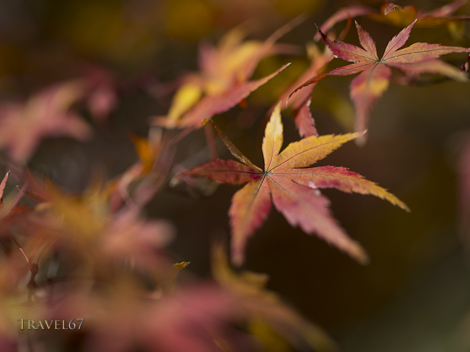
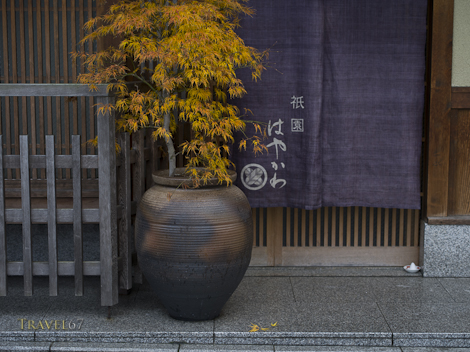
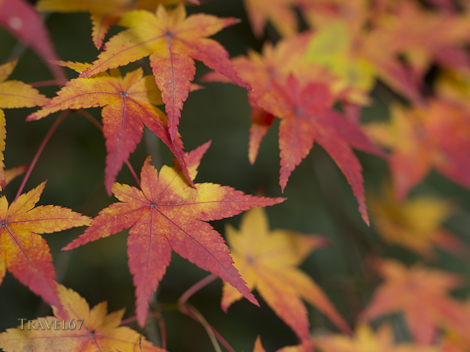
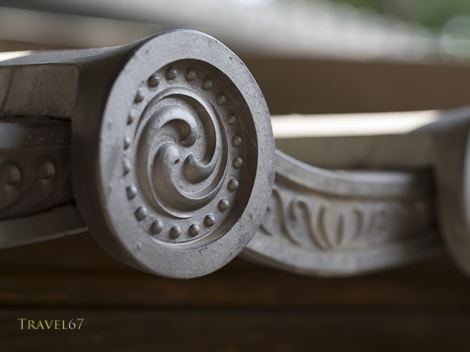
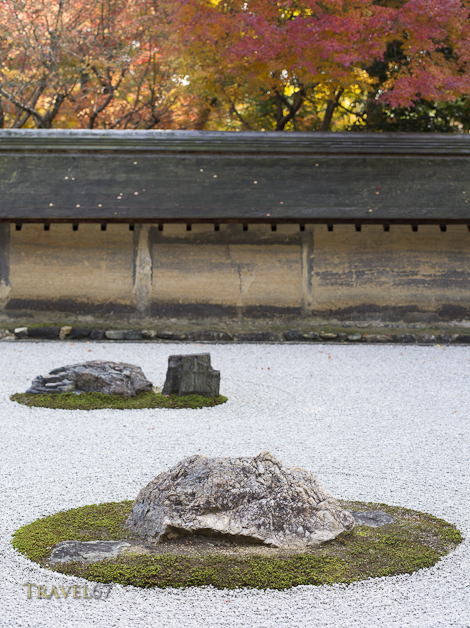
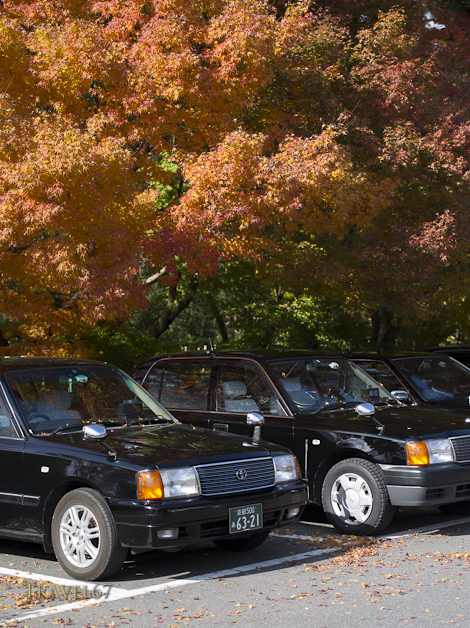
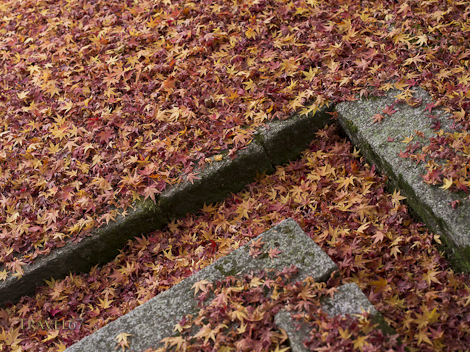
A few shots from last weekends trip to Kyoto to photograph the fall leaves with the new Pentax 90mm macro lens. Although fall viewing was coming to an end, there were still many trees covered in bright red and orange leaves. Quite an amazing sight.

Kyoto in the Fall

Kyoto in the Fall

Kyoto in the Fall

Kyoto in the Fall

Kyoto in the Fall

Kyoto in the Fall

Kyoto in the Fall

Kyoto in the Fall – Ryoan-ji

Kyoto in the Fall

Kyoto in the Fall

Kyoto in the Fall

Kyoto in the Fall

Kyoto in the Fall

Kyoto in the Fall – Kiyomizu-dera