Latest Posts

Suzuki v Coach – A Demonstration of The Pauli Exclusion Principle

Japanese Car Insurance

The Swift after its encounter with a coach

The Pauli Exclusion Principle states that no two objects can occupy the same place at one time. Unfortunately, two weeks ago, an Okinawan coach driver tried to bend the rules of quantum mechanics by attempting to move his vehicle through mine.

The driver attempted to merge into the space in front of me while I was stationary on Route 58 in Nago. As his back end came closer and closer I beeped my horn. The bus driver continued on, gouging the front bumper and right wing of my car and then stopped.

It was just a minor scrape and nothing serious, both the bus driver and I gave statements to the police, exchanged insurance information and went on our separate ways. I talked to my insurance company, but found that due to end of year vacation nobody could look at my car until Jan 4th.

Dropped off my car today, picked up a loaner, and everything will get repaired.

The one issue that does remain is exactly whose insurance will be paying for the repairs. You might assume that the bus company’s insurance would pay for everything, but in Japan blame is rarely attributed entirely to one driver. If the discussion between insurance companies results in me being given a token 10% of the blame, my insurance will pay for 10% of the damage to my car and the bus, and next year’s insurance premium will go up.

One positive note is that so far I’ve managed to use my temperamental Japanese skills to converse with a bus driver, police, insurance agents and mechanics. After more than a decade in Japan it’s quite nice to know that I can make myself understood (eventually) even if I am butchering the language as I do it.
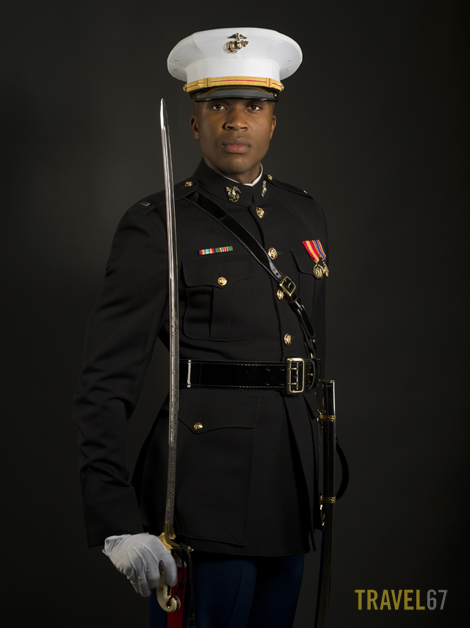
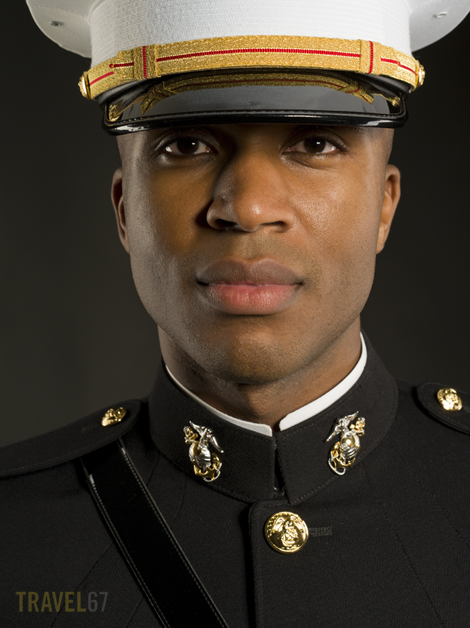
Men in Uniform

Marine Corps Blue Dress Uniform

Marine Corps Blue Dress Uniform

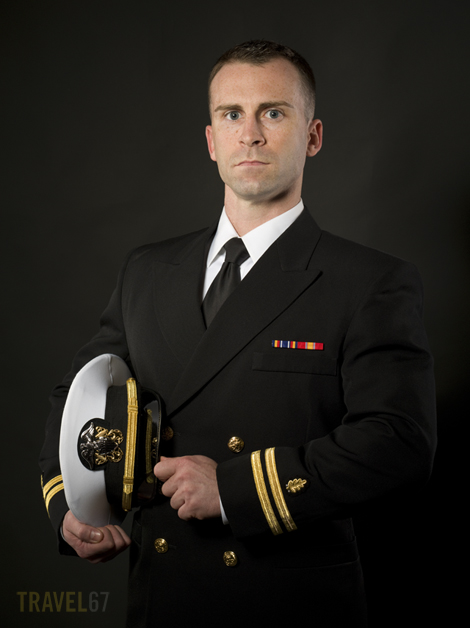
Navy Service Dress Uniform

Navy Service Dress Uniform

Marine Corps Service Uniform

Marine Corps Service Uniform

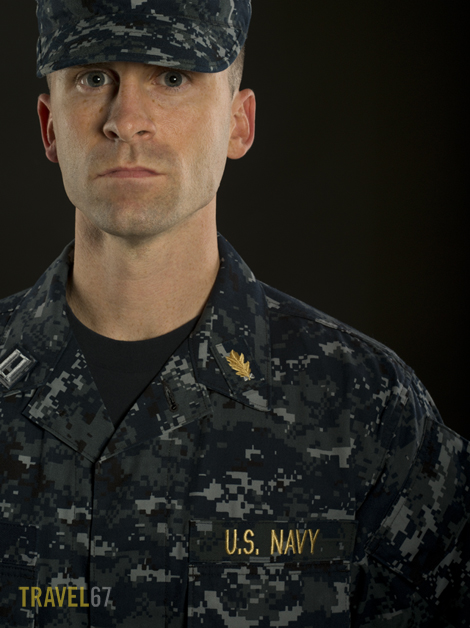
Navy Working Uniform

Navy Working Uniform

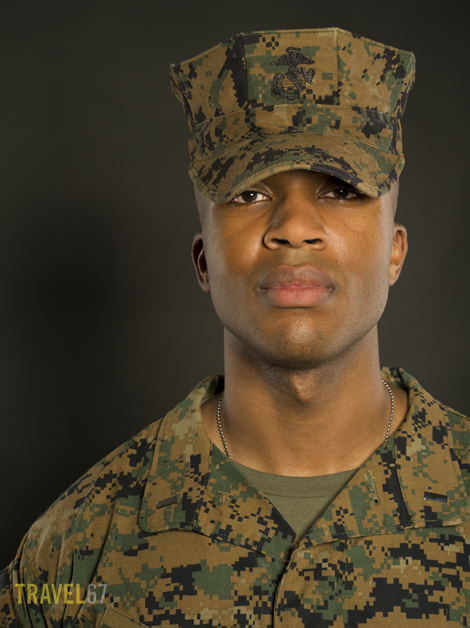
Marine Corps Combat Utility Uniform

Marine Corps Combat Utility Uniform

This was a quick series of portraits of military uniforms I shot a couple of weeks ago. As a civilian it’s fascinating to get a brief glimpse into the lives of others, even if it’s just noting the attention to detail they have when putting on their various uniforms and the pride they have from wearing them. A big thank you to D and Ryan for one of my favorite studio shoots of the year.

New Year, New Camera

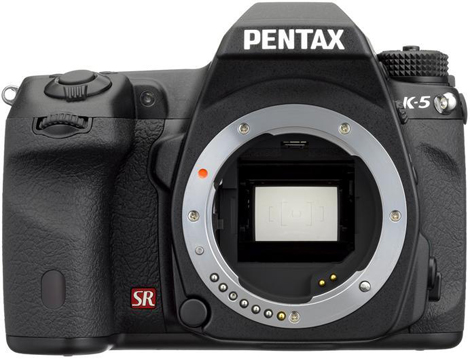
Pentax K-5 body

Pentax K-5 body

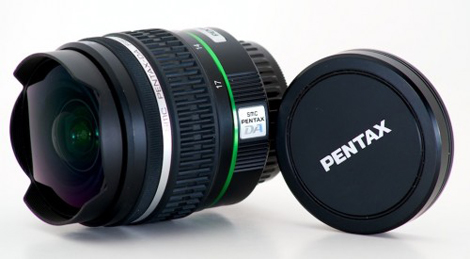
Pentax 10-17 fisheye

Pentax 10-17 fisheye

For many years I’ve been putting off shooting underwater. My Optio W60 is a great waterproof compact camera, but it doesn’t have the depth rating for scuba diving or the image quality for professional use.

I looked into an underwater housing for the 645D, but there were none available off the shelf and a custom built housing would be many thousands of dollars. (It would also be like scuba diving with a submarine.)

Ikelite, perhaps the biggest manufacturer of underwater housings, has however just released a housing for the Pentax K5/K7 cameras.

For many reasons (that I’ll explain in future posts) I decided to buy a K5, a 10-17mm fish-eye lens and the Ikelite housing. The housing is on its way from the States as we speak, while the K5 and lens arrived a couple of days ago.

Bear’s friend Ref posed for a few shoots so I could test out the fish-eye lens.

Fish-eye on Ref  (K-5 with 10-17mm)

Fish-eye on Ref (K-5 with 10-17mm)

Pentax 10-17mm fish-eye lens

Fish-eye on Ref (K-5 with 10-17mm)

Underwater photography is going to be an exciting challenge. Already have plans to shoot a lost city, a few sharks, and the occasional mermaid.

Photography 101 Workshop – January 14th and 15th

Photography 101 Workshop – January 14th and 15th

Who is the course for?

The beginner or novice photographer who has a digital SLR  and wishes to progress beyond the green fully auto mode. People who want to take better photographs of their friends and family rather than point, shoot, and hope for the best.

What do I need to bring?

Your digital  SLR camera, lens, your camera manual, memory card, battery and charger. You don’t need a particular brand of camera or lens. If you don’t have a digital SLR at the moment I can lend you one for the duration of the course.

What does the course cover?

Equipment – The anatomy of cameras, lenses, memory cards, filters and tripods.

Exposure – Aperture, Shutter Speed, ISO, Camera Modes, Metering

Composition – Angles, Repetition, Rules, Lines, Simplicity

Data Management – Sorting, storing and protecting your images.

This is a fun workshop rather than a lecture. As we cover new topics we will be taking photographs, reviewing the images, and discussing the results.  You’ll be learning by practicing each new skill rather than just reading about it.

Number of Students in the Class? Maximum of 4

Time and Place? 10.00 to 18.00 on January 14th and 15th. The class will take place at my home in Ishikawa (Uruma City), and surrounding locations. The workshop takes place both indoors and outdoors. It could be sunny or rainy so bring suntan cream and umbrellas! Bring some cash for the lunch breaks on both days.

What is the course fee? US$250 or ¥21,000

Who do I contact? To reserve a place send an email to chris@travel67.com (please write WORKSHOP RESERVATION on the subject line) Please state the name and date of the workshop you wish to book  A 50 dollar deposit is required. I’ll send a paypal request for the deposit to those who are booking the course.

Beach Yoga

Yoga instructor Adriesa Kane

The first shot from a beach shoot with yoga instructor Adriesa. This is a good example of using off camera flash (in this case a 300W moonlight plugged into a portable battery pack) to fill in the harsh shadows created by midday sun. For more information on off camera flash there are still three places on the workshop with Pete Leong and me in January.

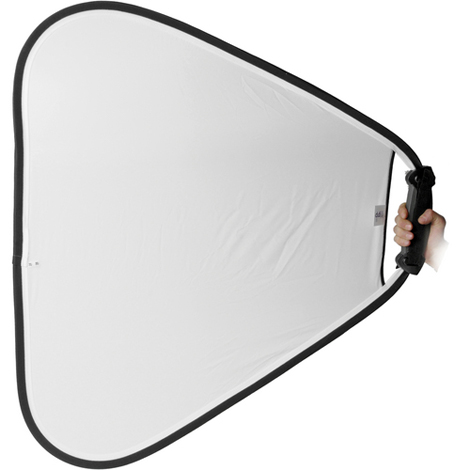
Lastolite TriGrip Diffuser

A diffuser is a useful piece of equipment which can help you control harsh light. You place the opaque material between your subject and the light source (usually the sun) and it cuts down the light . It is similar to moving a person from outside into the open shade in a doorway or beneath a tree, except you’re moving the shade to them.

As with reflectors, most portable diffusers for photographers are circular and collapse in on themselves for storage. Lastolite make a range of triangular trigrip reflectors and diffusers which have an integrated grip and are easier to maneuver.

Lastolite TriGrip Diffuser

Lastolite TriGrip Diffuser

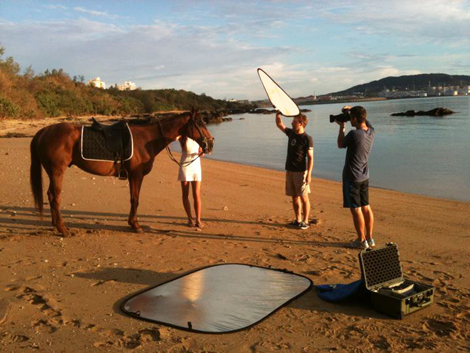
The medium size trigrip is a good size for putting a person or couple into shade when shooting in the harsh Okinawan sun. It is also a useful way to reduce the strength of the light when shooting into the sun backlighting the hair. In the shot below I used it to control the light on the model and her white dress. It also stopped her from squinting. The size of the diffuser will determine the  area of soft light, for example with a medium trigrip I wouldn’t have been able to put both the model and horse into shadow. (Lying on the beach is a large reflector rather than a diffuser.)

Lastolite TriGrip Diffuser

Using a Lastolite TriGrip Diffuser on the beach

There is one problem that can occur with the collapsible diffusers and reflectors and it has a lot to do with the design of samurai swords

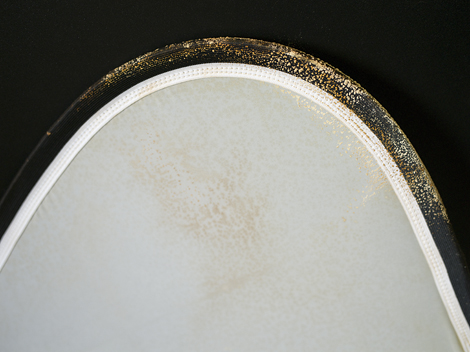
Samurai swords are made of both low carbon flexible steel and high carbon hard steel. Use only  low carbon steel and the blade doesn’t have a decent edge. Use only high carbon steel and the blade will shatter. Collapsible reflectors / diffusers whether circular or triangular work by having a steel band running inside them. For it to be able to twist and spring back into shape without breaking it must, I presume, use low carbon steel. One side effect of this is that things made of low carbon steel easily rust. If you are using your equipment on the beach, a little bit of salt water is going to make your diffuser do this…

Rusty Diffuser

On a previous shoot (model on a surfboard) one corner of the diffuser must have been dipped into the ocean. I dried it out before storage but the steel band is sown into the edge and I guess a little dampness was enough to unleash the rust. The diffuser still works fine, but looks a little worse for wear.

The solution for people who are working in wet or salty environments is to use a frame based diffuser made from aluminum such as Lastolite’s Skylite.

The Lastolite TriGrip Diffuser is available on Amazon, B&H and through some stores in Japan. It’s a great product just keep it away from water.

Skymark Airlines

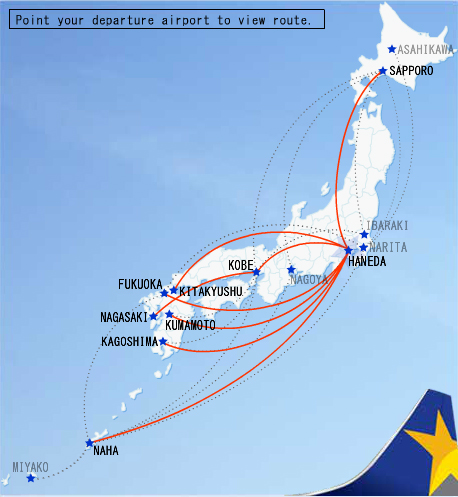
Skymark is Japan’s budget airline. Domestic flights in Japan are expensive and if you live in Okinawa they’re the only realistic option for getting up to mainland Japan. I’m visiting Tokyo for a few days in February so I thought I’d give Skymark a try. Hopefully I’ll save a bit of money, and at the least it will allow me to advise people better when giving travel advice.

Skymark Flights from Haneda

Skymark Flights from Haneda

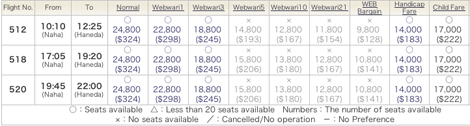
I wanted to fly Naha – Haneda return, so I visited the Skymark website which has an English section. A flight from Naha to Haneda ranges in price from 9,800 yen to 24,800 yen depending on how early you book. The key thing to know is that you can book a maximum of two months in advance. Bookings start from 9.30AM and due to demand you have to book at exactly 9.30AM two months previously to get the 9,800 or 10,800 yen tickets.  I know this as this morning I entered my information at 9.32, selected the available web bargain flight and by the time I’d filled in the details form the ticket was no longer available.

Skymark Naha Haneda Prices

Skymark Naha Haneda Prices

I quickly returned to the flight selection page selected the still available 12,800 ticket, entered my details and again the ticket was no longer available. Repeated the process and this time got to buy a 13,800 yen ticket. I’m quite a fast typer, but I guess I need to use auto fill if I’m going to get the cheapest fares in the future.