All posts filed under: Japan

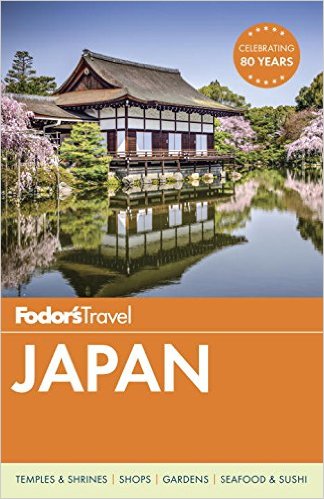
Fodor’s Japan 22nd edition

This is the third edition of the Fodor’s Japan guidebook that I’ve helped update. For the 22nd edition I travelled around Kyushu and Okinawa checking to see what changes there have been over the last couple of years. It’s great to be able to share amazing places with a worldwide audience. The book is now available for pre-order at Amazon.

Cherry blossom blooms in Okinawa

Cherry blossom is blooming in Okinawa. At Nago Castle Ruins the dark pink blossoms add color to the stairway leading up to the shrine. The white pieces of paper tied to the branches of trees at the shrine are omikuji or fortune papers similar to what you might find in a fortune cookie. They are usually sold from machines at Shinto shrines. After you’ve checked your fortune most visitors tie the paper to something at the shrine before leaving. Hanami or cherry blossom is also a popular time for Japanese to dress up in yukata (top two images) or the more formal kimono (bottom two images) .

Oba-san

This is the lady who always makes my workshop students and me delicious satandagi donuts. As I was captioning images I realized I don’t know her real name as she is always referred to as Oba-san (auntie) or Oba-chan (granny) by everyone. Will have to remember to ask her real name next time I see her!

Reforming a house in Japan

On April 3rd 2015, I moved into the new house. I was well aware that it would need some renovation work. Inside was mainly cosmetic and could wait, but the outside needed immediate work. Some of the drains at the house had been detached by previous typhoons. Leaks had occurred where water pooled up on the balcony and flowed in through air vents. Other water leaks had been caused by air vents missing hoods. In Okinawa rainy season is May to early June. It’s wet but the rain is falling vertically. However in  July, August and September there are typhoons. If you have an ocean view,  you are going to get hit by the full force of the wind and horizontal rain. The first job was to buy a power washer and clean the dirt off everything within reach. This enabled me to reveal any cracks in the concrete and assess the problems. Most homes in Okinawa are built out of reinforced concrete with a core of steel rebar. They are strong and able to withstand …

Buying a house in Japan

2015 has been a busy year, just one of the reasons is that in March I bought my first house. It was a relatively quick and painless process, but it was difficult finding information about all the associated fees in English so hopefully this post will help others. Back in December 2014, I was browsing the internet housing website Suumo. I wanted to check out the prices, and see what was available in northern Okinawa.  One property in Motobu caught my attention, or to be more specific the view from the house looked amazing. The website showed an approximate location so I decided to drive over. I found the house, and although there were no FOR SALE signs, I knocked on the door. The owner came out a little surprised, but was very friendly.  We had a brief chat and I had a quick look at the exterior. Although it was cloudy, the view was as I’d hoped, fantastic. The next day I called the toll-free number of the Sumo website and was connected through …
Heshikiya Eisa, Katsuren, Okinawa

Obon (or bon) is a traditional festival to honor the spirits of ancestors. In Okinawa families often have picnics at the tombs where the remains of previous generations were laid to rest. Eisa are traditional Okinawan folk dances usually performed during Obon. There are huge commercial gatherings of dancers such as the All-Okinawa Eisa Festival in Koza, but small local events take place all over the prefecture. Last weekend I drove down to Heshikiya on the Katsuren peninsular to photograph their local eisa event. The dances begin around dusk, but I like to arrive early to get some portraits and preparation shots before the event begins. At the Heshikiya Eisa all dancers are 25 years old or younger. As with many parts of Japanese life there is a clear hierarchy of members, and as with many of these hierachies it is based on age. In this group, the oldest  take on the senior chondara roles (black jacket). Next are the chondara with the traditional brown and white costume, and then the younger drummers. Women can …

Climbing Mt. Fuji at night – Part 1

There are several ways to climb Mt. Fuji. I’ll describe what I believe is perhaps the best and easiest option. During the July / August climbing season, you can get a bus from outside Shinjuku train station all the way to the 5th station on Fuji. Book tickets at the office which is next to Yodobashi Camera. You catch the bus from the “extraordinary bus stop” just a few meters away. A one way ticket is 2700 yen and it takes about 2 hours 30 minutes from Shinjuku to Fuji. The 5th Station on Fuji is already up in the clouds at 2304 meters. I arrived just after 5pm so that I could take photographs in the late afternoon light, but many night climbers will opt for a bus that gets in at 18.55, or on weekends 20.15 or even 21.55. Many hikers will buy a walking stick that that can be branded at the various huts on the way up. I was already carrying enough gear, so I didn’t bother. Hiking boots are advisable for the …

Fukagawa Hachiman Festival, Tokyo – Part 1

Fukagawa Festival a.k.a. The Water Throwing Festival held at Tomioka Hachimangu Shrine, Tokyo. Participants throw buckets of water at mikoshi (portable shirines) as they are carried through streets in one of the great Shinto festivals of Tokyo. Not everyone chooses buckets of water, there were plenty of kids with their super soakers happy to join in the fun.   These are shots from the Saturday, the day before the main festival. Going a day early allowed me to get a feel for the festival, work out the angles, and prepare myself for the following day.

Soma Nomaoi – The Riders Assemble

On day two of the Soma Nomaoi festival, the riders parade back to the Higarigahara-Saijochi horse racing ground from their respective hometowns. Once at the ground everyone starts to get organized. Samurai on giant horses shouted instructions. Others put the final touches to their armor. There were plenty of aging samurai preparing for battle. Some took a quick break from the heat for refreshments. This shot sums up how I, or probably any foot soldier, feels when standing next to cavalry. You’re small, vulnerable, and fully aware why a horse is far more useful than any kingdom. Following the samurai are those offering spiritual protection. Ladies performed a traditional sacred dance, and mikoshi (portable shrines) were carried into the arena. Armor on, flags unfurled, prayers offered, time to ride. And yes in the above epic samurai shot, the horse is sticking its tongue out to the camera 🙂