All posts filed under: Uncategorized

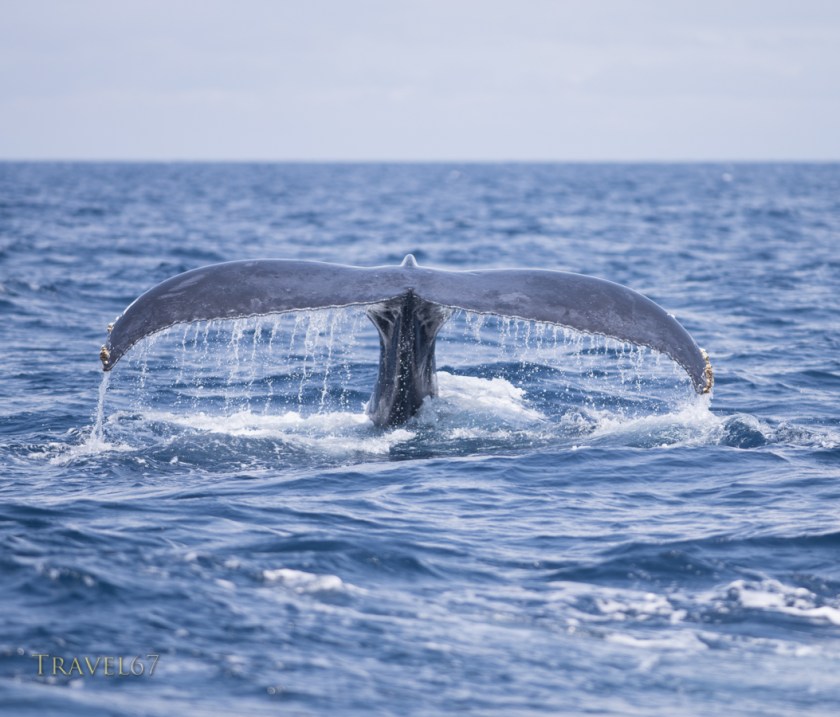
Humpback Whale Flukes

The Churaumi Research Center is able to identify and track individual whales by photographing their flukes. The data has allowed them to map their movement along the migration route, and note that the same individuals return year after year to Okinawa. Some of the researchers are able to identify the individuals on sight and have given them names including Snoopy and Z. The whale watching season is coming to a close in Okinawa, but they’ll be back again next year.  

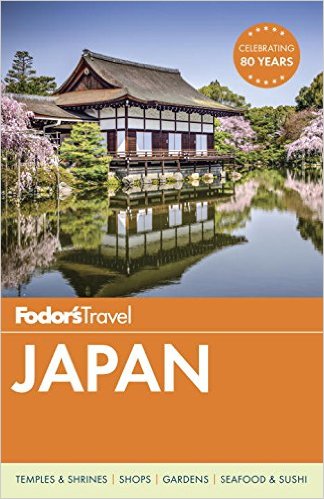
Fodor’s Japan 22nd edition

This is the third edition of the Fodor’s Japan guidebook that I’ve helped update. For the 22nd edition I travelled around Kyushu and Okinawa checking to see what changes there have been over the last couple of years. It’s great to be able to share amazing places with a worldwide audience. The book is now available for pre-order at Amazon.

Humpback Whale Watching

Out today with the Churashima Research Center taking pics from their research boat. A much happier occasion than photographing the carcass of a whale that had died and then washed up on the beach. We were in the waters of the coast of Motobu not far from Sesoko Island. We saw around 20 whales in total, but it was the first mother and calf pair that were the star performers. The whales slapped the surface with their long pectoral fins, and perform breaches before crashing back down onto the surface of the water.  Pics shot with the Pentax 645Z and a 300m lens. Used a monopod to take the strain off my arms.  Shot at ISO 400 so that I could use shutter speeds between 1/2000 and 1/4000 of a second.

Spring & Summer Workshops

  The March 12/13 Fundamentals workshop is now full. If you were hoping to take this class, but missed the chance don’t worry, and please join our May, June, July, or August workshop. Dates are here: https://travel67.wordpress.com/workshops/ and the Facebook event page for the May class is here: https://www.facebook.com/events/218375985183229/ Pete Leong and I have scheduled an 1-day Off Camera Flash workshop for May 21, 2016. We’ll be showing you how to add a little magical light to your images using cheap and cheerful wireless speedlights. You don’t need to have a flash to join the class, in fact if you don’t have one already, I’d highly recommend waiting until you’ve taken the class. The Facebook event page for the Off Camera Class is here: https://www.facebook.com/events/1538758036417243/ The Kyoto Workshop is now scheduled for the first week of April 2017, exact dates will be decided on in the near future.

Nakijin Shoot – Reflector Fill

Another shot from the Nakijin shoot this time using a simple reflector to bounce some light back onto Yuki. You still have clear shadows caused by the early afternoon sun, but the reflector is enough to keep them in check on the subject’s face. You don’t however get the clear catchlights that you would have got with the flash. Pentax 645Z, 90mm lens, reflector.

Humpback Whale Autopsy

  A dead humpback whale washed up near Kadena a few days ago. Humpbacks  migrate from the arctic to Okinawa to breed and rear their young in winter. Unfortunately for this young whale its life ended early. Okinawa Churashima Research Center monitors the migration of humpback whales and dolphins in the prefecture and also undertakes research to help with the preservation of endangered species such as the Hawksbill turtle and coconut crab. They also collect data from dead animals such as turtles killed by cars, bycatch from fishing nets, or beached whales. This morning the researchers undertook an necropsy (animal autopsy) of the humpback whale. The length of the whale, flukes, and various others parts were measured. The outer layers of blubber were then cut away, measurements were taken, and the flesh was bagged for disposal. The decomposing whale smelled badly especially downwind. As more and more of the whale was removed and bagged, the bones were also measured, and collected separately. After analysis the data will hopefully give some insight into why the whale, …
Cherry blossom at Nakijin Castle

A few shots of cherry blossom at Nakijin Castle. All taken with the Pentax 645Z and 90mm lens at f2.8 I used a Priolite HotSync strobe for flash which allowed me to shoot with shutter speeds above the cameras sync speed. These images were shot at 1/500 sec, but I could have shot as high as 1/4000 sec. I’m using Priolite’s M-Pack system which has the strobe head separate from the power pack. I placed the power pack in a should bag so that my assistant Gary was fully mobile. Being able to shoot with strobes at high shutter speeds is not a necessity in these static shots, but the HotSync system is still useful allowing me to use strobes with wide apertures without having to resort to ND filters. I’ll put up more detailed information about HotSync flashes in the future, and how they differ from the more common High Speed Sync systems. Thanks to Gary and Jamie for assisting on the shoot, and of course to Yuki for modeling.

An ounce of prevention

Main computer had an glitch, had to use Time Machine to get everything back to normal. Good job I have multiple backups so that occasional minor issues don’t become a major calamity. Currently I use  4TB external hard drives for backing up data on the Mac Pros, but I  will soon have to switch to an 8TB external hard drive on the newer computer as the amount of data grows. I also keep off site backups of data on other external hard drives just in case of fire or flood at the office. Finally all documents and a selection of images are also saved to the Cloud with Dropbox. Hard drives fail. Protect your data.  

Cherry blossom blooms in Okinawa

Cherry blossom is blooming in Okinawa. At Nago Castle Ruins the dark pink blossoms add color to the stairway leading up to the shrine. The white pieces of paper tied to the branches of trees at the shrine are omikuji or fortune papers similar to what you might find in a fortune cookie. They are usually sold from machines at Shinto shrines. After you’ve checked your fortune most visitors tie the paper to something at the shrine before leaving. Hanami or cherry blossom is also a popular time for Japanese to dress up in yukata (top two images) or the more formal kimono (bottom two images) .