Waking to the sound of pouring rain is not a good thing if you are hoping to see an eclipse. Other campers were already out of their tents patiently waiting for a miraculous parting of the clouds.
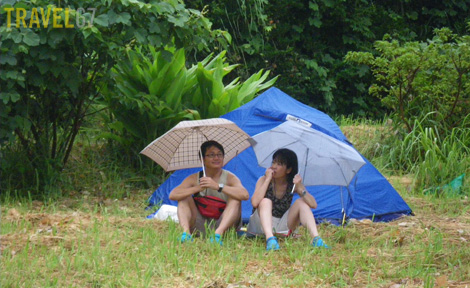
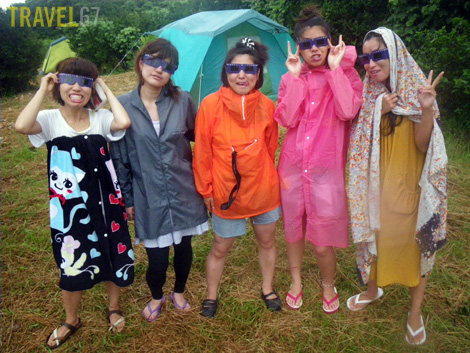
Some had their eclipse glasses at the ready to protect themselves from the blazing rays of the sun.
Unfortunately the miraculous uncloaking of the sun never came. At 10.56 we all stared up at a continuous mass of clouds.
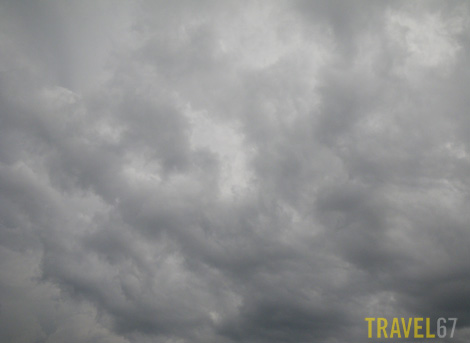
July 22 2009 Total Eclipse as seen from Yakushima, Japan
Although we couldn’t see the sun, the effects of the eclipse were still very much noticeable. From about 10.56 to 11.00 it was as dark as night, not just a little darker, but as if someone had turned off the light (or blocked it with a large moonlike object). At 11.00 the light returned and the longest eclipse of the 21st century had passed.
It was disappointing, but everyone at the campsite was surprisingly upbeat. Only minutes had gone by before people were talking about the upcoming total eclipses at Easter Island in 2010, North Australia in 2012, and North America in 2017.
I still had 28 hours left on the island, and with the eclipse over I could concentrate all my attention on discovering more about Yakushima. It’s not everyday you get to explore a UNESCO World Heritage Site and I even got to take some pictures…
 TRAVEL 67 : Chris Willson Photography
wow, thank you for sharing the picture
we in Indonesia were wondering how it looked like and talked about it 🙂
hmm very nice photos , i like these .