Feeling the Beat
Keith Gordon is a DJ and musician, who combined dance beats with traditional Okinawan music to create Ryukyu Underground.

Island Icon: Keith Gordon / Ryukyu Underground
After graduating from college in the United Kingdom, Keith Gordon backpacked around the world working as a club DJ. In 1997, he settled in Okinawa, and had his record collection shipped from home. Keith developed a passion for Okinawan music, and with American Jon Taylor, he formed Ryukyu Underground, producing a fusion of Okinawan, western and world music. After 3 successful albums, which have met with critical acclaim, he continues to find inspiration from the world’s music.
What are your musical influences?
“Coming from the UK, I grew up hearing bands like The Smiths and The Cure. At around 16, I got into hip-hop artists such as KRS-One, Jungle Brothers, Eric B, and Public Enemy. My tastes widened and I started to listen to older stuff that a lot of these hip hop artists sampled – such as James Brown, Roy Ayers and Donald Byrd. I guess it’s this stage of funk, soul and jazz that really excites me.”
“Recently I’ve become far more interested in world music than what passes for modern pop music. World music has become much more mainstream as well. Music used to have distinct boundaries that could be clearly categorized – African, South American, Cuban. Through people like Sting, Punjab MC and Hip Hop artists adding Indian samples to their tracks, I think genres have begun to mix to a greater extent, and world music has reached a much wider audience. These days, musicians and listeners are looking for something new, rather than tired retreads of older music.”
What is involved in the process of creating a new track?
I have a huge collection of traditional Okinawan music. For our first album, I found sections that I found interesting, from a melody to single note, and sampled them. I uploaded these samples into a sequencer on my laptop and then added the beats, drums, percussion, effects and keyboards to produce the finished track.
For the second album we had much professional equipment to work with – better software and improved synthesizers. The biggest change, however, was that through the success of the first album we were able to work with Okinawan musicians like Toru Yonaha and singer Mika Uchizato. This was much more organic, more natural, rather than just using samples of Okinawan music.
For our most recent album, Shimadelica, we took things a stage further. We were more confident working with the musicians and they were less nervous performing with us. It allowed us a much deeper collaboration, and I think the resulting music really shows this.
What instruments do you play?
“I’m not a professional, but I do play drums, percussion, keyboards, bass guitar and sanshin. Unfortunately, I’m not a virtuoso of any of them. Some people think what I do is merely putting other people’s music into a computer and that it requires no talent to work like this. I respond to them by saying that the computer is just the tool to get my ideas into the world. The fact is, however, that it doesn’t matter how much technology or money you have backing a project, you still need creativity and original ideas to make good music.”

Island Icon: Keith Gordon / Ryukyu Underground
Your albums have been described as having influences from dub, trip hop, and breakbeats. What exactly are these music styles?
Dub is a style of reggae with few vocals, heavier bass, and more effects. Breakbeats are old syncopated funk drum beats, which are usually sped up and were used heavily by bands like The Chemical Brothers and The Prodigy. Trip hop, has a hip-hop rhythm but is more experimental, usually with a hundred or less beats per minute. Both Jon and I listen to a wide range of music, so this comes out in the variety of styles that are present in the tracks we produce.
Future plans?
“We’re currently thinking about the direction for out next album. We are toying with a few ideas. I guess it’s all about trying a variety of different things and finding what works or what takes Okinawan music into new areas. In the end, the greatest thing is simply being part of the musical culture and community here on Okinawa. ”

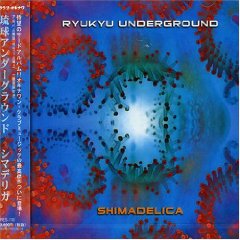
Ryukyu Underground albums are available for purchase on Amazon and iTunes.






 has just been published by Lonely Planet so I thought I’d get a copy. There are many more photos than in the standard Lonely Planet guide to Japan, and they even used ( and purchased ) an image I took on my trip to

 especially in the shot above. And this is the reaction you get when you ask for a few more photos 🙂