
The Traveling Photographer #10 by Chris Willson
The Traveling Photographer #10 in the June edition of Okinawa Living Magazine.
See a larger version of the image on either Facebook or Flickr.

Location Portraits by Cathy Joseph
Location Portraits
Although the photography is excellent, this is not a coffee table book but an instructional guide on how to take portraits outside of a studio. Advice is given by experts in various fields including travel photographers, photo journalists and those who specialize in corporate portraits. As with other books published by Rotovision, Location Portraits includes the technical details for each shot including camera, lens, film etc and where relevant lighting diagrams.
Unfortunately this book is no longer in print but it is still available new or used and is well worth checking out. (There are used copies on Amazon for less that $4!) Enjoy.
Teppan and Popo are two freestyle dancers who are bringing American funk and hip-hop to Okinawa’s streets.
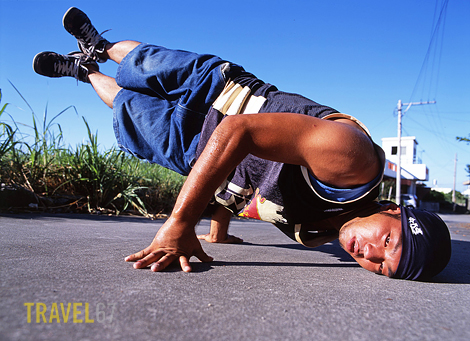
The New Okinawa Dancers
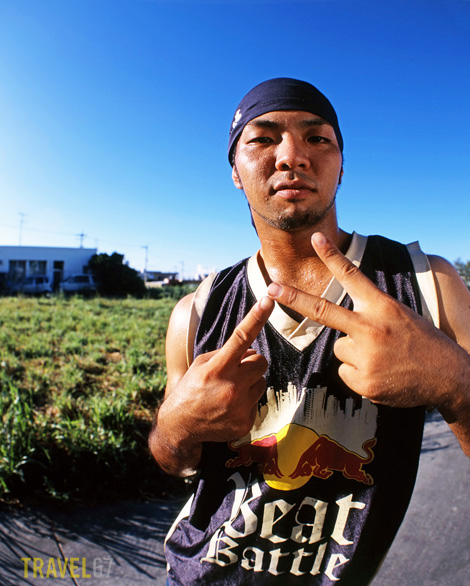
“Teppan” (Tetsuya Yamauchi), “Popo” (Masato Ishikawa) and “Taiga” (Taiga Ishioka) have been friends since elementary school. They grew up in the small, laid-back seaside city Ishikawa, and while most of their classmates were more interested in baseball or basketball their passion was street dance.
They formed their own dance team “Sound Terror” and their slick moves have taken them to competitions and events across Japan, and recently to the United States and the United Kingdom. In 2005, they set up their own SKF Dance Studio in Ishikawa, teaching freestyle dance classes to a new generation of kids with big dreams.
Teppan and Popo talk about their inspiration, their dreams and their love of dance.
Where did you learn to dance?
“We went to various classes while we were at high school. Teppan studied hip-hop, Popo was into locking, and Taiga did breaking. After six months, we quit the school classes and started dancing together as a team. Our styles have changed with time and now Teppan does popping and both Popo and Taiga do breaking.”
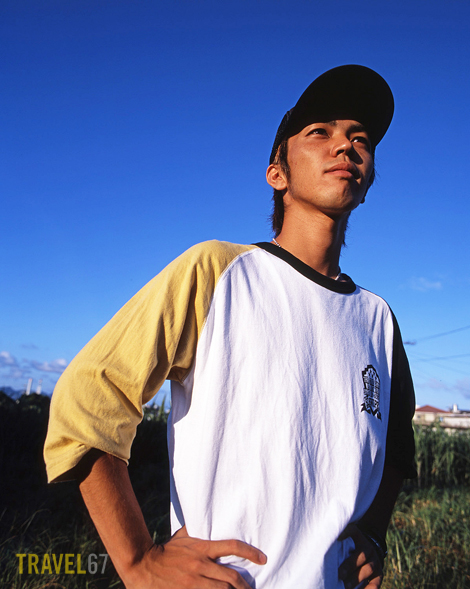
What’s the difference between locking, hip-hop, popping and breaking?
“Locking is usually done to soul or funk songs from artists like James Brown. It involves the dancer moving his arms rapidly and then locking them suddenly into a static position. Hip-hop is more about footwork, with the dancer moving to rap music. Breaking is based on the floor, with the dancer doing things like spins and fast leg work. Popping is done by the dancer relaxing and contracting muscles rapidly in time with the music giving the sudden jerking motion you see with moves like the robot.”
What or who inspired you to start dancing?
“Popo watched the Okinawa pop group Da Pump and wanted to copy the dance moves they were doing. He encouraged first Taiga and then Teppan to start dancing. In junior high school, we were in the soccer and basketball clubs, but by the time we reached high school we were just into dance.”
Are there any famous dancers you admire?
“Of course, Michael Jackson. We’re not so keen on his songs or the guy in general, but he was a really cool dancer. Of the more recent performers, guys like Usher are really good but, I guess, our favorite would be Omarion.”
Do you dance to any particular kinds of music or bands?
“We use many different types of music including hip-hop, techno and a lot of break beats. We’re really into Daft Punk, but also dance to DJ Shadow and rappers like Snoop Dogg and Outkast. To be honest, we don’t dance to that many Japanese groups I guess the only exception is Rhymester.”
What have been the recent highlights in your careers?
“In 2006, we won a fan award at the MTV Japan Dance Delight competition. In April 2007, we went to London for the Red Bull World Dance Beat Battle as the representative for Japan. Next year our goal is to win the Battle of the Year in Osaka.”
What are your hopes for the future?
“It would be really great if dance became a mainstream sport just like basketball and soccer. Although we love teaching, I think most of all we want to showcase our skills. Hopefully we can keep on performing to more and more people in Okinawa and around the world. “
Where can people see you dancing?
“Twice a month on Saturday evenings from six to nine the SKF crew performs under the Ferris wheel in Chatan. Also if you come across posters or flyers for dance events in Okinawa and you see “SKF” then we’re going to be there. Come check us out.”
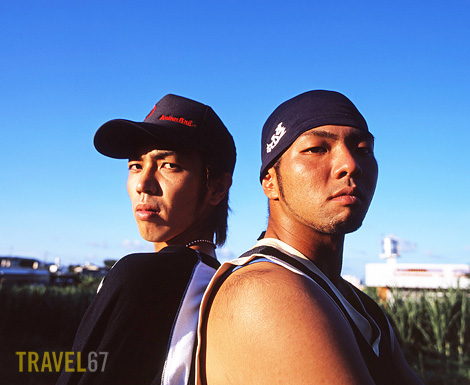 Interview first published in Okinawa Living Magazine, January 2008
One of the most famous tourist attractions in Beppu is to tour the 8 different “hells” or jigoku. You could easily argue that they are commercialized tourist traps with enormous souvenir halls and roped off walkways corralling you around the pools. However it’s also worth remembering that a large proportion of Japanese domestic tourists are elderly so the smooth wheelchair friendly layouts provide an accessible taste of volcanic activity. The decision to add some forlorn looking zoo animals was misguided, and may frustrate / irritate some visitors.
So here are the 8 hells:
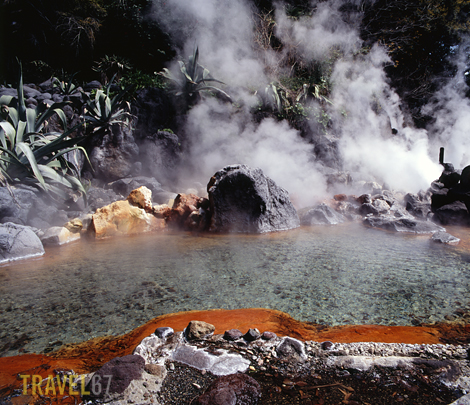
Yama Jigoku, Mountain Hell, Beppu
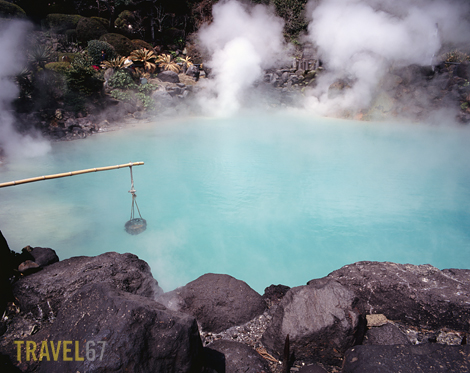
Umi Jigoku, Ocean Hell, Beppu
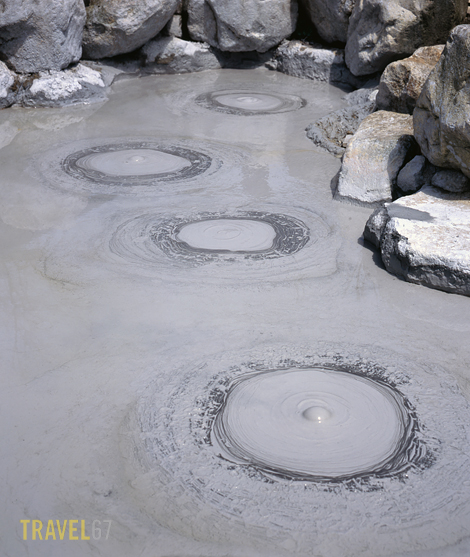
Oniishibouzu Jigoku, Oniishi Shaven Head Hell, Beppu
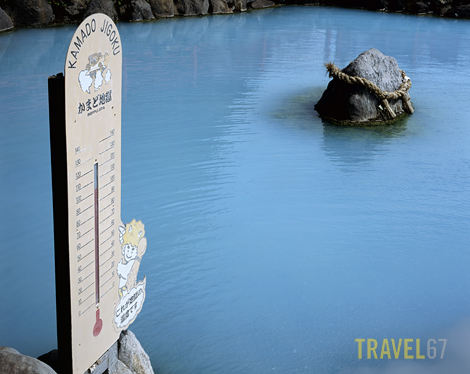
Kamado Jigoku, Beppu
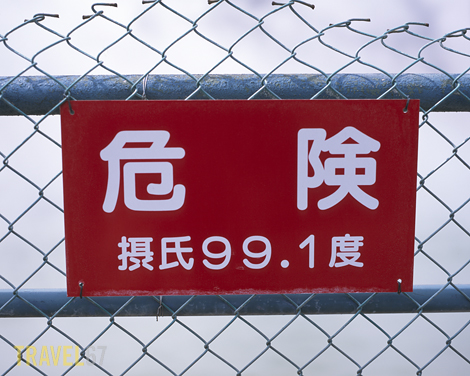
Oniyama Jigoku, Beppu
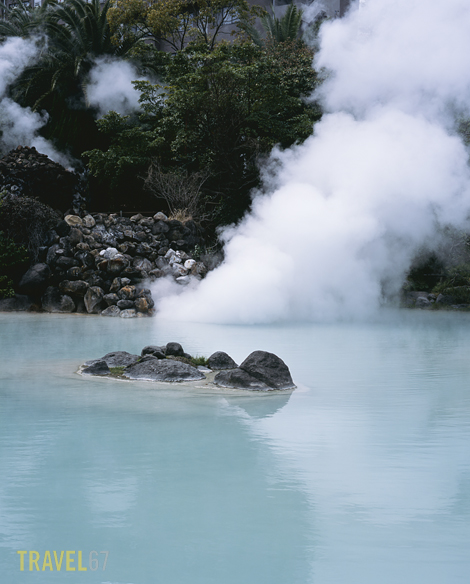
Shiraike Jigoku, White Pond Hell, Beppu
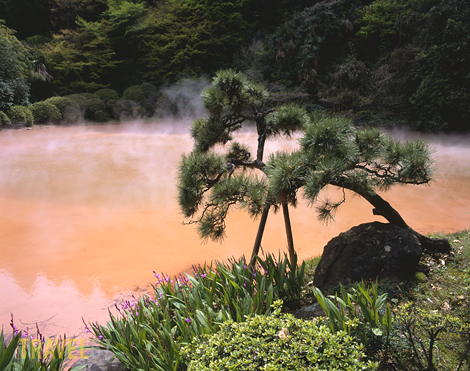
Chinoike Jigoku, Blood Pond Hell, Beppu
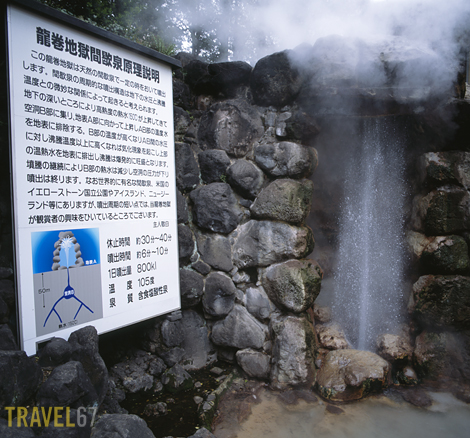
Tatsumaki Jigoku, Geyser Hell, Beppu

Ishigaki-Japan.com by Richard Shaw
Quick announcement to say that fellow Brit Richard Shaw has created www.Ishigaki-Japan.com a great new website about Ishigaki and the surrounding islands. Ishigaki is one Okinawa prefectures southern islands. I spent three weeks there a few years ago, and it remains one of my favorite places in Japan.
If you haven’t seen them already please check out “ Southern Comfort – Life on Ishigaki Island” and the “A tale of two islands -Taketomi & Iriomote” over at http://www.TRAVEL67.com
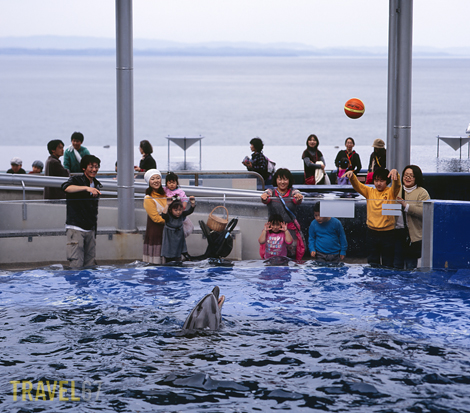
Basketball playing dolphins, Umitamago Aquarium, Oita
There are many aquariums in Japan. They vary in size, quality and role (education / research / entertainment). The Umitamago (Sea Egg) Aquarium in Oita seems to be aimed at entertaining and educating children about the ocean. It is far more hands-on than other aquariums, you can play basketball with the dolphins, feel the leathery skin of dogfish and rays, and even touch “Ponta”, “Mee” and “Bubu” the three resident Walruses.
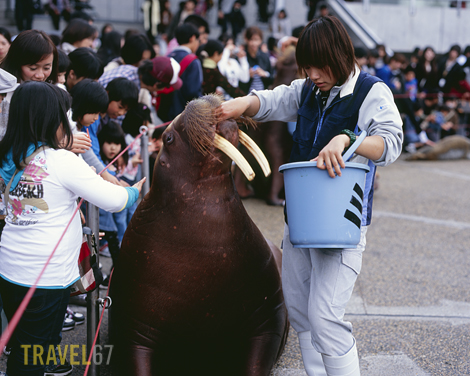
Meeting a Walrus at Umitamago Aquarium, Oita
The role of zoos and aquariums in modern society is a complicated issue. Are they little more than animal exploitation with profit the ultimate goal, or do they have a role in educating and inspiring visitors to cherish the oceans and marine creatures from zooplankton to whales?
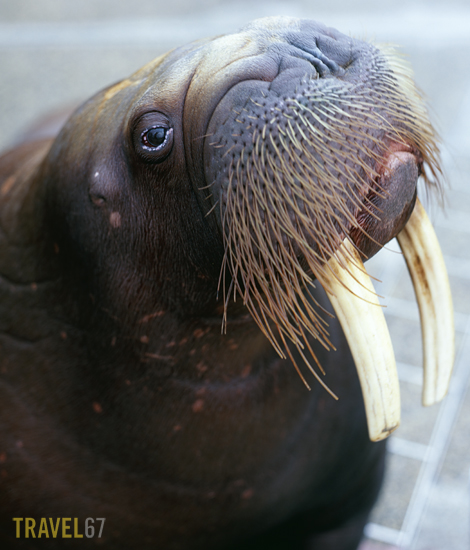
Walrus, Umitamago Aquarium, Oita

Tokyo Megacity by Ben Simmons Book Launch
On Saturday, photographer Ben Simmons will be giving a talk at Tower Records in Shibuya to launch his new book “Tokyo Megacity.” A great opportunity to meet a fantastic photographer.
I can’t think of a more appropriate place to launch a book about Tokyo than overlooking Hachiko Crossing! If you’re in Tokyo, check it out and say hello to Ben from me!

Takegawara Onsen is the oldest and the most famous onsen bath in Beppu. For just 100 yen, visitors can strip down, have a wash, then soak in the very hot water.
A must for anyone visiting Beppu.
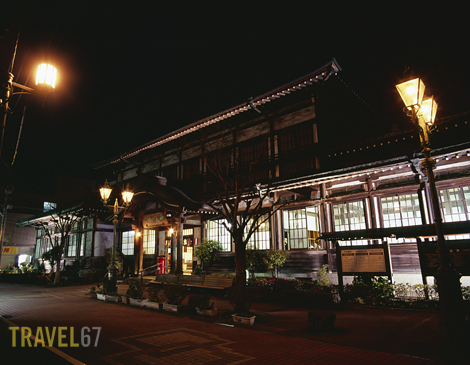
Takegawara Onsen, Beppu, Oita
Just got back the film from the couple of days I spent trying to photograph the Noguchi-gera. The Noguchi-gera is a rare woodpecker that is endemic to the forests of northern Okinawa. It is the prefectural bird of Okinawa and is designated as a natural treasure of Japan.
The photographs I’d taken were disappointing, but this was hardly surprising. There were several factors that made this a difficult shot. The bird was far away, the bird was moving, the day was overcast, and above all, I was using the wrong tools for the job. A large piece of film or a large sensor isn’t much use if you have to heavily crop the image to see the bird. I would have been better using my little 35mm film camera with a 67 to 35mm adapter on the lens. Even better would have been to have used a cropped sensor digital camera which would have increased the size of the bird in the image even further.
Here’s the best of the images. It serves as a good reminder of what the bird looked like, but I’ll think of this as merely a first (and second) attempt.
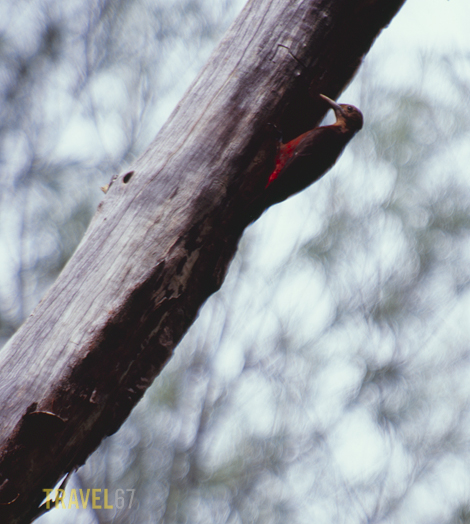
Noguchi-gera, Pryer's Woodpecker, Sapheopipo noguchii
 TRAVEL 67 : Chris Willson Photography