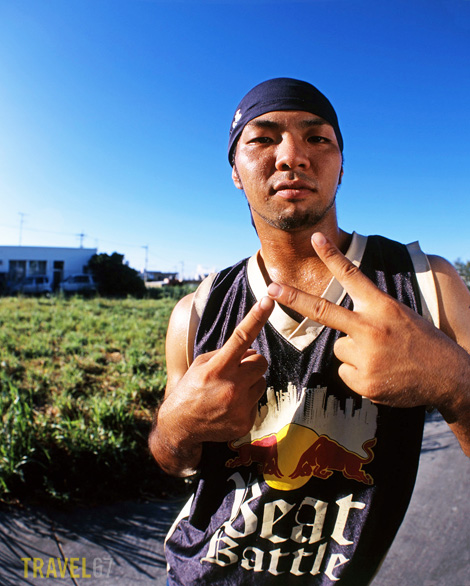
Teppan and Popo are two freestyle dancers who are bringing American funk and hip-hop to Okinawa’s streets.

The New Okinawa Dancers
“Teppan” (Tetsuya Yamauchi), “Popo” (Masato Ishikawa) and “Taiga” (Taiga Ishioka) have been friends since elementary school. They grew up in the small, laid-back seaside city Ishikawa, and while most of their classmates were more interested in baseball or basketball their passion was street dance.
They formed their own dance team “Sound Terror” and their slick moves have taken them to competitions and events across Japan, and recently to the United States and the United Kingdom. In 2005, they set up their own SKF Dance Studio in Ishikawa, teaching freestyle dance classes to a new generation of kids with big dreams.
Teppan and Popo talk about their inspiration, their dreams and their love of dance.
Where did you learn to dance?
“We went to various classes while we were at high school. Teppan studied hip-hop, Popo was into locking, and Taiga did breaking. After six months, we quit the school classes and started dancing together as a team. Our styles have changed with time and now Teppan does popping and both Popo and Taiga do breaking.”
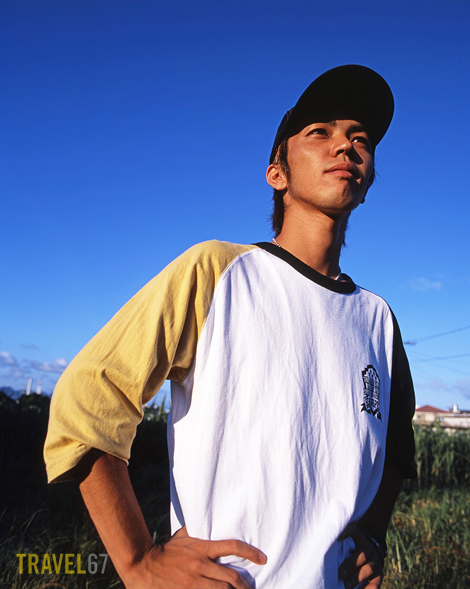
What’s the difference between locking, hip-hop, popping and breaking?
“Locking is usually done to soul or funk songs from artists like James Brown. It involves the dancer moving his arms rapidly and then locking them suddenly into a static position. Hip-hop is more about footwork, with the dancer moving to rap music. Breaking is based on the floor, with the dancer doing things like spins and fast leg work. Popping is done by the dancer relaxing and contracting muscles rapidly in time with the music giving the sudden jerking motion you see with moves like the robot.”
What or who inspired you to start dancing?
“Popo watched the Okinawa pop group Da Pump and wanted to copy the dance moves they were doing. He encouraged first Taiga and then Teppan to start dancing. In junior high school, we were in the soccer and basketball clubs, but by the time we reached high school we were just into dance.”
Are there any famous dancers you admire?
“Of course, Michael Jackson. We’re not so keen on his songs or the guy in general, but he was a really cool dancer. Of the more recent performers, guys like Usher are really good but, I guess, our favorite would be Omarion.”
Do you dance to any particular kinds of music or bands?
“We use many different types of music including hip-hop, techno and a lot of break beats. We’re really into Daft Punk, but also dance to DJ Shadow and rappers like Snoop Dogg and Outkast. To be honest, we don’t dance to that many Japanese groups I guess the only exception is Rhymester.”
What have been the recent highlights in your careers?
“In 2006, we won a fan award at the MTV Japan Dance Delight competition. In April 2007, we went to London for the Red Bull World Dance Beat Battle as the representative for Japan. Next year our goal is to win the Battle of the Year in Osaka.”
What are your hopes for the future?
“It would be really great if dance became a mainstream sport just like basketball and soccer. Although we love teaching, I think most of all we want to showcase our skills. Hopefully we can keep on performing to more and more people in Okinawa and around the world. “
Where can people see you dancing?
“Twice a month on Saturday evenings from six to nine the SKF crew performs under the Ferris wheel in Chatan. Also if you come across posters or flyers for dance events in Okinawa and you see “SKF” then we’re going to be there. Come check us out.”
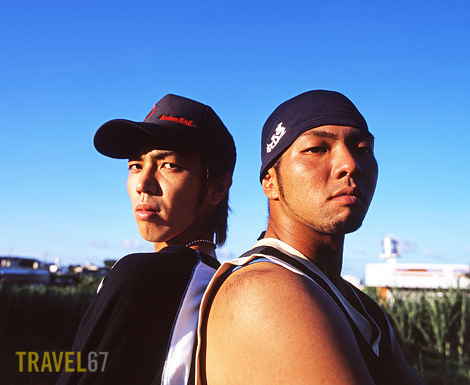 Interview first published in Okinawa Living Magazine, January 2008





 and
and  . I’m a fan of Oprah but for me (and probably a large proportion of the British public) Attenborough is a broadcasting icon beyond compare, so I know which version I’ll order.


 . Just ordered my copy, hopefully Ben will sign it next time we meet. 🙂



 by Cathy Joseph is one of the books in the Professional Photography series by Rotovision.