Latest Posts

Beppu – Matsuyama – Okayama – Kyoto – Matsumoto

Tomorrow I’ll fly up to the Japanese mainland for a two week photo trip. I’m going to visit  Beppu and Matsuyama, then head north via Okayama and Kyoto for a festival near Matsumoto. I return to Okinawa on the 11th.

Blogs will be a bit sporadic once I am travelling, but I’ll hopefully return with some great shots or at least a few amusing anecdotes.

If there are any orders for prints while I am away, I will sort them out on my return. Sorry for any inconvenience this may cause.

Just finished getting all my gear together. Most of the camera equipment goes in a Lowepro DryZone rucksack that is just on the limit of carry-on. Tripod, flash, clothes, wash kit and tea bags go in a second larger bag.

All my bags are packed, I’m ready to go…

My bag of goodies (Camera, lenses, hoods, lightmeter, polarizing filters...)

My bag of goodies (Camera, lenses, hoods, lightmeter, polarizing filters...)

Island Icons – Veterinarian Takashi Nagamine

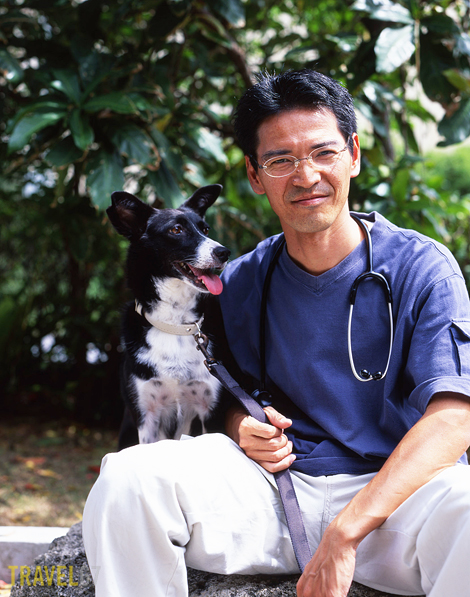
Veterinarian Takashi Nagamine

Veterinarian Takashi Nagamine

Bird Man of Okinawa

Takashi Nagamine is a veterinarian trying to save the Okinawa Rail from extinction.

Takashi Nagamine was born in Gushikawa City, Okinawa. He studied veterinary science at Nihon University, worked as a vet in Saitama prefecture for 11 years, and then returned to his hometown. In 2001, he set up Nagamine Animal Hospital where he treats the everyday ailments of local pets, and also injured wild animals from all over Okinawa.

What types of wild animals does your hospital receive?

“We get 150 to 200 cases a year, and these cover a wide range of species from the Crested Serpent-Eagle to the Okinawa Rail. Some animals have been injured by power lines or cars; others have been poisoned by pesticides.”

What kind of bird is the Okinawa Rail?

“The local name is the Yanbaru-kuina. It’s a small bird, about the size of a man’s hand, or a little larger than a pigeon. It was only discovered in 1981, because it is naturally a very shy bird. It is also the only flightless bird in Japan, which is one of the reasons that it is now endangered.

How many Okinawa Rails are there?

“The latest estimates are that there only 717 of the birds on Okinawa, and as it is endemic to the island, these are the last 717 individuals of this species in the world.”

Okinawa Rail, Yanbaru-kuina, Rallus okinawae

Okinawa Rail, Yanbaru-kuina, Rallus okinawae

Why are there so few of the birds left?

“There are several problems. The loss of habitat due to logging and the division of the remaining land by roads means there is smaller area in which the birds can live. Stray cats kill some birds, but the number one issue we need to deal with are the mongooses. In 1910, 19 mongooses were introduced from India to try to control the poisonous habu snakes. There are now more than 30,000 mongooses on the island. They have no natural predators, and the Okinawa Rail is easy prey. It’s particularly ironic because habu are nocturnal and mongoose are diurnal, so it was a bad idea from the start. ”

If the bird can’t fly and can’t defend itself, isn’t it just natural selection for it to disappear?

“The Okinawan ecosystem has always been in a delicate balance. The natural predators of the Okinawa Rail – the habu and jungle crows – were only able to kill a small number of the birds. Mongooses and domestic cats are foreign species that have upset this balance. If extinction were to occur, is wouldn’t be at all natural.”

What can be done to save the Okinawa Rail?

“In 2005, the Conservation Animal Welfare Trust was formed, and a rescue center was set up in Kunigami Village. At the center we provide injured birds with first aid, transport them to the animal hospital in Gushikawa, and there perform x-rays and surgery. The birds are returned to the rescue center where they can recover, before being released back into the wild. We also have a breeding program, with birds that we were unable to re-release, so far six chicks have hatched. The main problem, however, is still the large numbers of mongooses. The only long term solution is to remove all the mongooses from the area where the Okinawan Rail live. To do this we would need to build a fence across the northern part of the island, and catch every single mongoose north of it. ”

Are you optimistic about the future?

“It’s a very worrying, if not desperate situation, but I’m not willing to give up. I expect, in the near future, the numbers of birds will continue to drop. I do believe, however, we can save the Yanbaru-kuina from extinction. We just have to return Okinawa to its natural ecological balance.”

Okinawa Rail, Yanbaru-kuina, Rallus okinawae

Okinawa Rail, Yanbaru-kuina, Rallus okinawae

(Interview first published in Okinawa Living Magazine  March 2007)

The Conservation & Animal Welfare Trust has a website at http://www.yanbarukuina.jp/

67 lenses on the 645D body

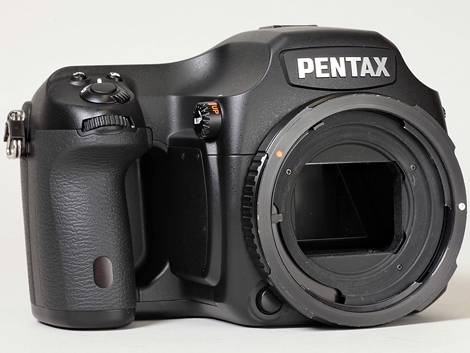
Pentax 645D body

Pentax 645D body

Pentax 645D with 67 to 645 adapter

Pentax 645D with 67 to 645 adapter

Pentax 645D with 67 to 645 adapter and 67 105mm lens

Pentax 645D with 67 to 645 adapter and 67 105mm lens (Images from DC Watch)

This post is to show how lenses from the Pentax 67 cameras will be able to fit on the Pentax 645D body.
Simply attach the 67 to 645 adapter to the camera, and then attach the 67 lens. The adapters were available from B&H Photo in the States but the site says they are no longer available. I got mine from Amazon.co.jp.
Using larger lenses on a smaller camera will mean that your normal lenses become telephotos, and your telephotos become super-telephotos. This particular adapter will allow aperture priority metering (unlike the 67 to 35mm adapter).
It is worth remembering that larger lenses can fit on smaller cameras, but smaller lenses can’t be used on larger cameras. This means that  lenses designed specifically for  cameras with APS sized sensors won’t work on a full frame 35mm camera. When buying lenses consider if you may be switching to full frame 35mm in the future so you  won’t have to replace incompatible equipment.

The Power of Okinawa

The Power of Okinawa

The Power of Okinawa

The Power of Okinawa is a website and a book by my friend John Potter. If you have any interest in Okinawan culture or history please check them out. Music is woven into the very fabric of the Ryukyu Islands. An appreciation of its beauty, or at least an awareness  of its importance, is one of the keys to understanding life on Okinawa.

Your Japan, My Japan: An Englishman’s Perspective

Your Japan, My Japan by Chris Willson

Your Japan, My Japan by Chris Willson

From 2002 to 2004 I had a monthly column in the Asahi Weekly newspaper. In 2006, Nan’un-do published わかる日本と不思議な日本―Your Japan,My Japan:An Englishman’s Perspective a textbook based on my articles combined with various exercises to check comprehension, expand vocabulary and encourage discussion. I am pleased to say that it is now used in several universities and language centers across Japan.

Island Icons – Toy Maker Morito Toyonaga

Morito Toyonaga Paper Toy

Morito Toyonaga Paper Toy

The Toy Maker

Morito Toyonaga creates toys that are miniature works of art. His designs have been exhibited in Tokyo, Yokohama, Osaka, Sendai and Okinawa. He has a love of traditional techniques that would otherwise disappear.

Morito Toyonaga studied sculpture at Okinawa Prefectural Art University and the School of the Museum of Fine Art, Boston, Massachusetts. His interest in sculpture blossomed into a passion for preserving the skills once used to create Okinawan children’s toys. In 2002, he set up his own toy store called Road Works beside Shuri Castle.

What materials do you use to create the toys?

“Some of the figurines are sculpted from wood, while the stuffed toys are fabric filled with cotton balls. The majority of my toys, however, are made from papier-mâché. To create these paper toys, I start by carving a wooden mold. I then layer a mixture of newspaper, brown paper and glue onto the outside of the mold. The wooden core can then be removed, leaving a thin paper skin. To strengthen the toy, I mix powdered sea shells with strong glue and paint this onto the brittle structure. After several layers of the mixture, the paper has a tough outer coating. I then use traditional Japanese powder paint mixed with more glue for a final colored layer. The last things to be done are the intricate details like the manes of horses or hats for people.”

Your elephants are bright blue and your horses are scarlet. What influences your choice of colors?

“For the more traditional designs, I look at paintings and photographs of original toys stored in Okinawan museums. Unfortunately, because the toys are made of paper, not many of them have survived. The photos did show that certain animals were always painted with the same colors – such as bright red horses. With modern designs I can be more flexible, but I still tend to stick with bright primary colors.”

Morito Toyonaga Paper Toy

Morito Toyonaga Paper Toy

Do you get inspiration from other forms of art?

“I have an interest in African tribal art, but my designs are very much based around Okinawa. My modern toys include miniature versions of Japanese police boxes, shîsâ, and Naha City’s monorail. I have even created a small paper toy based on my dog.”

Who usually buys your creations?

“Although these are toys, most of them are not given to children. The traditional designs are very popular with collectors of Okinawan crafts. The more modern pieces are often bought by young women ­ they like the cute designs, and they’re a great souvenir to remember a visit to Okinawa.”

Morito Toyonaga Paper Toy

Morito Toyonaga Paper Toy

(Interview first published Okinawa Living Magazine May 2006)

F.A.Q.’s Which film do you use?

Fujichrome Films

Fujichrome Films

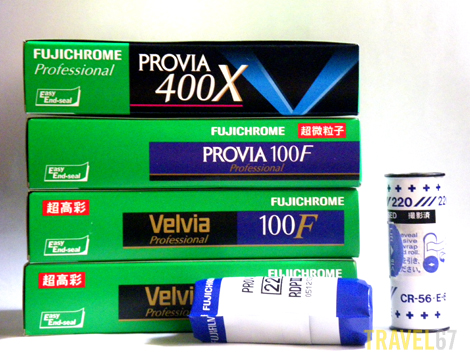
95 % of the time I shoot with 220 rolls of Fujifilm’s Fujichrome Provia 100F. The Pentax 67II gives you 10 images on a 120 roll, and 21 images on a 220 roll. Using 220 means I get one extra shot compared to shooting two rolls of 120, processing is a little cheaper and I spend less time changing film. 220 rolls of Provia aren’t available on Amazon but you can get them from B&H Photo.

I use Provia 100F for it’s ultra-fine grain, and great color reproduction. However, I sometimes use Provia 400X if I have to shoot on an overcast day or for fire festivals. (Provia 400x is not available in 220 so I use 120 rolls)

On my next trip as I’m going to be shooting some landscapes (hopefully with blue skies and cherry blossom) so I have also got a couple of boxes of Velvia 100F for higher color saturation. I wouldn’t use Velvia for portraits, for this Astia 100F would be a better option.

I have only used Kodak products a few times when film was specified by the client. I am sure they’re great, but I’ve just got used to using Fujichrome. Kodak shouldn’t feel too left out however as it’s a Kodak sensor in the Pentax 645D so I will be shooting with both Fuji and Kodak in the future.

Japan Guidebooks

Guidebooks on Japan

Guidebooks on Japan

I have a stack of Japan guidebooks that I have bought or aquired over the last decade. I’ve spent most of the last week preparing for my next trip up to the mainland so I felt I could give a few brief pointers about the differences in books available and which I would recommend. I’m only going to discuss the guidebooks I’ve actually used, but if you’ve read another I’d love to hear your comments. In a later blog I’ll give a list of useful Japan travel websites.

As a quick means of comparison I will mention the amount of information each book has on Matsuyama (one of the places I will be going).

Let’s start with the heavyweights.

Lonely Planet Japan (Pages on Matsuyama: 5 including 2 page city map)  The Rough Guide to Japan (Pages on Matsuyama: 12 including city map and Dogo onsen map.)

The problem I have with the Lonely Planet and the Rough Guide is their places to eat, and places to stay sections seem to be almost arbitrary. It is quite easy to waste a lot of time looking for the recommended option while wandering past numerous equally good restaurants / hostels / hotels. (Also with the rapid turnover of bars and restaurants in Japan, there is a good chance the place you are looking for is closed.) The best thing about the Lonely Planet and the Rough Guide is that you are far more likely to get an honest opinion about certain attractions e.g. Don’t visit …. because ……they have  zoo animals in tiny concrete pens / overpriced rubbish / tourist trap.  The photos in both books tend to be small and limited, and grouped together on separate pages. This lack of integration between text and images makes browsing less interesting but if you’re a  Joe Friday and all you want is the facts (ma’am) then the books have a huge amount of useful information. Of the two I prefer The Rough Guide.

On the other end of the spectrum is the National Geographic Traveler: Japan (3rd Edition) (Pages on Matsuyama 4 including 4 color photographs.) As is to be expected this book has great photography, and is very nicely laid out on the page. It would be a great book to buy when first considering where to travel in Japan. The amount of detail on some places (a single page for Kobe City) means that it would be less useful when traveling in Japan.

Japan Travel Pack (Globetrotter Travel Packs) is a compact pocket sized book I was given. It fits easily in your bag, but the information is limited and now out of date so give this one a miss. (1 page on Matsuyama)

Michelin Travel Guide Japan (Michelin Travel Guides) This was my most recent purchase, having been recommended it by Amazon based on my purchase history (Matsuyama 4 pages inc 2 small photos).  The first thing I checked when it arrived was the section on Okinawa where I read “The booming capital city of Naha is well on its way to becoming a modern metropolis, with its towering skyscrapers and state-of-the-art monorail.” If I was browsing in a bookshop I would have immediately put the book down and moved on.

The final two guidebooks, Japan (Eyewitness Travel Guides) (Matsuyama 1 page) and Insight Guides Japan (Matsuyama 1 page) are a cross between a standard guidebook and an illustrated encyclopedia. They both have a good mix of text, photographs, maps and illustrations. (Some of the images are out of date – e.g. the Tokyo Stock Exchange, but overall they integrate well with the text.) Of the two I prefer the Insight guide and this is not only due to the fact that the Insight guidebook includes four of my photographs.

Summary
Best backpacker guide: The Rough Guide to Japan
Best all-rounder: Insight Guides Japan

F.A.Q.s Which digital SLR should I buy?

I get asked this question quite a lot, and in all honesty, I am not really the right person to answer. The only digital camera I currently use is my little point & shoot W60, while for work I still use my Pentax 67II medium format film camera.

Getting balanced opinions isn’t made easier by the fact that many photographers are extremely proud (or defensive) of the brand they use. The situation is akin to sports teams. Asking a Nikon user about the quality of Canon’s gear, is similar to asking a Liverpool fan about Manchester United. You may get an honest answer, but you are more likely to be told the other brand is trash or that Rooney looks like  Shrek.

Photography magazines are usually better, but you have to raise an eyebrow when the glowing review for a particular camera is followed by a two page paid advertisement for the exact same camera.

I would first take a look at the digital SLR buyers guide at Digital Photography Review. Another good introduction to the variety of digital cameras available is B&H Photo’s buyers guide. As a camera store they are of course hoping you will buy things from them, but they seem more balanced than other sites when comparing the pros and cons of different brands or sensor sizes.

The B&H buyers guides are divided into three sections based on price.

Entry-Level DSLRs

Mid-Range DSLRs

Pro-Level DSLRs

These introductions were released just before Christmas but I don’t think too many new models arrived in the last couple of months. Also they don’t  include every brand, the Sigma DSLRs for example are not discussed.

Hopefully these sites will be able to answer some of your questions without turning everyone into hooligans.