Latest Posts

Winter in Okinawa

Not surprisingly I didn’t have a white Christmas here in Okinawa. Most of my Okinawan friends have never even seen snow.

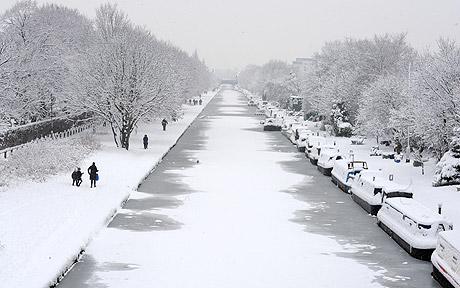
On the other side of the world is my hometown of Sale near Manchester. They are having the coldest, snowiest winter in recent history. My parents just told me that there was a photo of the canal near our house in The Telegraph newspaper. Here it is:

Bridgewater Canal in Sale, Cheshire. Photo by PAUL COUSANS

Bridgewater Canal in Sale, Cheshire. Photo by PAUL COUSANS

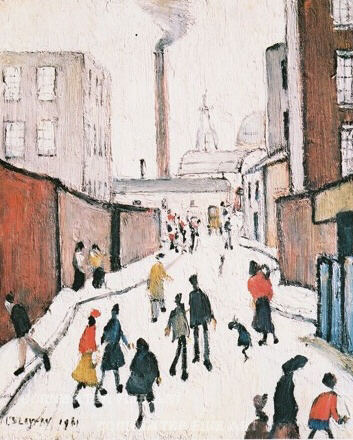
I wanted to put up the photo on the blog, not just because it’s a topical picture of my hometown, but because it’s a simple, elegant, timeless image. The small, almost abstract, people also remind me of the work of another Mancunian, the painter L.S. Lowry.

Streetscene by L.S. Lowry

Streetscene by L.S. Lowry

The Americans by Robert Frank

As I mentioned a few weeks ago I thought it would be interesting to talk about a classic photography book with others. There is a Japanese phrase Ju nin to iro which means 10 people 10 colors i.e. we all perceive the world a slightly different way. I’d be delighted to hear how you see the images in the book.

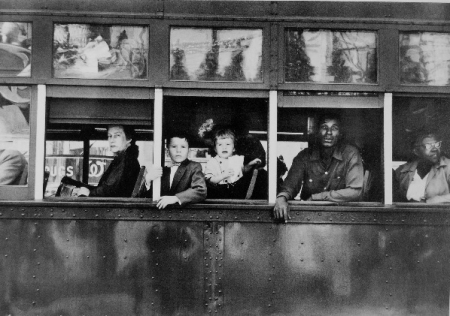
Streetcar by Robert Frank in The Americans

Trolley - New Orleans by Robert Frank in The Americans

For me the cover image of the street car in New Orleans is one of the most powerful. A clear reminder that when Robert Frank made his journey across America in 1955/1956 the divisions between races were very clear. It was December 1st 1955 that Rosa Parks famously refused to give up her seat for a white passenger.

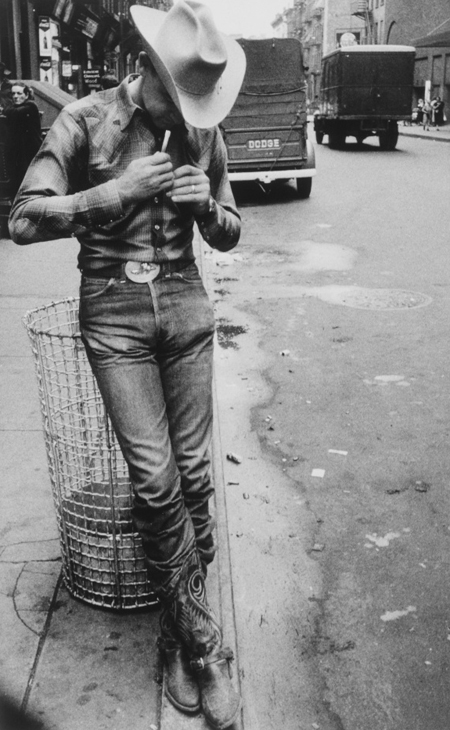
Rodeo - New York City by Robert Frank

Rodeo - New York City by Robert Frank

The image of the rodeo rider is another of my favorites, what strikes me is just how wiry and sinuous he appears. For me it seems to speak of a time when heroes, and perhaps America in general, were leaner.

So there you go, anyone else want to share their thoughts?

Island Icons – Motorcycle Police

Ryukyu Riders

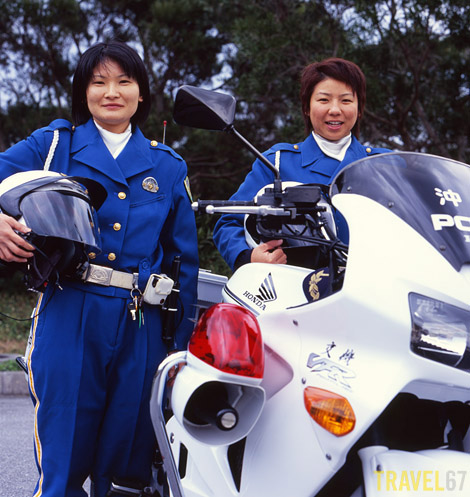
Katsue Oshiro and Matsuri Kuniyoshi are Okinawa’s two female police motorcyclists.

Okinawan Motorcycle Police

Okinawan Motorcycle Police

Why did you become motorcycle police officers?

K.O.  “I joined the police force because I wanted a career that would let me help others. When I got to choose my specialty, I decided to become a motorcycle officer, even though I’d never ridden a bike before. It looked like such a cool thing to do as a career.”

M.K. “I rode a motorbike when I was in high school, and even got caught by the police a couple of times. I decided that I wanted to ride bikes for a living, and joined the police with the one goal of becoming a motorcycle police officer.”

What special training do police riders receive?

“The police bikes we use are 750cc Honda VFR’s. Once you’ve added sirens, lights, speakers and panniers, they become quite large and heavy. We do a lot of training to improve our maneuverability on the bikes. We have to be able to turn them around in tight spaces and weave through traffic. We’re also trained to ride fast; on the expressway we sometimes get up to 140 kilometers an hour to catch speeding vehicles.”

Okinawan Motorcycle Police

Okinawan Motorcycle Police

When you start the sirens and flashing lights, do some vehicles refuse to pull over?

“It doesn’t happen very often, but if they don’t stop we follow them until they either give up or lose control of the vehicle.”

What are the main problems that you have to deal with?

“Motorists in Okinawa are getting a lot better about using their seat belts, but now we have a big problem with people using their cellular phones while they are driving. Motorbike riders need to wear helmets that are fitted properly, and chinstraps must be fastened. We also have to deal with people who have made illegal modifications to their car by adding extra-wide tires or exhaust systems that are not designed for their vehicle.

In general, people need to relax and drive more safely. If everyone sticks to the rules then we’ll have fewer accidents on Okinawa.”

Why are roads on Okinawa so slippery when wet?

Older Okinawan roads, especially those in the northern part of the island, had coral rock mixed into the asphalt. These roads can get very slippery. Newer roads in Okinawa are built with higher quality asphalt so they give more grip. It’s still common sense, however, to slow down when the road is wet.

Have you ever seen the TV show CHiPs that’s about the Californian Highway Patrol motorcycle police?

We’ve never seen it, but our boss, Taba-san, is a big fan of Francis “Ponch” Poncherello.

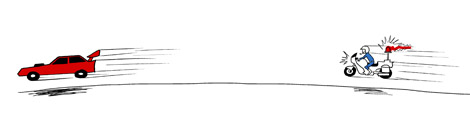
shirobai chase

"Shirobai Chase" by Simon http://www.tensimon.com


(Interview first published in Okinawa Living Magazine April 2006)

On the bookshelf: A Shadow Falls

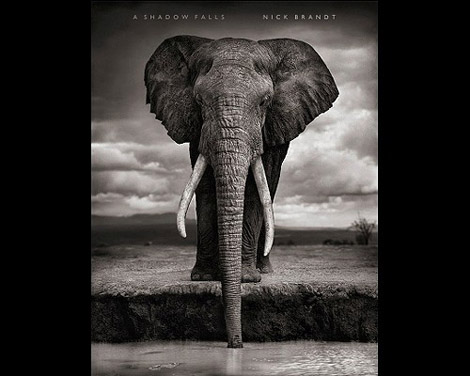
A Shadow Falls by Nick Brandt Cover

A Shadow Falls by Nick Brandt

A Shadow Falls is a impressive book. Impressive in its physical size (nearly 16 x 13 inches). Impressive in its vision (vast African savanas). Impressive in its goals (to memorialize the vanishing natural grandeur of East Africa).

The images are stunning. The tritone plates have a mesmerizing quality to them. Although the shots of elephants are perhaps the most famous examples of his work I found the images of the wildebeest migration the most powerful.

Enjoy.

A Shadow Falls by Nick Brandt

A Shadow Falls by Nick Brandt

The Fall

The Fall is a fascinating movie, particularly for those with an interest in photography or film.

The Fall

The director, Tarsem, has a background in commercials and music videos, which may have lead to his strong visual style. In fact, the theme of the movie appears to be about  the power of images and storytelling.  The movie begins with a stunning steam train sequence in black and white. It then splits into two clear parts, the muted reality of life in a hospital and the saturated surealism of the storyteller’s tale.

There is an interesting scene in the hospital where light streams through a keyhole projecting  the inverted silhouette of a horse on the wall. On one level the director may have just enjoyed demonstrating a naturally occurring  camera obscura, or it might have been to lead the viewer into thoughts about our perceptions of reality. The highlight of the hospital scenes is the 8 year old Catinca Untaru who is perhaps the best child actor I have seen.

The images from the story are stunning. Filmed over 4 years in 18 different countries, I got the impression that the director had gone through his collection of National Geographic magazines, and created a shot list of impressive locations to shoot a movie. Another influence of the director is even clearer, the movie Baraka that I discussed in a earlier post here. The scenes of Balinese chanting and Sufi whirling in The Fall appeared to be copied from (pay homage to) similar scenes in Baraka.

The movie has its flaws, but is well worth watching.

Enjoy.

Island Icon – Fashion Designer Kanna Yamauchi

A Sense of Style

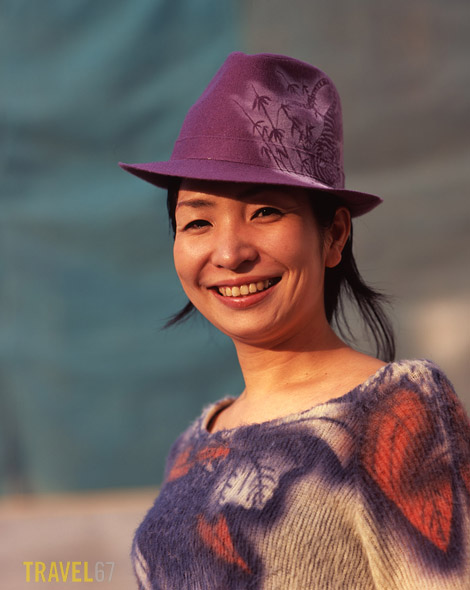
It was during a visit to Paris when Kanna Yamauchi originally decided she would become a fashion designer. Some may say it was inevitable and that a sense of style was in her blood – her mother has been one of Okinawa’s top designers for more than thirty years. Upon her return to Okinawa, Kanna quit her job as a tour guide, enrolled in fashion art college, and hasn’t looked back. Now age 32, Kanna has received several design awards, gained prefectural sponsorship, and set up her own company, Yokang.

Okinawan Fashion Designer Kanna Yamauchi

Okinawan Fashion Designer Kanna Yamauchi

Where do the ideas for your designs come from?

“I grew up in Yanaburu; it’s very rural so you’re always surrounded by nature. The mountains, trees, ocean and flowers of Okinawa have all influenced the patterns in my clothes. When designing a new article, I think about the structure of the dress or shirt, and then work out which material and pattern will best fit that particular piece.

While studying at college, I spent my afternoons helping my mother make clothes and iron fabric. I guess it influenced me, but my own designs tend to be more functional than my mother’s and aimed at a younger market.

I also appreciate the work of some foreign designers like John Galliano. He uses materials and colors that are similar to those found in Okinawan clothing. Before he was famous, Galliano spent a lot of time ironing clothes for other designers, so I feel we are traveling similar paths.

Who buys your clothes?

Above all, it tends to be people with a real love of Okinawa. They like to have uniquely Okinawan designs, and want to support smaller businesses, like ours, that produce such items. We distribute to about forty stores at the moment, but we are now making contacts with boutiques in other countries. We’ll soon be selling Yokang designs in London and Copenhagen. We’re also starting to develop a following with celebrities; my clothes have been worn by Okinawan models Yamada Yu and Yukie Nakama, and even some Hong Kong movie stars.

What are your plans for the future?

As each item is handmade, I never expect the company to become huge. I think making clothes is at its most satisfying when you are creating tailor-made pieces. I like to be able to spend time meeting and getting to know the client. I love to discuss ideas then create the exact thing they want, whether it is an outfit for a wedding or something more casual.

At the moment ten percent of our designs use traditional bingata printing methods and ninety percent is done using stencils and an airbrush. Using an airbrush is faster and enables more people to afford traditional Ryukyu designs. In the future, however, I hope to spend more time printing with the traditional techniques.
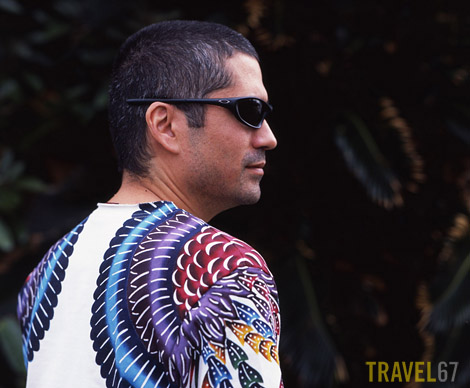
Bingata print t-shirt by Okinawan Fashion Designer Kanna Yamauchi

Bingata print t-shirt by Okinawan Fashion Designer Kanna Yamauchi

If you could design an outfit for any person who would it be?

I would love to create clothes for Madonna. She’s been a style icon for decades, from her outrageous Jean-Paul Gaultier brassieres through to cowboy chic. Once when I was an elementary student, I went to school dressed like her. I was sent straight home by the principal. I guess not everyone shares my love of fashion.

(Interview first published in Okinawa Living Magazine March 2006)
Santa Scuba

Hiroshi and I went for a dive at Sunabe seawall today to spread some Christmas joy to all the underwater creatures that might otherwise miss out. Not many people know this but  SCUBA is actually an acronym from

Santa Cavorts Underwater By Aqualung

Merry Christmas

Santa Dive 2009