Funnily enough, the Guardian newspaper’s list of interesting videos on the internet this week contained a video filmed at my local aquarium – the giant tank is right next to where the turtles were released (see previous blog.)
Enjoy…
Funnily enough, the Guardian newspaper’s list of interesting videos on the internet this week contained a video filmed at my local aquarium – the giant tank is right next to where the turtles were released (see previous blog.)
Enjoy…
The day after I got back from Yakushima, I was up at Emerald Beach to photograph the release of captive bred turtles into the ocean. Here are a selection of images from the event.
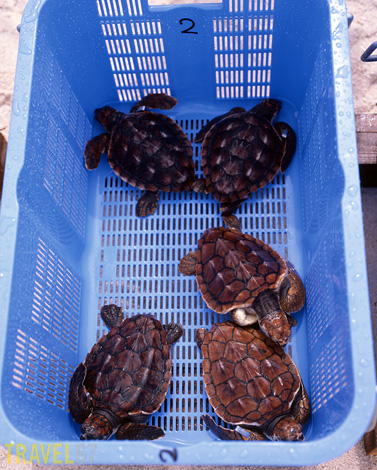
Crates of turtles are readied on the beach.
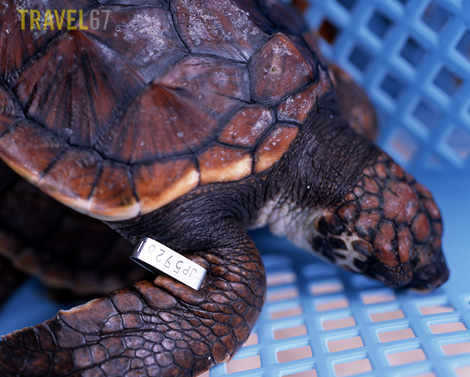
Each turtle gets its own identity tag
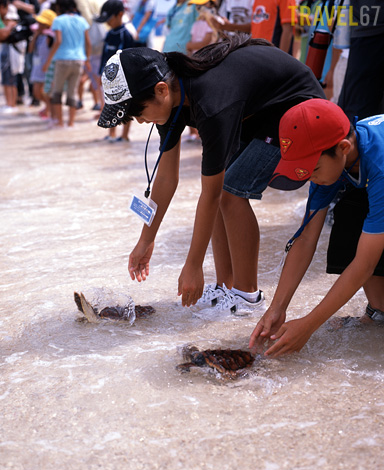
Local children get to release the turtles into the ocean.
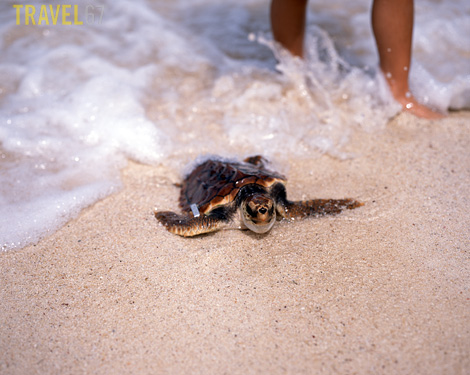
Some turtles are not quite sure which way to go...
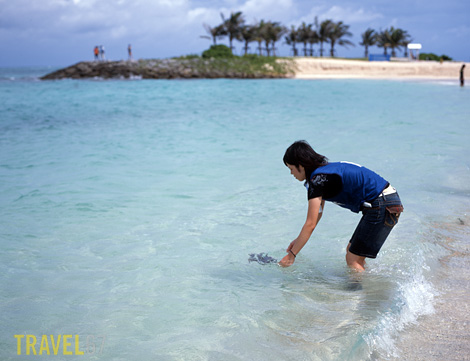
but staff are on hand to guide them in the right direction.
I should have mentioned this before the event, but today was the 10,000 person Eisa dance festival on Kokusai Street in Naha.
Took the big camera and shot a roll and a half. Manual focus and medium format film is not ideal for fast moving dances – there is a good chance that many if not all the shots will be out of focus or have an arm blocking the face. Will have to wait and see if there are any keepers when I get the film back.
Until then here’s one from a couple of years ago.
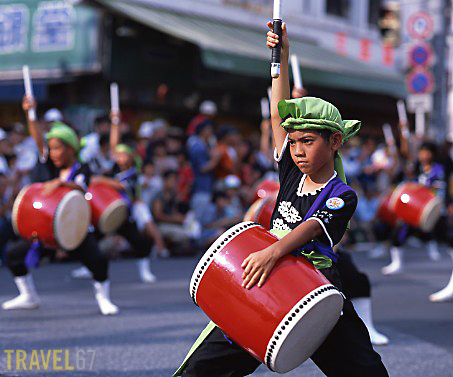
10,000 Person Eisa Dance on Kokusai Street, Naha, Japan

Marley & Me by John Grogan
Just finished reading Marley & Me
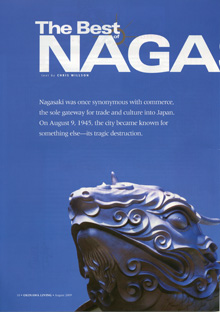
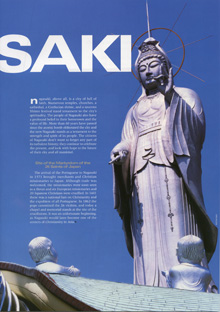
My feature “The Best of Nagasaki” is in the August edition of Okinawa Living magazine.
You can read the entire text from the article and check out more photographs of Nagasaki here: The Best of Nagasaki.
On the afternoon of the eclipse I got a lift over to the other side of the island to see the Ohko-no-taki waterfall. Took the big camera and tripod, and before it started to rain I got several shots. This image was the best as it has some foreground interest (man looking up at waterfall) and even a tiny man with a tripod near the falls to show a sense of scale.
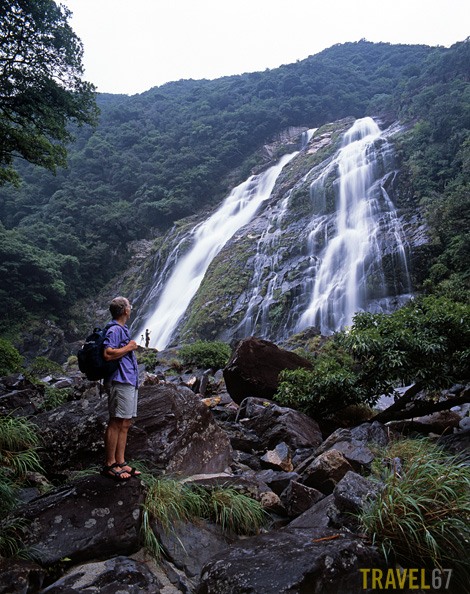
Ohko-no-taki Waterfall, Yakushima, Japan
The following day before heading back to the ferry I went to the Shiratani Unsuikyo Ravine. A long steep windy road takes you from the town of Miyanoura up into the misty mountains. A 424 hectare area of ancient Yaku-sugi cedar forest has been designated a “forest recreation area”. Visitors who don’t have the time or stamina to trek for hours or days into the centre of the island can follow a 90 minute loop on well kept trails, past waterfalls and through verdant forest to a couple of the ancient cedars the island is famed for.
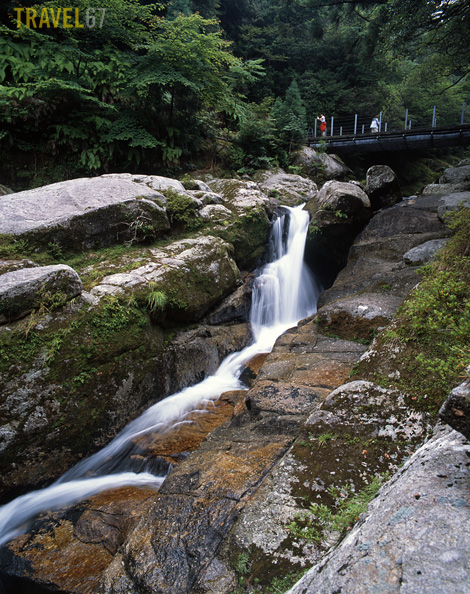
Small waterfall at Shiratani Unuikyo natural recreation forest, Yakushima
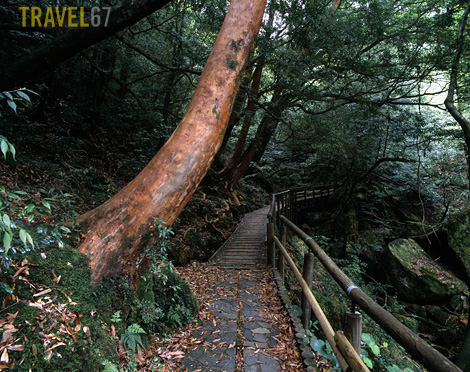
Following the trail at the Shitatani Unsuikyo, Yakushima
One unexpected photo opportunity on this trip was when I stopped by the Yudomari-onsen hot spring. Hot spring bathing is an important part of Japanese culture, but is something I haven’t managed to photograph over the past decade. I asked the guys in the onsen if I could take a picture and they said no problem. I took a few shots and am very pleased with this one. As is often the case, my favorite photo from the trip was one I had never intended to take.
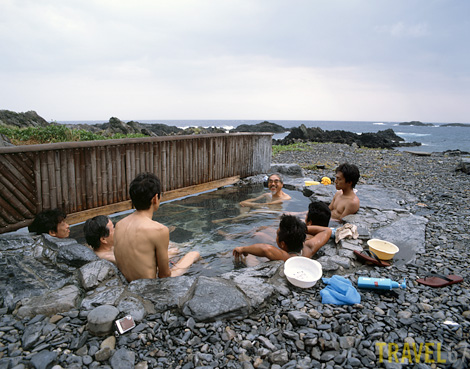
Yudomari-onsen Hot Spring, Yakushima, Japan
Overall, my time on Yakushima was really interesting. Of course, the weather wasn’t helpful, but I’m looking forward to going back.
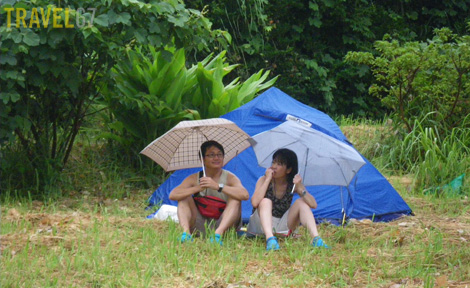
Waking to the sound of pouring rain is not a good thing if you are hoping to see an eclipse. Other campers were already out of their tents patiently waiting for a miraculous parting of the clouds.
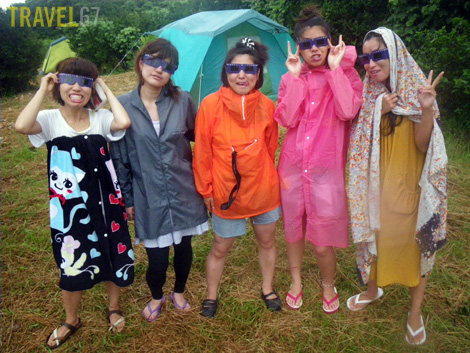
Some had their eclipse glasses at the ready to protect themselves from the blazing rays of the sun.
Unfortunately the miraculous uncloaking of the sun never came. At 10.56 we all stared up at a continuous mass of clouds.
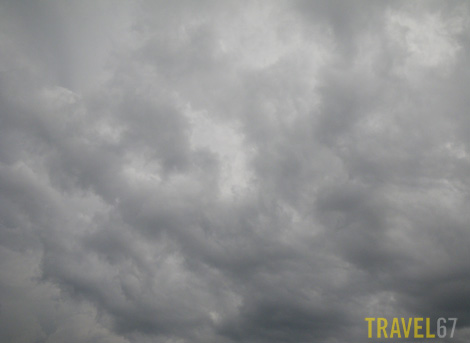
July 22 2009 Total Eclipse as seen from Yakushima, Japan
Although we couldn’t see the sun, the effects of the eclipse were still very much noticeable. From about 10.56 to 11.00 it was as dark as night, not just a little darker, but as if someone had turned off the light (or blocked it with a large moonlike object). At 11.00 the light returned and the longest eclipse of the 21st century had passed.
It was disappointing, but everyone at the campsite was surprisingly upbeat. Only minutes had gone by before people were talking about the upcoming total eclipses at Easter Island in 2010, North Australia in 2012, and North America in 2017.
I still had 28 hours left on the island, and with the eclipse over I could concentrate all my attention on discovering more about Yakushima. It’s not everyday you get to explore a UNESCO World Heritage Site and I even got to take some pictures…
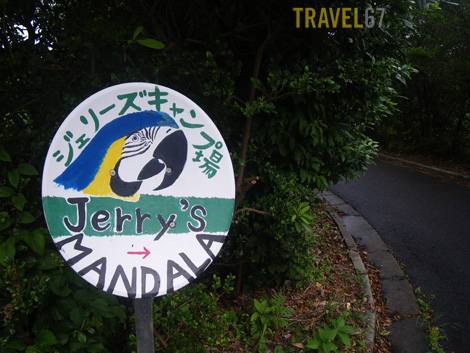
All accommodation on Yakushima for the week of the eclipse was completely full months if not years before I tried to book. Luckily I managed to find some space at Jerry’s Campsite – Mandala on the southern coast beside the village of Onoaida. Camping in the summer heat and humidity is not really a great idea, (the campsite is normally closed in the summer months during which the owner lives in Hokkaido) but luckily we were lent a large well-ventilated tent that made things more comfortable.
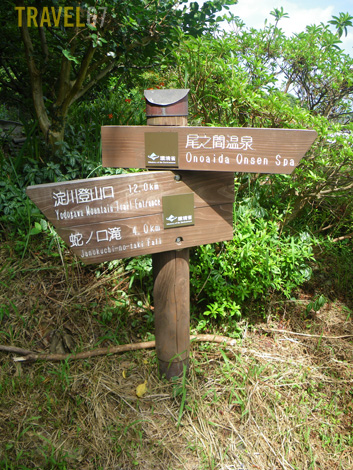
On the 21st, the weather was cloudy with occasional rain. Left the big camera and took the waterproof point and shoot on the hike up to Janokuchi-taki (Janokuchi waterfall). The trail started at the Onoaida-onsen (hot spring) and climbed up the mountainside for 4 kilometers.
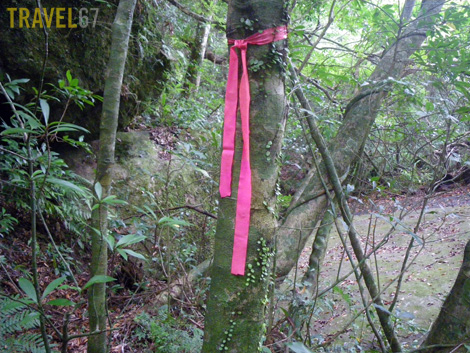
 Once in the forest the trail was marked by bits of pink ribbon tied to trees. I am not sure if this is also done on the longer hikes into the center of the island, but it made it easy to follow the trail.
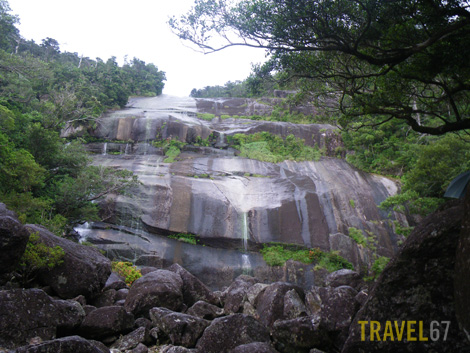
Reached the waterfall after around 90 minutes of steady walking. The falls were pretty with a large pool at the base. Lush green vegetation was growing everywhere – a result of the damp climate. As if to prove a point it started to rain heavily. Got a couple of quick photos, the second of which I’m quite pleased with.
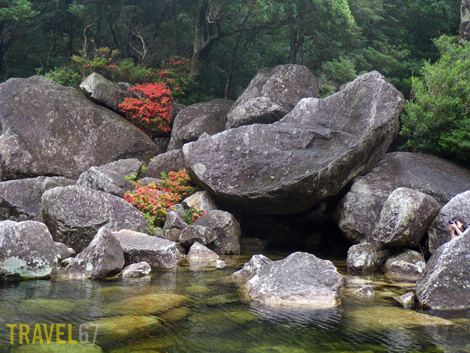
Hiked back down the trail into Onoaida, and then to the campsite. The mountain tops were shrouded in mist and solid cloud blanketed the sky. Not a good sign for the 22nd but still hoping things would clear.
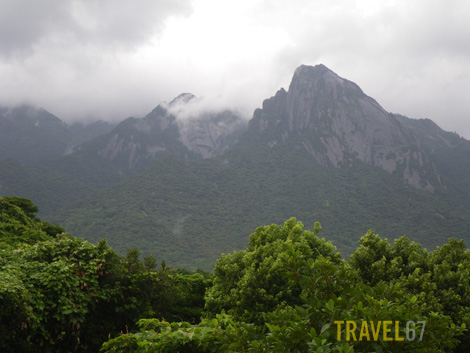
I’m now back in Okinawa.
Had an interesting time on Yakushima, and although not everything went as I’d hoped, it turned out to be a very useful trip in terms of planning future visits to both Kagoshima and Yakushima.
Learned many useful things…
1) Kagoshima Airport is not close to Kagoshima City. It’s 45-60 minutes by expressway bus from the airport to the city center and then a 10 minute taxi ride to the ferry port.
2) You can get to Yakushima by plane, slow ferry, or high-speed Toppy ferry. Plane is a great idea if you are in a hurry and already flying in to Kagoshima Airport from elsewhere in Japan.
3) I had booked tickets on the Toppy. Usually it is around 11,000 Yen for a return ticket from Kagoshima to Yakushima. As this was a couple of days before the eclipse I had to pre-book the tickets months in advance and they cost around 22,000 Yen return.
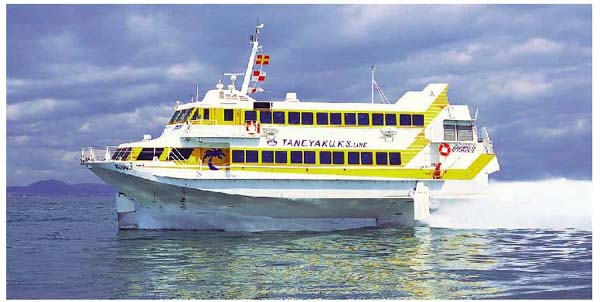
The Toppy ferry is fantastic. It is a jet-foil which means it can go up to 45 knots (83 kilometers an hour) and is not affected as much by waves compared with conventional ferries. Fantastic piece of engineering. Managed to make both trips without throwing up. Anyone who has been boat diving with me will know this is nothing short of miraculous.
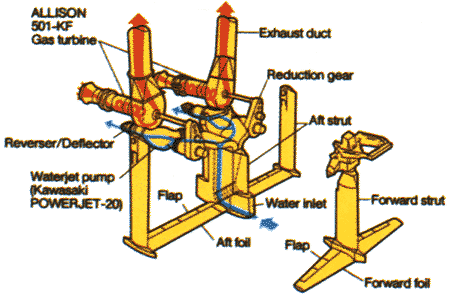
Jetfoil Propulsion System
Arrived in Yakushima. Weather cloudy, couldn’t see the sun. Not a good sign.
On the 22nd of July there will be a total solar eclipse visible from a narrow band across the earth.
One place in the narrow band of totality is Yakushima, so tomorrow I’m heading to the island to hopefully witness and photograph the phenomenon.
Flights are booked to Kagoshima, ferry is booked to Yakushima, and the camp site is booked in Onoaida.
The best information I found on photographing eclipses was at Mr. Eclipse.com
I intend to set up the camera on a tripod use 100 speed film and shoot various shots on f8 between 1/30 and 1/250 I am not taking my huge telephoto lens but will instead take my 165, 105, and 45. The lens I use will depend on the location I shoot from, which I am expecting will be the campsite I’m staying at.
The big question is what the will weather do? Yakushima is famous for rain, so even more than normal I’m hoping for clear skies.
Fingers crossed.
 TRAVEL 67 : Chris Willson Photography