It was announced on the news today that David Carradine is dead. I am a little too young to have grown up watching the TV show Kung Fu, but I am sure that for many this will be a sad day. In recent years Carradine returned to fame as Bill in Tarantino’s Kill Bill movies.
For those who haven’t seen the movies, in one of the scenes in Kill Bill Part 1, Uma Thurman travels to Okinawa to get a samurai sword made by sword smith Hattori Hanzo.
A couple of years ago I did an interview with the only real sword smith in Okinawa – Kanehama Kiyochika. I even got to ask him about Kill Bill…

Okinawan Sword smith Kanehama Kiyochika
From the age of 22 to 31, Kiyochika Kanehama trained as an apprentice swordsmith. At a forge in the Japanese Alps, his sensei Kiyomune Miyairi taught him how to create a blade from lumps of iron ore. For years, he studied the process of folding and honing metal to produce edges so sharp that they are considered a thing of legend. In 1983, he returned to Okinawa to open his own forge. There, he continues to practice his ancient art creating blades fit for a samurai.
What are the different types of samurai swords?
“There are three main types. The first is the tanto, or dagger. It has a short blade less than 30 centimeters long. The second type is the wakizashi; the sword has a medium length blade between 30 to 60 centimeters long. The wakizashi was used for fighting in confined situations such as inside a house when a longer sword would be too cumbersome. Finally, there were the katana and tachi. These were the full length swords the samurai used with deadly efficiency.”
What makes samurai swords so special?
“Small lumps of iron ore are heated to between 1400˚C and 1,500˚C using pine charcoal until the metal fuses. This molten mass is stretched, folded, and beaten. The process is repeated until the steel is made up of thousands of layers. The secret, however, is not just in the number of layers, but also the different types of steel that make up the blade. High carbon steel is very hard and can be honed to a sharp edge. It is also very brittle, and a sword made entirely of high carbon steel could shatter. Low carbon steel is softer and more flexible. A samurai sword, therefore, is constructed with a core of low carbon steel surrounded by layers of high carbon steel. It produces a blade that is both strong and razor sharp.”
How do you know who made a blade?
“The name of the swordsmith, along with the town or region he is from, is etched into the steel on the tang of the blade hidden beneath the hilt. If you take any of my swords apart, you will see my name there.”
How do your swords differ from those on the mainland?
“The scabbards of the blades are made using Ryukyu lacquerware techniques. Many of the sheaths also have Okinawan emblems such as the dragon on them, or they include local materials in their construction like shark skin for the hilt.”
How much does a sword cost?
“A tanto dagger with a lacquerware sheath is around ¥550,000 (US$5500). A katana with plain wooden scabbard would be upwards of ¥1,300,000 (US$13,000). If money is no object, the hilt, handguard and scabbard can be adorned with gold and precious stones.”
In the movie Kill Bill, Uma Thurman travels to Okinawa, so that she can get a katana made by the swordsmith Hattori Hanzo. There is even a little shîsâ on the blade he makes for her.
“I’m afraid there’s only one swordsmith on Okinawa and that’s me. As for the movie, well to be honest, I haven’t even seen it.”

Etched into the tang of the blade is name and town of the sword smith
(Interview first published in Okinawa Living Magazine January 2006)



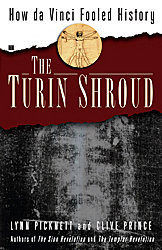
 was lent to me on my last photo trip so I had something to read on the train. The book is the research about how Picknett and Prince came to the conclusion that the Turin Shroud was not just a forgery ( as previously shown by carbon dating ) but that it was a primitive photograph created by Leonardo da Vinci. Most of the book is not particularly well written and was a bit of a struggle to get through. They go into detail about the history of the shroud, and the various different theories regarding its creation. The book did become interesting in the penultimate chapter when they describe how they tried to create a similar shroud image using techniques da Vinci (in their opinion a skilled chemist, artist, physician, physicist, and heretic) may have used.