Latest Posts

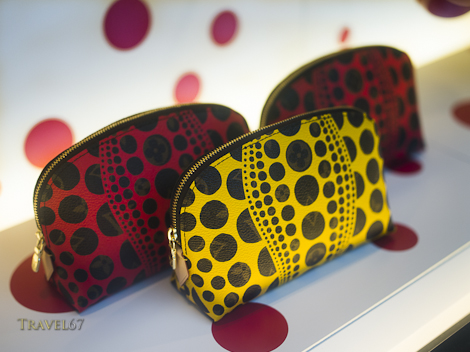
Yayoi Kusama designs for Louis Vuitton

Yayoi Kusama designs for Louis Vuitton, Tokyo

A couple of years back, luxury Italian clothing / accessory brand Louis Vuitton teamed up with Japanese  artist Takashi Murakami to bring some color and youthfulness to their line. This year Louis Vuitton are once again emboldening their somewhat staid image with Japanese artist Yayoi Kusama.

Why is this big news? Because in urban Japan, Louis Vuitton bags seem to be almost standard equipment for hundreds of thousands of office ladies. Once they have graduated college and gained a company job, the acquisition of a LV emblazoned bag appears almost mandatory. Perhaps these brightly colored special editions are for the ladies who want to show their individuality and break free from the ubiquitous brown on brown bags carried by the huddled masses. Of course, there are the  brave few who will push the boundaries of convention even further, and not buy one at all.

Yayoi Kusama designs for Louis Vuitton, Tokyo

HD PENTAX-D FA645 MACRO 90mmF2.8ED AW S

Sasaki-san watching carefully in case I try to run off with the new 90mm super lens.

While I was at the Pentax Forum for my exhibition I got to have a brief play with the new 90mm lens that will be released at the end of this year. It’s a large, heavy lens but doesn’t unbalance the similarly gargantuan 645D body. What I realized was that with its image stabilizer it would be the perfect lens for the kind of travel portraits I love to do. I have therefore made the decision to order one of the 90mm lenses.

Before the new lens arrives it’s time to create some space in the dry cabinet and make the bank balance a little healthier. For this reason I’ll be selling a few of the lenses I’ve been using infrequently over the last couple of years. They’ll go in Ebay in December, but if Pentaxians want to make offers before then just send me a message.

PENTAX SMC M*67 400mm F4ED[IF] with 1.4 converter (grey) and drop in polarizing filter

PENTAX SMC 67 165mm F2.8

SMC Pentax 67 100mm F4 Macro inc. 1:1 converter.

Pentax 67 Auto extension tubes

Pentax 67 angle finder

HD PENTAX-D FA645 MACRO 90mmF2.8ED AW S

HD PENTAX-D FA645 MACRO 90mmF2.8ED AW S

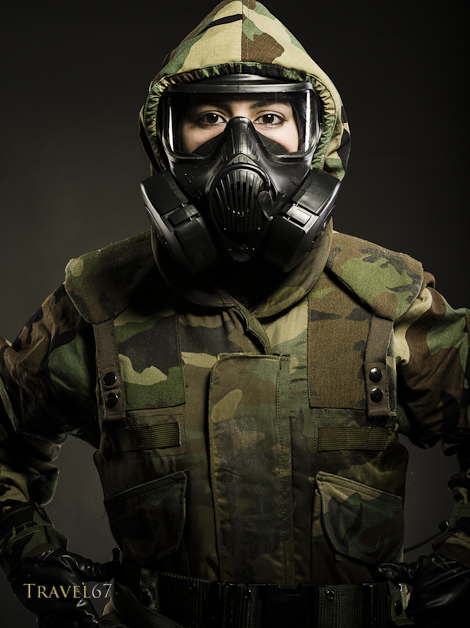
Testing for Toxins

Testing for Toxins

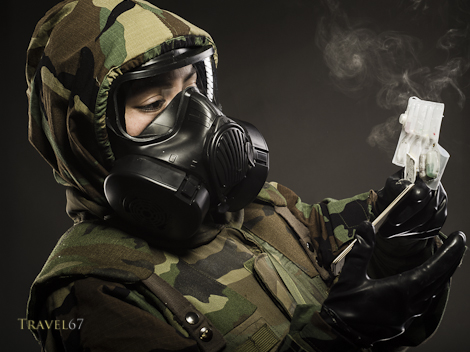
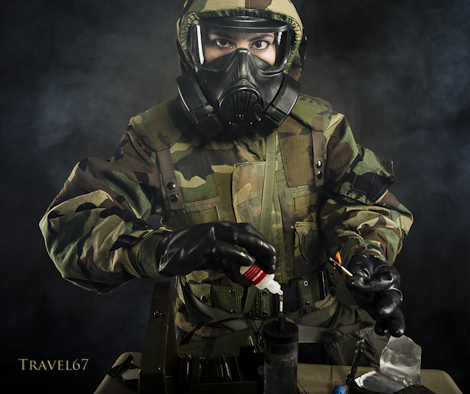
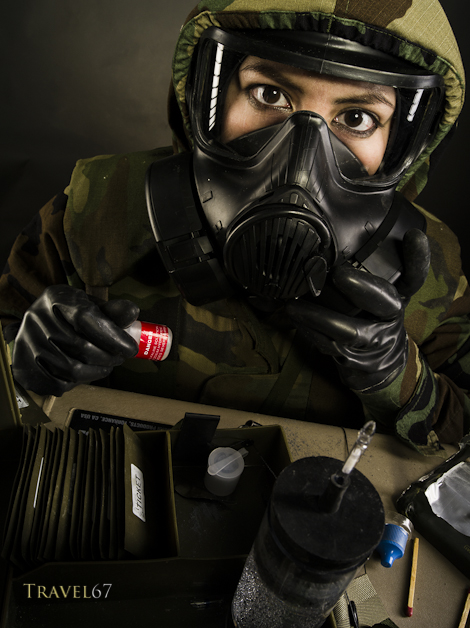
Testing to see what dangerous chemicals are present in my workplace.

Testing for Toxins

It turns out that my studio is free of anything lethal, which is a good thing, because while Jovi was wearing full MOPP gear, I was chilling out in a t-shirt and shorts.

Testing for Toxins

On a more serious note, particularly just after Remberance Day in the U.K. and Veteran’s Day in the U.S., for some people the threat of sickness or death from chemical and biological weapons is a very real concern. Hopefully, one day, humanity will have progressed and the danger of these horrific armaments will no longer exist. To those who, for the protection of others, face this threat on a daily basis, thank you.

Testing for Toxins

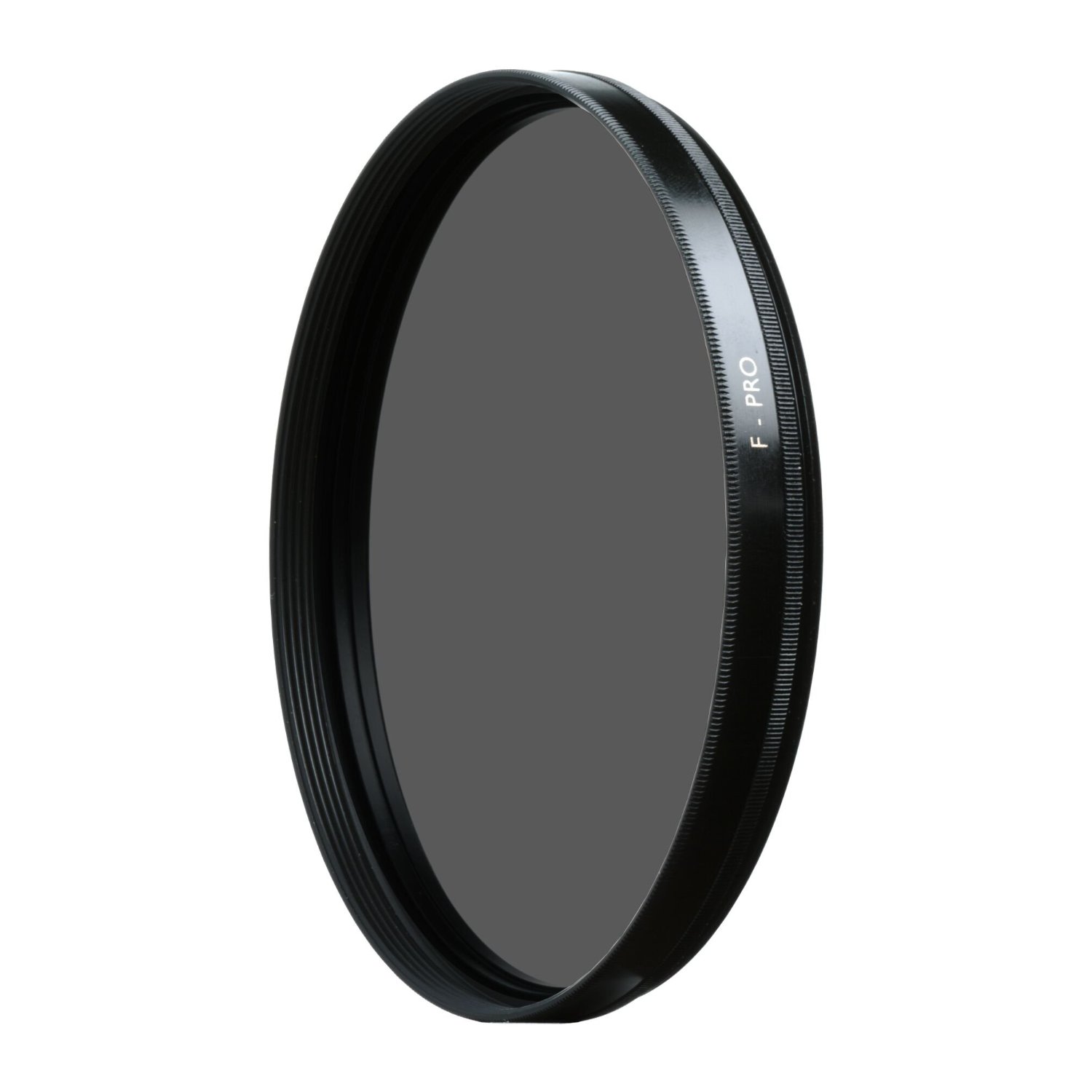
A Photographer’s Christmas Wish List – Polarizers

Polarizing Filters are a great accessory for photographers. Some may argue that UV filters are a waste of money, and that colored filters are obsolete in the age of Photoshop, but polarized filters are still a fantastic tool particularly for landscape photography.

A polarizing filter will give you saturated blue skies and bright white clouds, verdant vegetation, and  remove reflections from water.

Polarizer Punch

Before you rush out and buy one for you or your loved one, here are some things you need to be aware of:

Buy the same diameter filter as the lens you’ll be using the filter on. To find out the lens diameter check on the back of the lens hood, or on the lens itself. It’s often written with a diameter symbol so it would look like this  ⌀72 for a 72mm diameter lens.

“Wide” versions of polarizers are thinner (and more expensive) so they don’t result in vignetting of the image when placed on wide angle lenses.

Buy a circular not a linear polarizer. Linear polarizers can lead to autofocus problems with modern SLR cameras.

The quality of glass in the polarizer will have an effect on image quality and more significantly on price. The benefits of having a very expensive and sharp lens may be lost by using a cheap filter, but likewise you’re probably not going to notice the benefits of a 400 dollar polarizer compared to a cheaper one unless every other link in the image quality chain is solid.

I have a selection of polarizers I bought a decade ago, and although cameras and lenses have changed they are all still good to go. I always put them in my camera bag when I’m going on trips, a useful and sometime indispensable photographer’s tool.

I usually get my photographic gear from B&H Photo in the U.S. , Amazon.com , Amazon.co.uk , Amazon.co.jp or Yodobashi Camera but you should also be able to pick up polarizers from your local camera store.

Fugu Delivery Service, Shinjuku, Tokyo

Fugu Delivery Service, Shinjuku, Tokyo

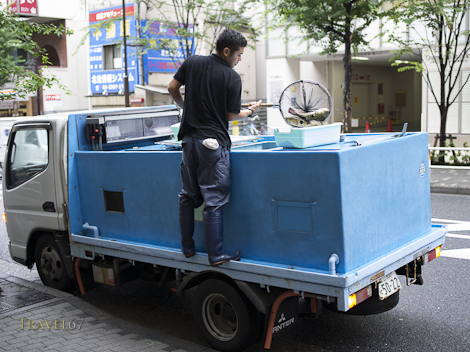
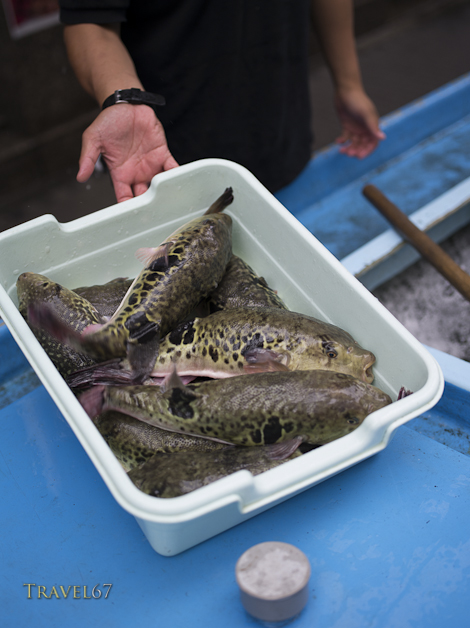
While in Shinjuku for my exhibition, I came across this unique delivery truck. It was parked outside a restaurant and the driver was restocking the restaurant’s aquarium with fish.

Fugu Delivery Service, Shinjuku, Tokyo

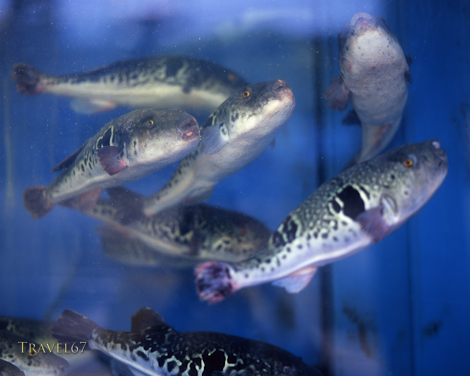
Aquarium is probably the wrong term, as it’s more like a holding pen before the fish meet their maker. They swim around in the glass tank, unaware that a few hours later they will be sliced up for Tokyo’s  gourmands.

Fugu Delivery Service, Shinjuku, Tokyo

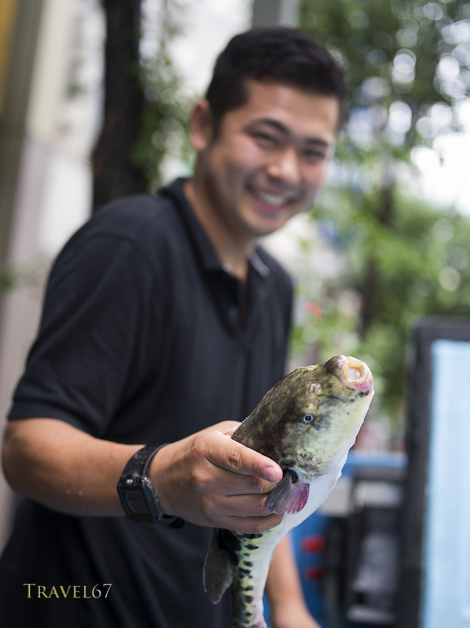
However, even after their own demise, these particular fish can get their revenge. The fugu, or pufferfish, contains tetrodotoxin that if ingested by a diner will paralyze muscles leading to asphyxiation and death. Prepare the fish incorrectly and the chef can inadvertently kill of his clientele.

Fugu Delivery Service, Shinjuku, Tokyo

Unsurprisingly, fugu chefs have to be specially trained and have gained a fugu license before they can serve the fish to the public. On a previous trip I photographed a chef with his license.

Fugu Delivery Service, Shinjuku, Tokyo

Fugu Delivery Service, Shinjuku, Tokyo

For 10,000 yen, you can try 12 different dishes made with fugu. Or, if like me, you prefer to see fish swimming in the sea than dead on your plate, you can watch Homer give fugu a try in One Fish, Two Fish, Blowfish, Blue Fish.

Fugu Delivery Service, Shinjuku, Tokyo

Dalai Lama visits Okinawa

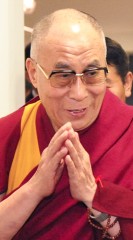
Dalai Lama in Okinawa Image property of Ryukyu Shimpo

Yesterday I went down to Naha to cover the Dalai Lama’s second visit to Okinawa. Unfortunately press access for photography had to be arranged before I was aware the event was taking place, but I was able to listen to the lecture he gave at the Budokan.

The Dalai Lama’s speech included some of the following thoughts:

Respect differences to find peaceful resolution.

Distrust, hatred, fear and jealousy disturb our peace of mind.

Compassion is not just for the benefit of others, it calms your own mind.

A self centered attitude, or extreme self centered arrogance, leads to stress and heart attacks.

Conflict is a result of a lack of conviction in the basic human values of love and respect.

Respect all religions and the non-religious.

Group culture must take care of others, we must be wise selfish, not foolish selfish.

Media coverage appeared to be exclusive to RBC (a local television station) and the Ryukyu Shimpo newspaper who was one of the co-organizers. Surprisingly, even the photographers who had access were all shooting with long lenses from the sides or back of the hall. This means that if I’d been allowed to shoot, the images would have been mediocre at best. The only press image I’ve seen was the snapshot shown above in the Ryukyu Shimpo.  I would have loved 15 seconds of his time, to get some proximity, a clean background, eye contact and decent lighting. The fact that nobody at the Ryukyu Shimpo did  this is either a missed opportunity or the Dalai Lama’s team have very strict control over images.

One real niggle for me was that the organizers had a live video feed projected on a large screen above the stage. A great idea in theory, but there were a couple of small issues. The first was that the cameraman didn’t zoom in on the Dalai Lama. This meant that the view on the screen above the stage was similar to what you could see with your own eyes: a small man, far away. The second problem was the cameraman was making a rookie mistake with exposure. In fact, anyone who has attended my Photography Fundamentals workshop could have put them straight. The camera appeared to be set to auto exposure, the bright pale yellow background misled the meter in the camera resulting in the foreground subject being too dark. Rather than a well lit shot of the Dalai Lama’s smiling face, most of the audience were looking at a shady robed figure.

Karate Masters Portrait Project – Behind the Scenes

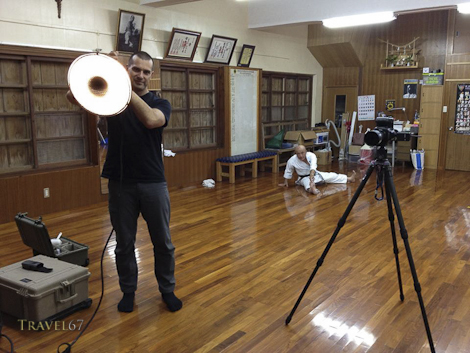
James working as a remote control light stand

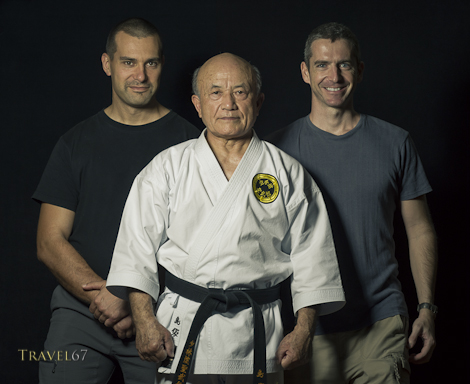
Thought I’d show a few behind the scenes shots from the  latest Karate Masters Portrait Project shoot with Shimabukuro-sensei.

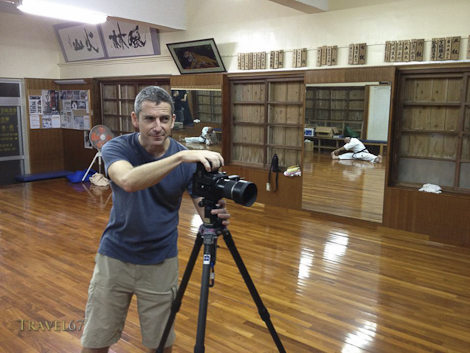
We assemble our mini studio inside the dojo of each master. I have a Profoto 7A power pack which plugs into the mains and then a single pro-head inside a beauty dish for light. Behind the karate master I set up a large Lastolite Skylite with black velvet to give a clean background, and so the look of the images will remain constant throughout the entire project. I use the Pentax 645D camera with a 150mm lens and mount this to a tripod, although some shots are handheld. James holds the light and moves it from side to side depending on the stance of the karate master. The flash is triggered by a Pocketwizard remote trigger on the top of the camera, that signals another Pocketwizard that’s attached to the power pack.

Posing with the camera, while the karate master is clearly not in front of me, but stretching in the background!

I take a couple of simple headshots and then we ask the karate master to adopt their favorite stance or show their favorite technique. My job is then to try and keep up with the action, as unsurprisingly they can unleash a flurry of blows and kicks before I’ve managed to get them in focus.

Publicity photo for the new sitcom “My two students”

James will be testing for his second dan black belt next weekend. In another thirty or forty years maybe he’ll be the subject of a shoot, until then we’ll continue photographing these amazing Okinawan icons.

A Photographer’s Christmas Wish List – Lightroom 4

As Christmas, or more accurately the time for Christmas shopping, draws near, I thought I’d list a few things that would make good presents for photographers. (These are not hints to my own family, but things that I have and, or, would recommend for others)

Adobe Photoshop Lightroom 4

Adobe Photoshop Lightroom 4 is a photo management and editing program. What is does is create a simple and intuitive workflow for photographers from inserting the SD card into the computer and importing new images, through keywording and adding IPTC data, to editing the image, and then final exports to web, print or other applications.

Rather than using Adobe Bridge for data management, then Camera Raw to process files, then opening them up in Photoshop CS6, Lightroom is your all in one solution. The editing part of the program isn’t anywhere near as powerful as Photoshop CS6, but more than enough for most applications. If you have an image that requires serious manipulation then you can simply export the image from Lightroom to Photoshop CS6. Both Lightroom and Photoshop CS6 are made by Adobe and are designed for different purposes rather than as direct competitors.

Using Lightroom 4 on dual monitors

One great piece of news is the price. Adobe Photoshop Lightroom 4 is just US$125 compared to around US$520 for Adobe Photoshop CS6. If you’re a student then Adobe also has very reasonable academic pricing. This is a smart move by Adobe as it should mean more people will buy a license rather than just acquiring a copy off the back of a virtual truck.

Could you save 125 bucks and use a cheaper or free photo editing program? Of course, but you’ll spend hours learning the workflow, keyboard shortcuts and idiosyncrasies of an inferior program, and then when you switch to Lightroom (which you probably will) you’ll have to start learning the process again. I had put off using Lightroom for years as I was comfortable using Bridge, Adobe Raw and Photoshop, but having started using Lightroom my workflow is faster which means that hopefully I can spend  fewer hours in front of the computer and more time out taking photos.

Seibukan Karate 10th Dan Zenpo Shimabukuro

Seibukan Karate 10th Dan Zenpo Shimabukuro

Seibukan Karate 10th Dan Zenpo Shimabukuro

Shorin-ryu Seibukan Karate 10th Dan Zenpo Shimabukuro, the latest subject of the Karate Masters Portrait Project. Shimabukuro sensei was kind enough to take an hour out of his evening for the shoot, and told us how pleased he was that James and I are undertaking the project. This is always good to hear as the sensei we have photographed can help us connect with the other masters on Okinawa.

Seibukan Karate 10th Dan Zenpo Shimabukuro

Seibukan Karate 10th Dan Zenpo Shimabukuro

Seibukan Karate 10th Dan Zenpo Shimabukuro

Seibukan Karate 10th Dan Zenpo Shimabukuro

Seibukan Karate 10th Dan Zenpo Shimabukuro

Seibukan Karate 10th Dan Zenpo Shimabukuro