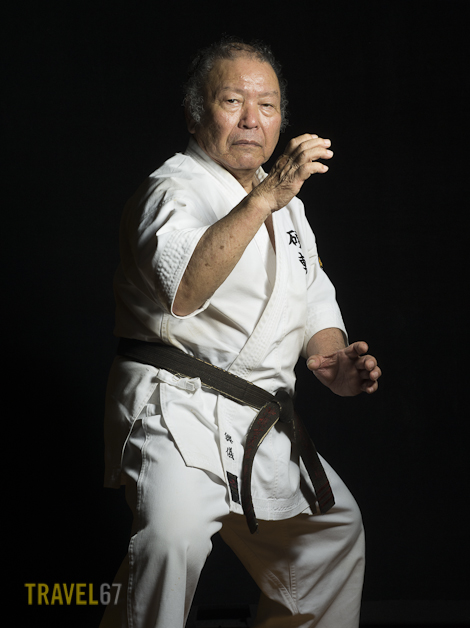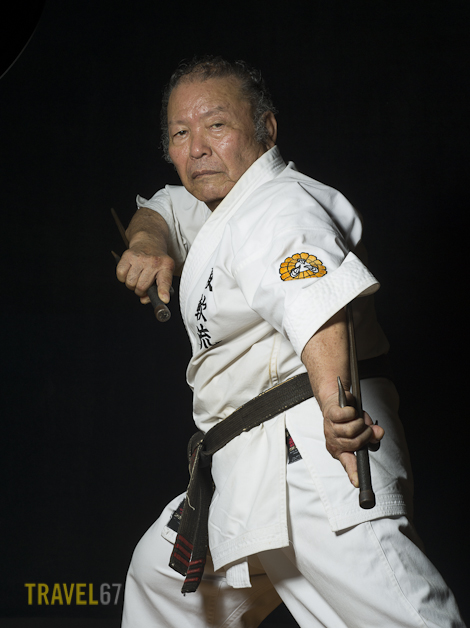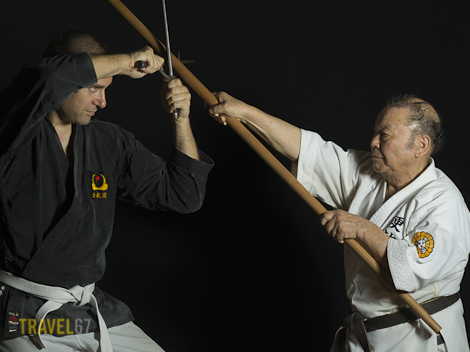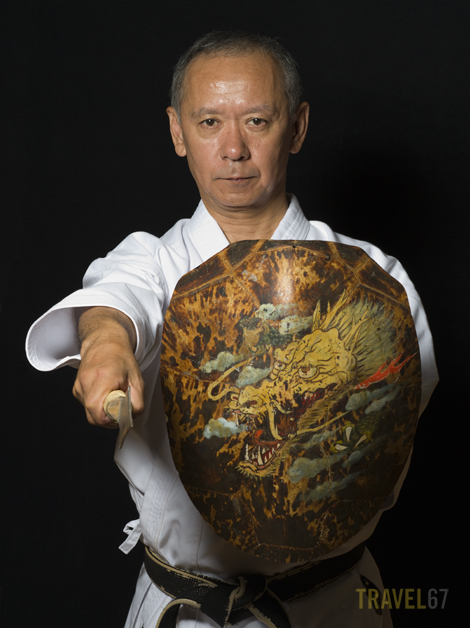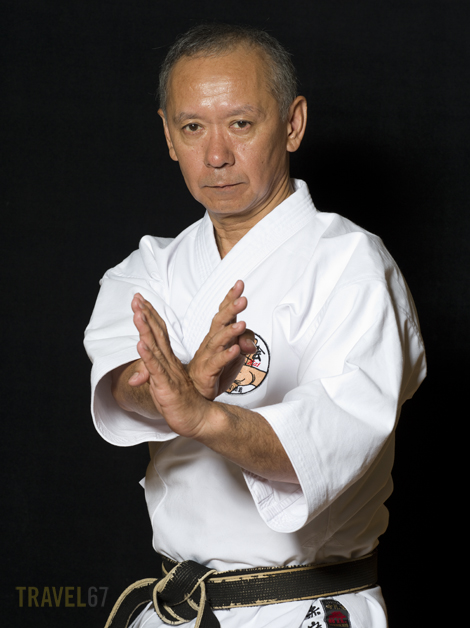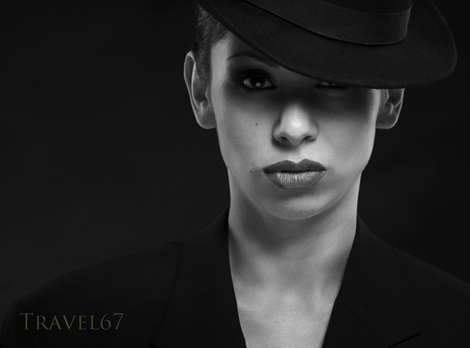
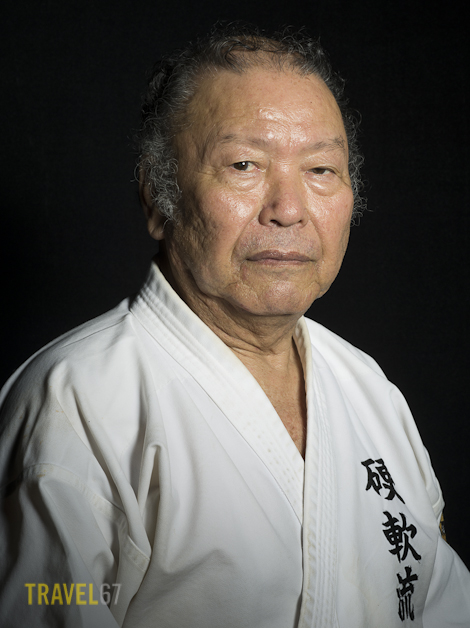
9th Dan Kounanryu Karate and Kobudo Master Jyosei Yogi, photographed at the Budokan national martial arts center in Naha, Okinawa.
Latest Posts
Scooby-Doo Sid
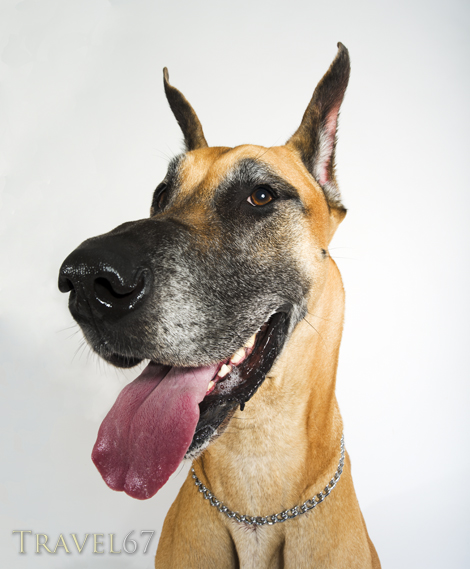
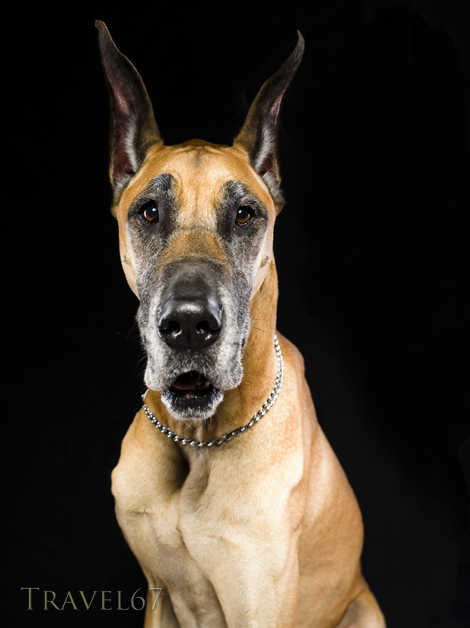
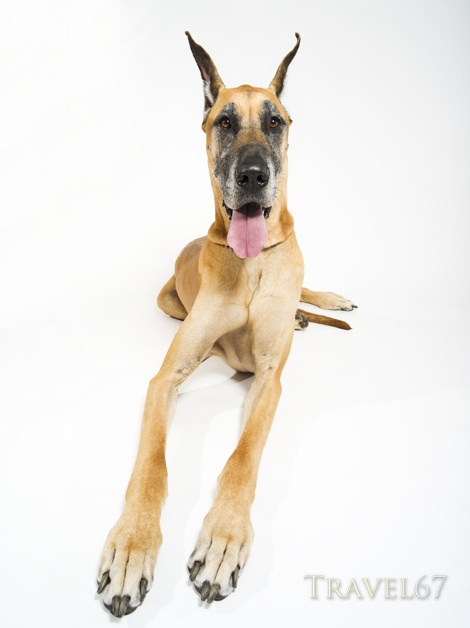
I bumped into Sid a couple of weeks ago as he was taking his two human minions for a walk along the seawall. I asked Sid if he’d done any modeling before, and he said that people were always describing him as a leggy blonde. A couple of days later he was chauffeured over to the studio and happily struck a few poses for the camera.
I was going to point out that Sid looked at little like Scooby-Doo, but this would have been a real insult to a Great Dane as it is common knowledge that Scooby-Doo was modeled on the exact opposite of what a champion Great Dane should look like.
Takamoto consulted a studio colleague who happened to be a breeder of Great Danes. After learning the characteristics of a prize-winning Great Dane from her, Takamoto proceeded to break most of the rules and designed Too Much with overly bowed legs, a double chin, and a sloped back, among other abnormalities. Wikipedia
Thanks very much to Sid and his two personal assistants. Hope you like the photos 🙂
Let there be underwater light (Part 3)
It will shine still brighter when night is about you. May it be a light to you in dark places, when all other lights go out.
Once the sun has dropped below the horizon, you can continue to dive, you just have to bring your own light with you. Night divers normally have a large, bright dive light and a smaller backup dive light. Some strobes have a modeling light which can act as the main dive light, but you still need at least one other dive light.
In someways it is actually easier to take photographs at night, the fish are often dopily lounging around while crustacea like shrimps have come out of their crevices and scuttle about the reef.
Diving at night, with or without a camera, is a strange if not surreal experience. It’s a bit like being in the middle of an Alien movie: labored breathing, flashlights peering in to the darkness, the ease at which disorientation sets in, and an awareness that something toothy might be lurking just outside your field of vision.
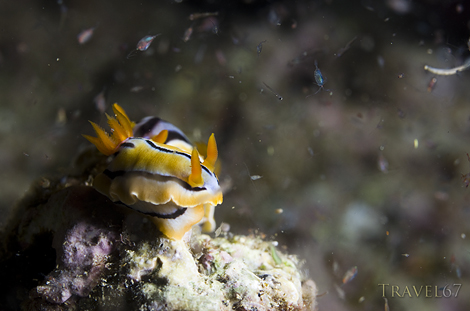
Photo-jacking / photo-bombing is the phenomenon when a stranger decides to jump into background of your photograph to ruin (or possibly improve) your shot. It seems to be quite common during night dives when using strobes with bright modeling lights. If you spend too much time photographing a particular subject, dozens if not hundreds of other little creatures, like moths to a flame, will get in on your shot. This is annoying if you want a clean background, but amazing as you don’t clearly see the plankton until they’ve been illuminated by the bright strobe. There are some lovely iridescent copepods in the above shot of two nudibranchs.
Shorinryu Karate and Ryukyu Kobudo Master Hiroshi Akamine
Hiroshi Akamine a master in both Shorinryu Karate (no weapons) and Ryukyu Kobudo (a whole range of weapons). Lovely man based out of a new dojo in Tomigusku.
On the wall of Akamine’s dojo there was an old black and white image of Akamine’s teacher posing for a photograph with a bo (staff). It isn’t part of the portrait series, but James and I thought it would be nice for Akamine to have a shot of him in the exact same pose many years later. The sepia tone was added in Photoshop to match the original image.
In the Studio – Michelle
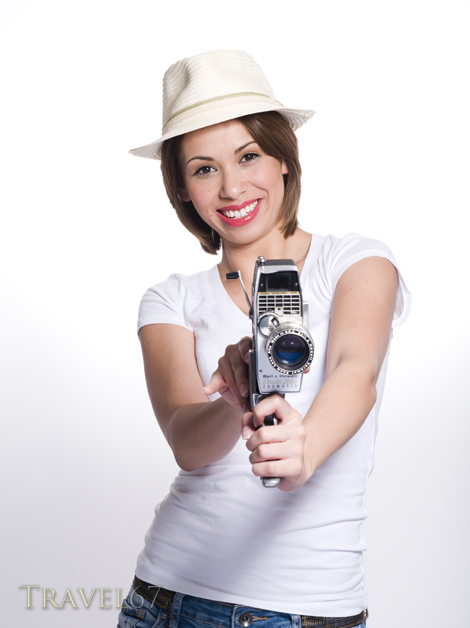
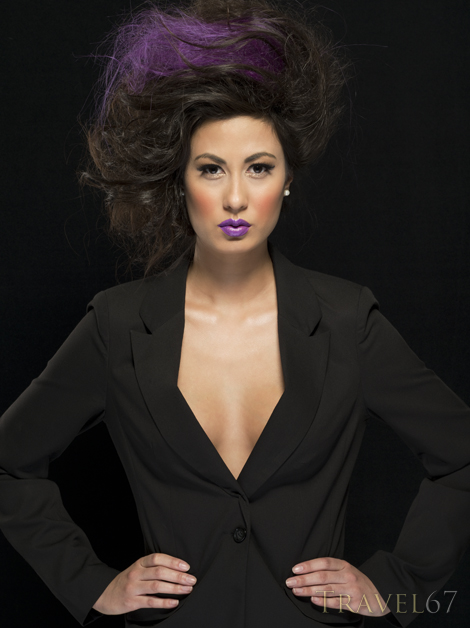
A few images from a portfolio shoot with model Michelle Santos. Michelle heads back to Brazil having spent several years in Japan. She wanted some new images in her book so that’s what we did.
I’d like to thank Summer Johnson and Aiasha Orick-Fleurantin for their work on makeup and hair, and Michelle for being able to pull off so many different looks in a short time.
“Matsuri” Photo Exhibition at Pentax Gallery Shinjuku Tokyo
I got a call from Pentax yesterday saying that from September 19th to October 1st 2012 I will have a solo exhibition of my matsuri (Japanese festival) images at the Pentax Forum Gallery in Shinjuku, Tokyo. There will be about 30 large prints, highlighting my favorite photographic subject.
It’s several months away, but thought I’d let everyone share in the exciting news and hope to see some of you in September.
A Close Call
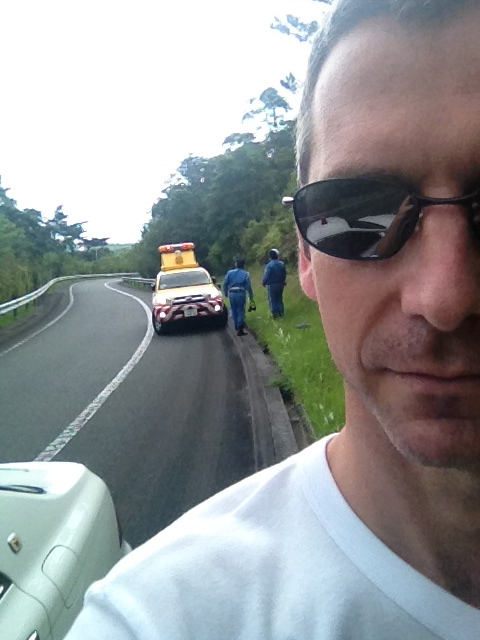
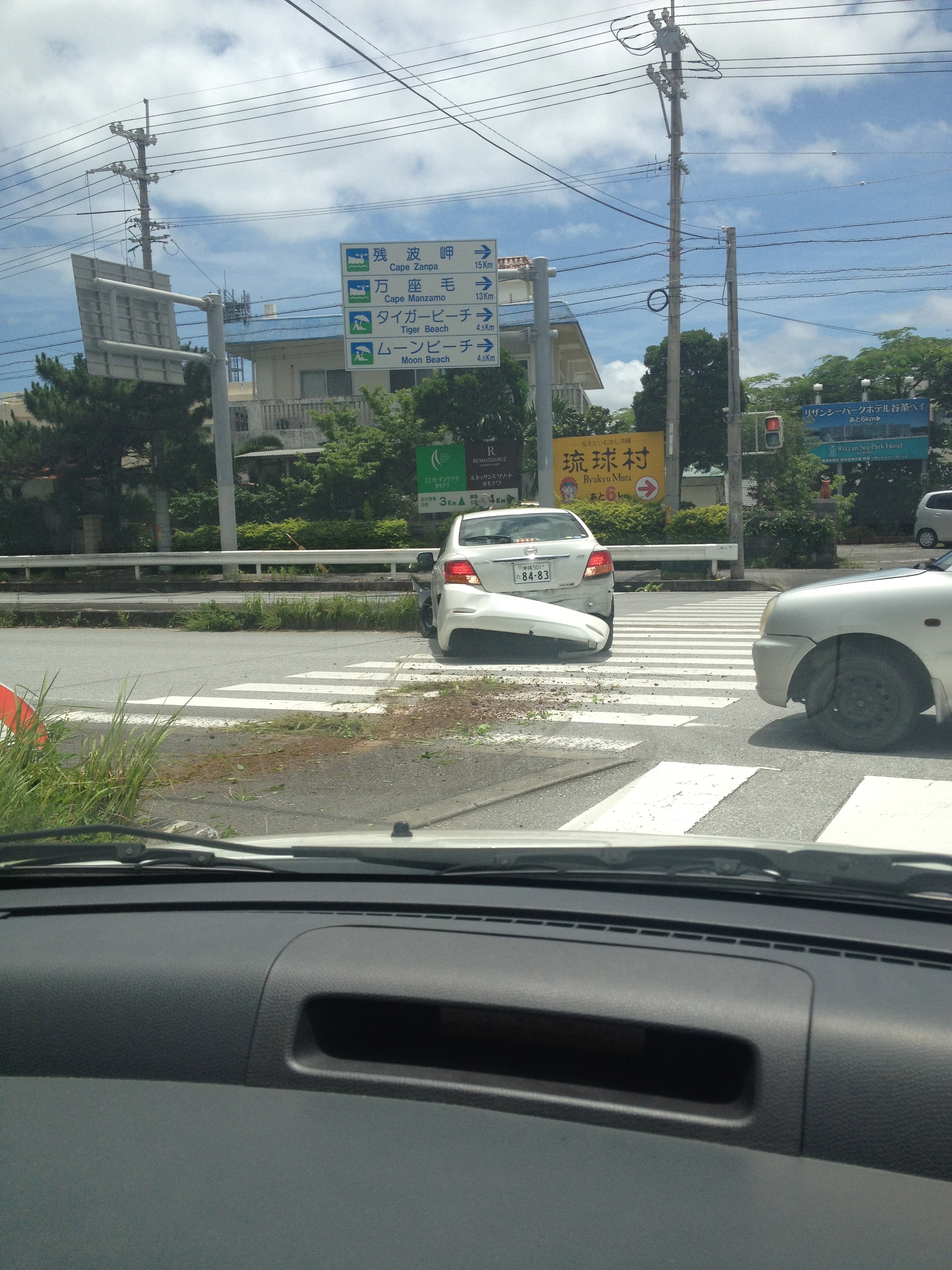
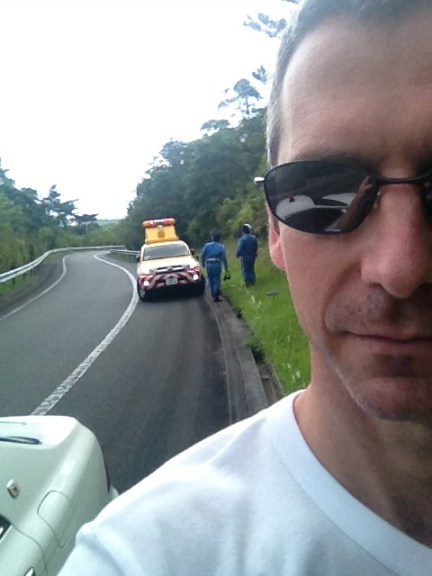
Had an eventful day today. As I was leaving the Okinawa expressway at the Ishikawa exit, in my rearview mirror I glanced a white car hurtling up behind me. I guess it was doing about 120 KPH exiting the expressway and not slowing at all. The car swerved around me hit the railing, careened across the road hitting the road markers and grass, but didn’t stop. It seemed the driver kept his foot to the floor as he veered back across the road hit the railing again then ricocheted back across again up the grass and drove along the banking. I thought he was going to flip, but he dropped back to the road, and kept on going. He went through the little tunnel under the expressway and then amazingly through the automatic barrier of the toll gate.
I continued following him, as he bounced off more sidings. He reached the major junction bounced over the kern, hit the median, and the car came to a halt. I stopped my car at the lights, took a photo of the scene with my phone (as he was trying to reverse) and ran over to the car. I opened the door, checked the guy was okay and stopped his engine. It was a Japanese man in his 60’s who seemed to be completely clueless about what was going on.
My Japanese isn’t fluent, but I could follow the gist of the conversation once the police arrived. He said he hadn’t been drinking, but does have diabetes. He didn’t think he was having any problems until he came to a stop in the middle of the road at the traffic lights. He said he unaware that he’d swerved around me or crashed multiple times. He seemed to be telling the cops that the accident occurred only at the traffic lights. I told the police my version of the events, and they brought in the expressway police in one of their unmarked vehicles with the pop up red light. They wanted me to show them where on the expressway exit I’d seen the accident take place so I got in the police car and we hurtled down to the next junction, turned around and hurtled back to leave from the same exit ramp. I sat in the back of a police car as we did 172kph with the lights on and siren blaring. (Interestingly it read about 185 on the car’s analogue speedo and 172 on the police digital readout).
It was pretty clear where he’d bounced around as there was a trail of dented railings, crushed markers, shredded foliage, bits of the rear fender and tyre tracks. We drove back to the junction and the policeman thanked me for all my help. They had already taken my details so I was free to go. The driver was still sitting by the side of the road, physically unhurt but still looking confused. I guess I’ll never know what exactly was going on in his mind.
Let there be underwater light (Part 2)
Here are some shots from the first dive with the strobes. The lens used was a 50mm macro (which due to the crop factor on the K5 means it’s the equivalent of a 75mm lens on a 35mm camera). The strobes mean macro shots will be a lot sharper. This is partly because the flash sync shutter speed of 1/180 maybe quicker than the shutter speed used without strobes, but mostly it is because it is the much faster flash duration that actually freezes the action. The result is that you can make out the teeth of the grumpy anemone fish, which otherwise would have been just a blur.
The bright modeling light of the DS-161 strobe is a great help allowing the camera to autofocus more easily. The operative word here is more, as getting it to lock onto a fish as it whooshes by is always going to be tricky. That’s why you’re going to be seeing a lot of photos of fish that either don’t move much (see below) or tend to stay in the same place (see above).
In the Studio – Susan
A couple of weeks ago, I did a portfolio shoot with model Susan Fletcher.We worked on a selection of looks to give Susan more variety in her images. The keys to this transformation were the skills of makeup artist Summer Johnson and hair stylist Aiasha Fleurantin.
Let there be underwater light (Part 1)
A you descend beneath the ocean’s surface things become darker and bluer. Light is absorbed by the water and it does this to a greater extent at the red end of the color spectrum. When shooting in the shallows you can capture the vibrant colors of the reef, but sink a little further and your images will look a little green and possibly blurry from slow shutter speeds (or noisy from high ISOs).
The solution is to shed a little light on your subject. Send in the strobes.
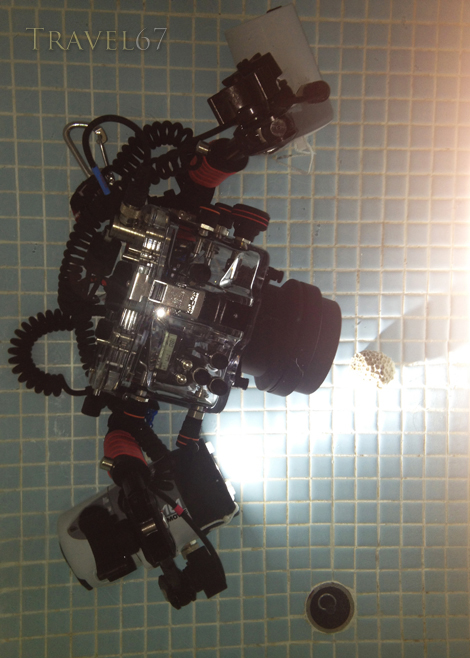
I bought two used Ikelite strobes on Ebay (thank you Vadim in Australia). One is a powerful DS-161 strobe that has a 3W modeling light, and the other is a far less powerful (and much cheaper) DS-51 strobe that I use as fill. The above image is a pre-dive test in the bath, which showed that both strobes worked, and that the light from the modeling light allows the camera to autofocus on the subject. The strobes are positioned in this image for macro shooting. The lens I’m using is a Pentax DFA Macro 50mm.
Here’s a shot of me using the rig this afternoon.