Latest Posts

Pixels 2 Pigment – Martin Bailey Okinawa Workshop

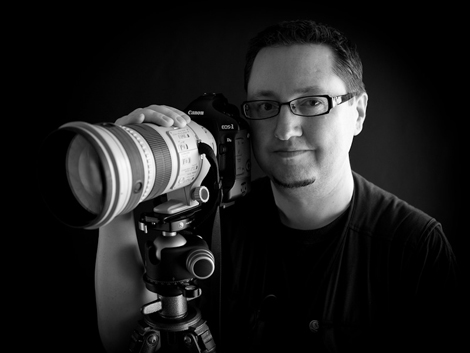
Martin Bailey Tokyo Based Photographer

Martin Bailey Tokyo Based Photographer

If you listen to photography podcasts or are interested in Japanese wildlife photography you’ve probably already come across Martin Bailey. Check out his website to learn more about him, but in summary he’s a talented guy from the UK who works as a photographer in Tokyo and shares his knowledge with others through his podcast, an e-bookphotography tours, and workshops.

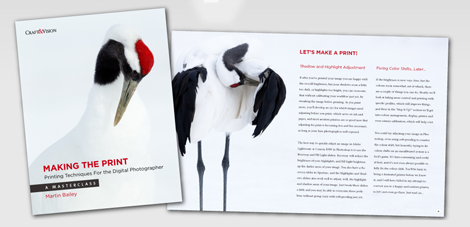
Martin Bailey Making the Print e-book

Martin Bailey Making the Print e-book

A couple of the areas Martin is particularly knowledgable in are color management and printing. These are key parts of a professional photographer’s workflow, and without a firm understanding of them, you’re just hoping for the best rather than taking control.

After the successful Photography 101, Off Camera Flash, Retro Portraits, and Light Painting workshops I contacted Martin to ask if he’d like to come to Okinawa to teach a weekend workshop on color management and printing. We discussed the idea and as Martin is already planning on teaching  Pixels 2 Pigment workshops in the UK, America and Australia later in the year, he said if there was enough interest he’d come down to Okinawa this summer.

So why is color management a vital part of a photographers workflow? Here’s a few possible scenarios:

Images look great on your monitor, you send them to an online printer but the photographs you (or your clients) receive don’t look quite right.

A client wants you to photograph a dress for a catalog. It’s a gorgeous red dress, but when you (or your client) looks at the dress on a monitor it’s a different shade of red. When the catalog is printed, the dress has changed color again.

A photo editor at a magazine receives a submission of images, immediately they can see that the color balance is off. Rather than fixing the images, they simply move on to the next submission.

You buy a fantastic new printer, but each time you print you end up having to go back into the file, make adjustments and then print again. You end up wasting ink, paper, and time.

I’m hoping that we can hold the workshop in early July. The price of the two day course will be US$250. At this stage I’m not looking for deposits, just gauging the level of interest on Okinawa. My belief is that there are enough professional photographers on the island who can see the benefits this course will offer, and will jump at this opportunity.

If you’re interested please leave a comment, send me an email or a Facebook message.
 

Wonderful Workshops

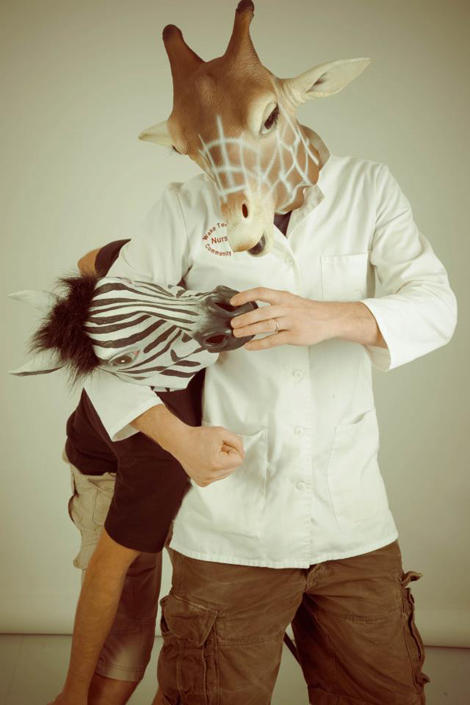
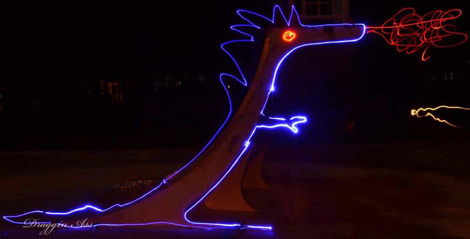
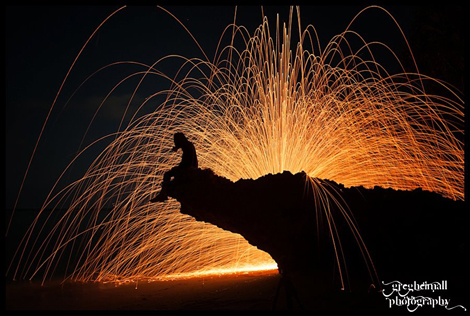
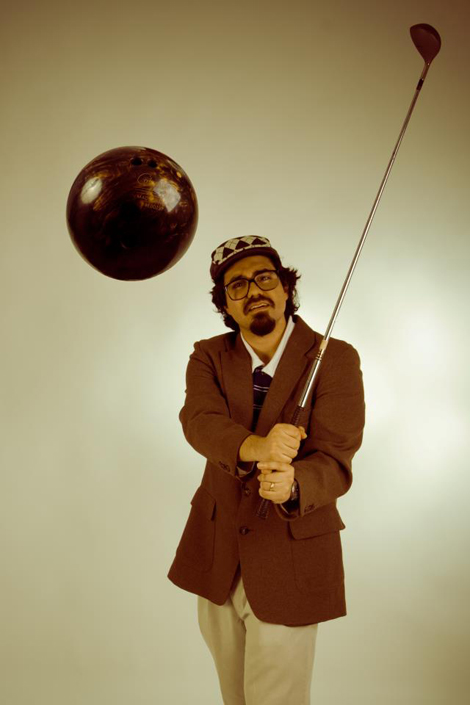
A great time was had by all at the two workshops held last week by Trevor Williams. Things were decidedly silly at the retro portraits evening, and smoking hot at the light painting weekend.

Here are a few shots from the students.

The Golfer by Alex Frank

Heavy Hitting Herbivores by James Trujillo

The Ishikawa Dragon by Mark McIlroy

 Let the sparks fly by Greg Heimall

Let the sparks fly by Greg Heimall

A huge thanks to Trevor for coming down to Okinawa again, you’re always welcome back to our little island.

Uechiryu Karate 9th dan Takehiro Gaja

Uechiryu Karate 9 dan Takehiro Gaja

Uechiryu Karate 9th dan Takehiro Gaja

Gaja-sensei, a lovely Okinawan man in his late 60’s, who after years of conditioning, has become both the unstoppable force and the immovable object.

Uechiryu Karate 9th dan Takehiro Gaja

Uechiryu Karate 9th dan Takehiro Gaja

Uechiryu Karate is in my opinion the toughest of the karate styles. It is based around brutal conditioning of the body so that, if required, the person can endure heavy blows and then deal out a devastating response.

Uechiryu Karate 9th dan Takehiro Gaja

Uechiryu Karate 9th dan Takehiro Gaja


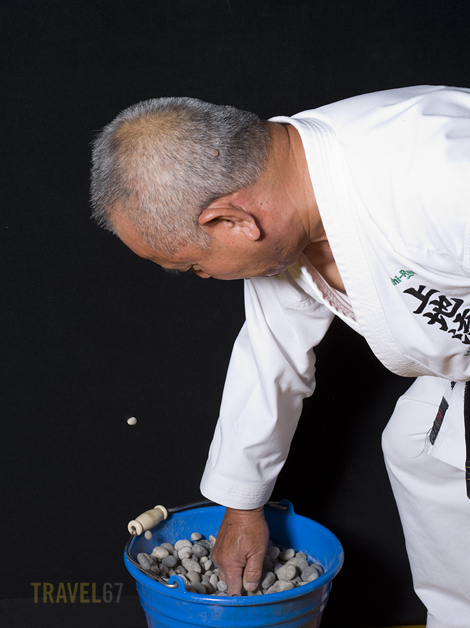
Conditioning fists, forearms and shins is done through striking punch bags, wooden boards and even concrete pillars. Gaja-sensei demonstrated his technique for conditioning fingertips. Fill a bucket with stones (or sand if you’re taking it easy) and then punch with an open hand deep into the bucket of stones.

Uechiryu Karate 9th dan Takehiro Gaja

Uechiryu Karate 9th dan Takehiro Gaja – Fingertip Conditioning

So why condition the fingers to such an extent? The answer is simple and brutal. Poking someone in the ribs is more effective if you can literally reach in through the rib cage and remove some of them.

Juggling

Another brief note to say that I’ll be back to posting soon. The Trevor Williams workshops went great, have done several portfolio shoots with local models, another couple of karate master portraits and slowly getting to grips with underwater photography. Along with that there’s been the usual drama with a computer that occasionally misplaces hard drives (hooray for Time Machine) and a labrador that is continually shedding hair.

Busy Busy Busy

It’s been a little hectic the last week with various shoots, and getting ready for the coming workshops. Blog posts will follow soon. Also a quick reminder that there are a few places left on the retro portrait workshop and the light painting workshops. As a bonus it looks like the rain will have finally stopped.

Here’s one of my favorites from last year’s course.

Dave in the Zone by Shawn

Dave in the Zone by Shawn Miller

Recovering the war dead on Okinawa

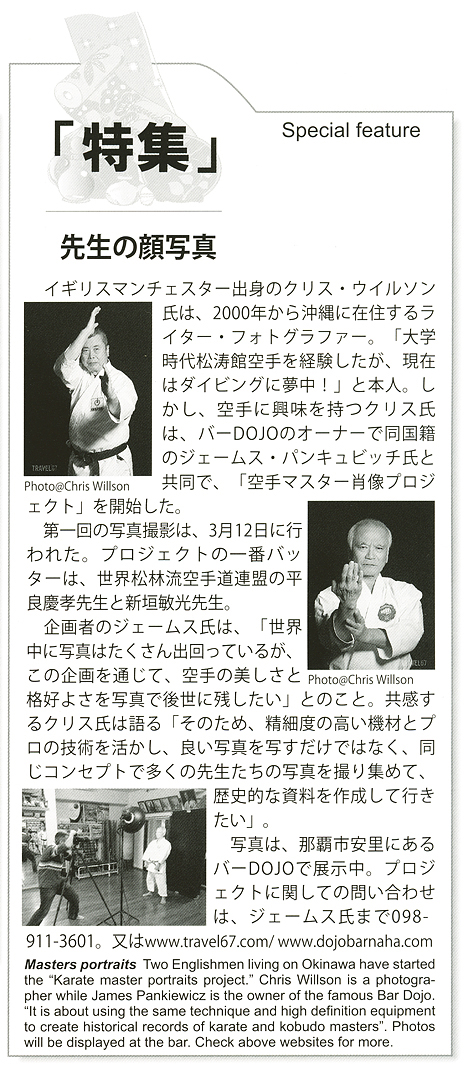
FCCJ Number 1 Shimbun April 2012

FCCJ Number 1 Shimbun April 2012

A month ago I worked with writer Julian Ryall on a piece about how the remains of the war dead found on Okinawa are identified and hopefully returned to their family graves. Photographing the skeleton of a dead Japanese soldier, and shards of bones in various trays was somber, but at that moment you are working and concentrating on getting images. Only later, when you’ve packed your gear away and returned to everyday life do you ponder the deeper meanings of what you’ve witnessed.

On the cover of the Number 1 Shimbun is an image I shot of Gushiken-san a volunteer that has devoted his life to returning the remains  of the fallen to their loved ones. Inside are a couple more images and the feature by Julian Ryall.

Pick and Tuck Dressage and Eventing

Alexis - Pick and Tuck Dressage and Eventing Team

Alexis - Pick and Tuck Dressage and Eventing Team

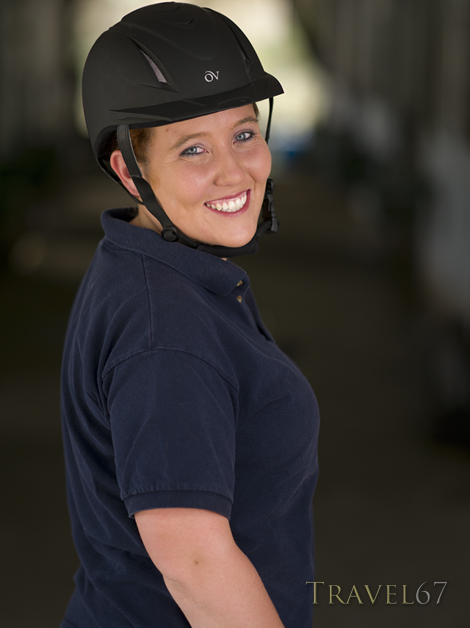
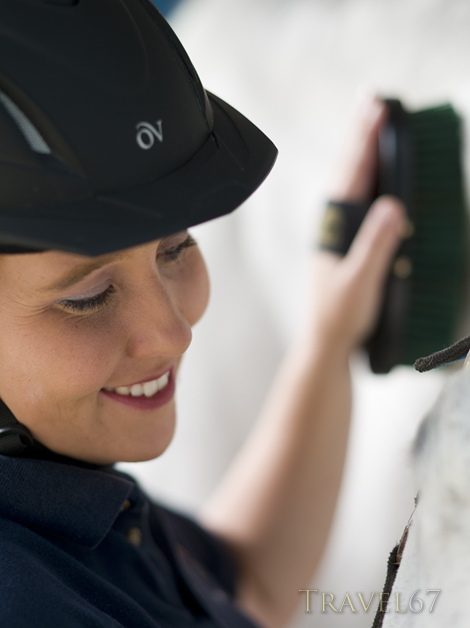
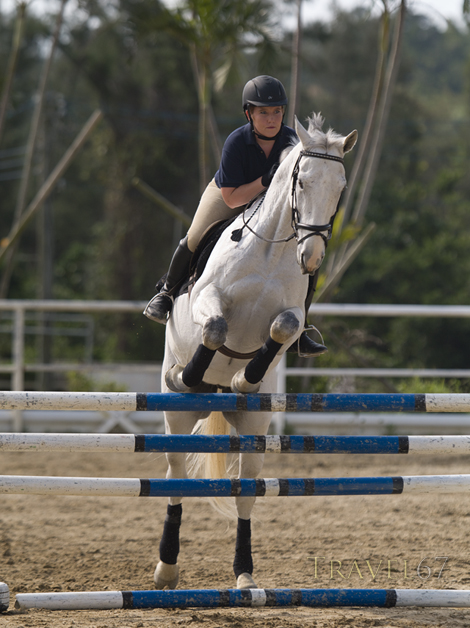
Riding instructor Alexis leaves Okinawa today, but will soon be back in the saddle on American soil. Alexis wanted some new images for her company Pick and Tuck Dressage and Eventing so we set up a shoot to take some horse jumping and barn images.

Alexis - Pick and Tuck Dressage and Eventing Team

Alexis - Pick and Tuck Dressage and Eventing Team

For the horse jumping images I used a long 400mm telephoto lens and prefocused the lens on the bars of the jump. With the lens on a tripod and everything focussed and framed I just waited for the Alexis and Sky to be in the classic legs tucked position before firing the shutter.

Alexis on Sky - Pick and Tuck Dressage and Eventing Team

Alexis on Sky - Pick and Tuck Dressage and Eventing Team

I took photos of two different jumps, once facing almost into the sun producing a backlighting effect, and the other with the sun almost behind me. I prefer the style of lighting and the more muted tones of the above image, but it’s all a matter of preference.

Alexis on Sky - Pick and Tuck Dressage and Eventing Team

Alexis on Sky - Pick and Tuck Dressage and Eventing Team

I wish Alexis and her husband Michael safe travels back to the States. Okinawa, and particularly Sky, will miss them.

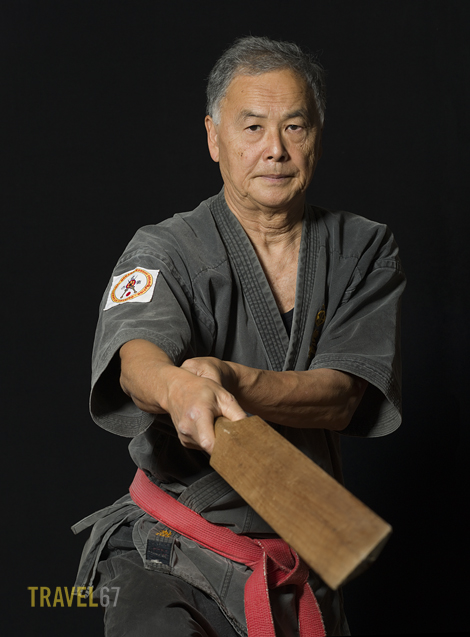
Gojuryu Karate 10th dan Tetsuhiro Hokama

Gojuryu Karate 10th dan Tetsuhiro Hokama

Gojuryu Karate 10th dan Tetsuhiro Hokama

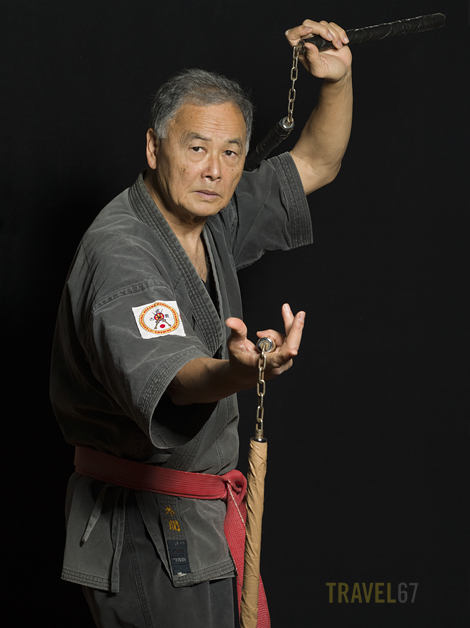
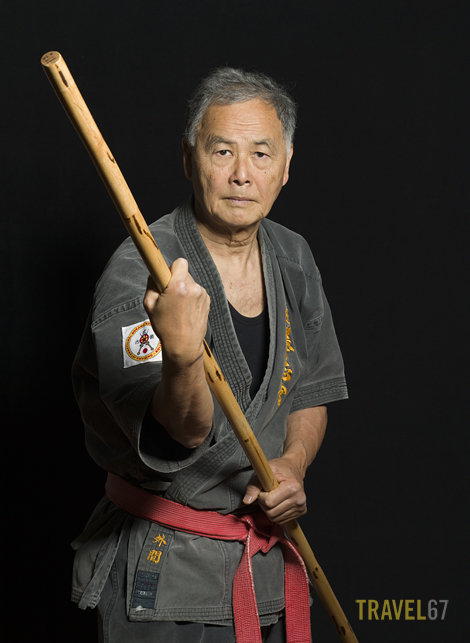
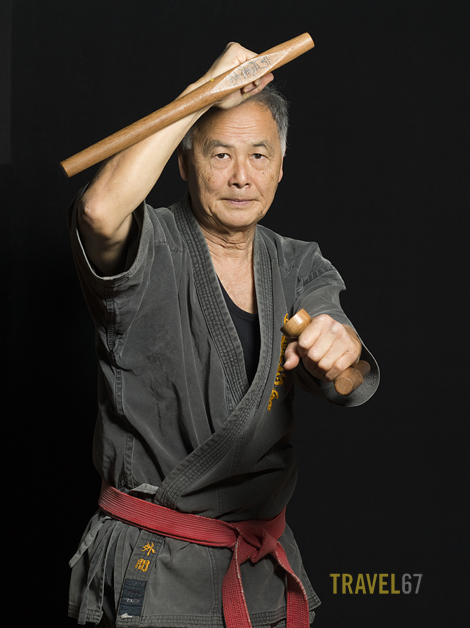
A great day last weekend shooting with Gojuryu karate 10th dan Tetsuhiro Hokama. As is clear from the following photos the idea that karate is a weaponless martial art is clearly not accurate. Although many practitioners state that karate means empty hand, the original meaning of the word was Chinese hand. Improvised weapons, many from farming equipment, were very much part of karate.

Gojuryu Karate 10th dan Tetsuhiro Hokama

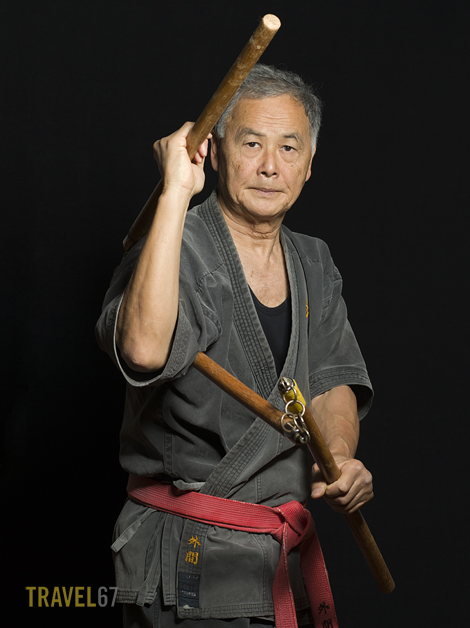
Gojuryu Karate 10th dan Tetsuhiro Hokama with nunchaku

It might seem strange to see a karate master using duct tape covered nunchaku, but it’s also impressive that he’s using them so much he’s got to give them a little reinforcement.

Gojuryu Karate 10th dan Tetsuhiro Hokama

Gojuryu Karate 10th dan Tetsuhiro Hokama with rokushaku bo

“Speak softly and carry a big stick; you will go far” Theodore Roosevelt, a big proponent of the rokushaku bo.

Gojuryu Karate 10th dan Tetsuhiro Hokama

Gojuryu Karate 10th dan Tetsuhiro Hokama with tonfa

Tonfa now used by police forces across the world.

Gojuryu Karate 10th dan Tetsuhiro Hokama

Gojuryu Karate 10th dan Tetsuhiro Hokama with eku (an oar)

Never start a fight at the Okinawan dragon boat races.

Gojuryu Karate 10th dan Tetsuhiro Hokama

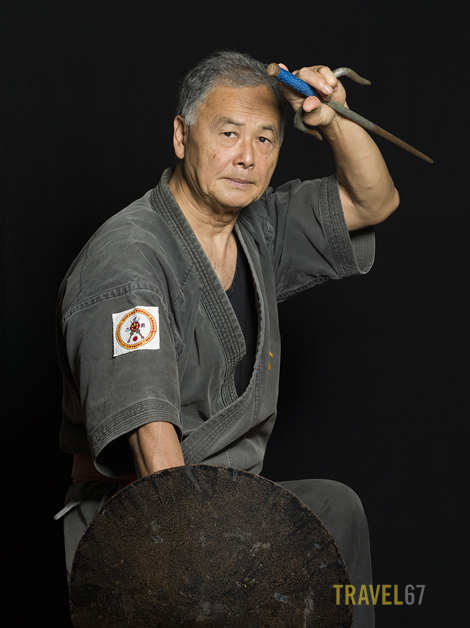
Gojuryu Karate 10th dan Tetsuhiro Hokama with timbe (shield) and sai

The Okinawan sai, as used by Raphael. Hopefully before you clicked on that link you weren’t thinking of this other Raphael.

Gojuryu Karate 10th dan Tetsuhiro Hokama

Gojuryu Karate 10th dan Tetsuhiro Hokama with kama

Hokama-sensei showed how the kama can be used between the opponents legs to end the fight very quickly.

Gojuryu Karate 10th dan Tetsuhiro Hokama

Gojuryu Karate 10th dan Tetsuhiro Hokama with sansetsukon

And if one big stick isn’t enough why not carry two or three.

Gojuryu Karate 10th dan Tetsuhiro Hokama

Gojuryu Karate 10th dan Tetsuhiro Hokama with kali sticks