Latest Posts

Beware the Habu

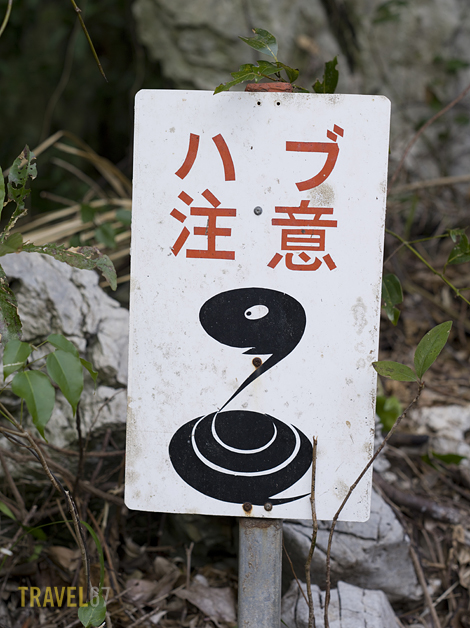
Habu Snake warning sign

Beware the Habu Snake

Habu ( Trimeresurus flavoviridis ) are poisonous pit vipers found on Okinawa. As with most snakes they keep to themselves so you’re very unlikely to see a habu in the wild while on Okinawa. Unfortunately you are likely to see one sitting at the bottom of a bottle of Awamori (Okinawan Sake). Similar to the worm in a bottle of tequila the snake is thought to give the alcohol an extra kick.

Another interesting fact about the habu is that in 1910 someone made the decision to import Indian Mongooses into Okianawa to control the habu population. The mongoose has now become a serious pest on Okinawa, killing and eating virtually every native creature on Okinawa, except for… the habu.

Donations to Japanese Red Cross

Some readers have been asking where they can make donations.

Information on making donations can be found at the website for the JAPANESE RED CROSS SOCIETY . Those in America will probably find it easier to make donations through the AMERICAN RED CROSS .

Not sure about the situation with regards to donations of clothes and blankets. For those in Okinawa I believe that they are making collections at some of the bases.

I’ve decided that during March and April I shall be giving 20% of the sale price from my prints of Japan to the Japanese Red Cross Society. This applies to any of my photographs sold through my website or through the Kadena Gift Corner on base.

As mentioned in previous posts, if you have relatives in Okinawa they are fine and well out of harms way. Thoughts should go out to those around Sendai. Radiation concerns seem to be getting all the attention in the news, but there are still thousands of people without homes or enough food and water.

Radiation on Okinawa

I’ve had a few emails and comments asking whether Okinawa is affected by the radiation leaks from the nuclear power plants in Fukushima.

Short Answer: NUCLEAR RADIATION LEAKS DO NOT AFFECT THOSE LIVING IN OKINAWA. PLEASE DO NOT WORRY.

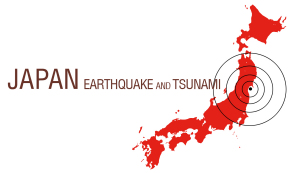
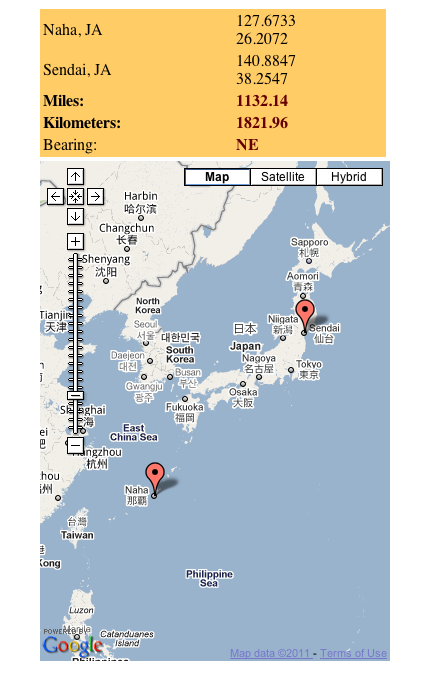
Longer Answer: The “Fukushima Fifty”, Japanese engineers who are at the plant trying to control the nuclear reactors, are I imagine in very real danger. People within 13 miles of the plant have been told to leave the area. People between 13 and 19 miles have been told to stay indoors. People in cities not far from the plant may receive higher than background amounts of radiation, but nothing that is considered dangerous. Okinawa is over 1000 miles from the radiation leak and well out of harms way even in a worse case scenario.

Distance from Okinawa to Sendai

Updates / Lizard on a Leaf

Latest Update:

Things up in Tokyo seem to be even more stressful than normal. Worries about possible radiation or possible panic, along with rolling electrical blackouts mean than some are heading out of the city to stay with relatives in other parts of Japan.

One friend commented that the ice cream at the convenience stores was on sale, I guess the refrigerators don’t have backup generators.  I imagine that later tonight there will be some people  sitting around eating HäagenDazs in the dark.

I heard on the news that they had found several thousand people who were thought to be missing. Wonderful news, but many others will be still be spending a night out in the cold with limited food and water.

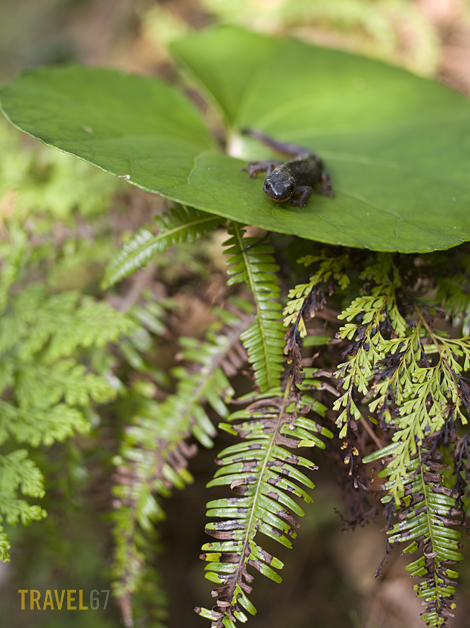
I’ll end with a snap of an Okinawan lizard I saw at Cape Teniya near Higashi Village. No idea of the species. It had a brown/black body with a vivid orange underside. Didn’t have a macro lens with me,  this is as close as I could go with the 55mm wide angle.

Okinawan Lizard


Progress

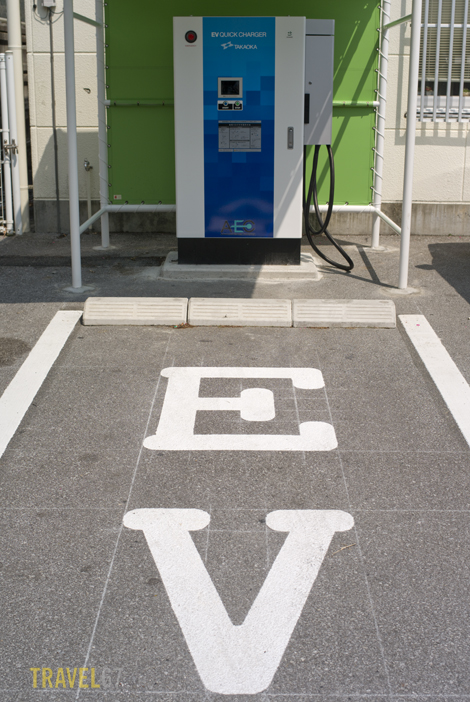
Things seem to be back to normal in Okinawa. Yesterday I went for a drive to the north of the island, and noticed this parking space at one of the convenience stores.

Electric Vehicle Parking / Charging Space in Okinawa

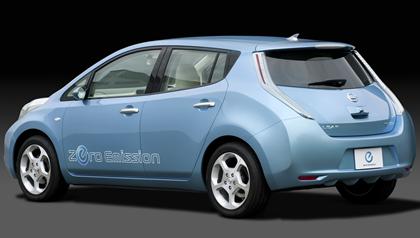
These E.V. (electric vehicle) charging stations are starting to appear across Okinawa. There are some at the expressway service areas , and I even spotted one all the way up in Higashi Village. This is a quite uplifting, a really positive sign for the future, especially following days of seeing catastrophic images on the news. I also saw my first Nissan Leaf electric car.

Nissan Leaf Electric Car

Nissan Leaf Electric Car (photo by Nissan)

Okinawa is pretty much perfect for electric vehicles. The islands compact size means that all journeys should be less than the official 100 mile range of the Leaf (and also less than the EPA’s  estimated range  for the Leaf of 73 miles). My hope is that the Leaf, and similar vehicles, will become the standard rental cars on the island. Great for the environment, great for the lungs of pedestrians and cyclists, great for the car companies to showcase their creations, and great for visitors who are indirectly test driving a possible next vehicle.

Operation Tomodachi

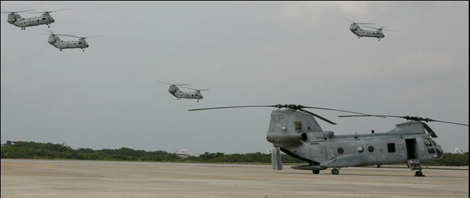
CH-46E Sea Knight Helicopters Leave Air Station Futenma on Okinawa

CH-46E Sea Knight Helicopters Leave Air Station Futenma on Okinawa - photo by Cpl. Dengrier M. Baez

Operation Tomodachi is the relief effort of the III Marine Expeditionary Force. Over the last couple of days planes and helicopters have been leaving bases in Okinawa and heading north. Some will be flying to Naval Base Atsugi, near Tokyo while others will probably head to Misawa Air Base in Aomori Prefecture . (Tomodachi is the Japanese word for friend)

I will continue to post updates on my blog and the Chris Willson Photography Facebook page, but if you have family members in the US armed forces you can also get the latest information about the Marines in Japan at the III Marine Expeditionary Force Facebook page.

Some have asked if I intend to head up to the disaster area to photograph the events taking place. Logistically it would be almost impossible to get there from Okinawa by myself. It would be different if I could be embedded with part of the military or civilian humanitarian effort, but these are contacts that are difficult to make if you’re a lone photographer unaffiliated to a major news agency.

The latest news I’ve heard is that, along with 3 other trains,  one of the bullet trains that runs between Tokyo and Aomori is missing.  The Hachinohe to Aomori section was only finished in December 2010 and the new Hayabusa train only came into service on March 5th 2011. The fate of the passengers is unknown, and it is clear that rail travel along the east coast of Japan will be disrupted for the indefinite future.

The Day After

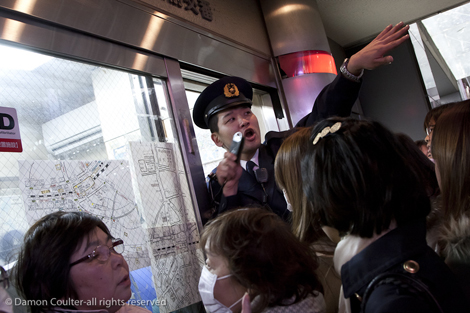
March 11th 2011 Earthquake - Image by Damon Coulter

March 11th 2011 Earthquake - Image by Damon Coulter

It’s been an strange day. Spent a lot of time switching between BBC World and CNN on the TV and various news sites on the web.  I saw the images coming in from photographers and journalist friends based in Tokyo, many of whom are now heading north to Sendai. I wish all the best to those who are going out to cover the disaster. Stay safe.

The above photograph by my friend Damon Coulter shows a scene from Tokyo just after the quake. It is not an image of chaos or carnage, but a man putting his training into action. Japan is well aware it lies in an earthquake zone, and the precautions taken with regards to building design, planning and training mean things are much better than they could have been.

I put up yesterday’s post with images of the tsunami’s effect on Okinawa hoping that it would be of interest to a few of my blog readers. The tsunami clearly didn’t have a large impact on Okinawa. The ocean appeared to go from high to low tide and back to high tide over a matter of minutes, but there were no injuries or damage to my knowledge. It became clear, however, that a large number of people outside Okinawa didn’t have any information about what was happening on the island. The result was that over the last 24 hours more than 20,000 people  found their way to my blog. It was great that the forum of concerned friends, parents and grandparents that commented on the post were able to reassure others who were worried about people living on Okinawa.  (To the person who tried to post that he wished Okinawa and the expletive people living on it had been covered by water – please seek counseling you clearly have some issues you need to deal with.)

Some of my friends in the US military on Okinawa will now be part of the humanitarian mission to help people affected by the tsunami. The presence of American military bases in Japan and particularly Okinawa is a complex and often contentious issue, but right now the availability of US planes, helicopters and manpower must be seen as a blessing. Good luck to all those heading up to the mainland to help, and once again stay safe.

Finally, thanks to all of my friends and family who were concerned about my wellbeing. My thoughts go out to the people of Sendai, and  those who have received tragic news or are going through the agonizing experience of simply waiting by the phone.

Shuri Castle at Night

Shuri Castle at Night

Shuri Castle in Naha is still undergoing renovation. It looks like they are in the second of three stages, concentrating on the roof line and the golden dragons that sit at either end of the apex. You can just spot the scaffolding in the above photo. Here’s a crop from the  image at 100%. It’s nice to see they paint the scaffolding red, quite thoughtful really as the castle still gets many visitors while the reconstruction is going on.

Shuri Castle at Night (Crop from above image)

Inked

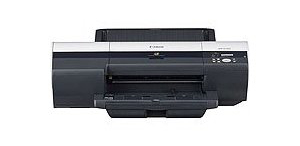
Canon Imageprograf IPF5100

Canon Imageprograf IPF5100

The Canon ipf5100 printer I use for creating my limited edition prints is fantastic. It uses the highest quality archival pigment inks, it takes rolls of paper rather than sheets allowing me to use the  thick cotton photo rag I love, and it produces images with great detail and wonderful color. It is, however, the size of a small piano and costs around 2000 dollars.

As anyone with a exotic sports car will tell you,  the high initial cost is not the only concern, the running costs are just as significant an issue. The ipf series printers have two print heads and 12 ink cartridges. Print heads cost around 400 dollars each, and probably will last you several years. Ink cartridges are around 70 dollars each and their longevity will depend on a combination of how often you print and how often the printer needs to run the cleaning mode.

If you are an occasional printer, this is going to make running the machine very expensive. Every time you turn on the printer it will run the cleaning mode which uses ink. If you then make a single print and turn it off, you may be using more ink cleaning than printing. If you simply leave the printer on, the printer will automatically run the cleaning mode when necessary, slowly using up that 740 dollars worth of ink (70×12).  As I produce my own prints for both exhibitions and sales I am using the printer enough to justify the running costs.

The next issue is that of servicing. Again owners of Italian supercars who don’t live in Maranello or Sant’Agata will be aware that this can be a bit of an issue. Not only do you need to order non-standard parts but you also need specialist engineers. Which brings me back to my printer…

On February 2nd I put up the blog post E161-403F? which included the line “Slow realization that this will be a frustrating and expensive experience.” How right I was.

Talked to Canon on the phone who told me it was a problem with the left print head. I ordered the print head and they sent over a Canon Okinawa engineer to fit it. The engineer could not  install the new print head, but bizarrely also removed the right print head. He put it  on the top of the printer  leaking ink onto the printer and possibly damaging the jets of the print head. He left saying he may have to order more parts (I wasn’t charged for the visit).  I phoned Canon Japan and tried to explain situation. The Okinawa Canon engineer then phoned back to say they would replace right print head he shouldn’t have removed with a new one. He would also order parts he may need to fix the printer. The Canon engineer returned a week later and managed to fit both print heads and happily there was no need for any replacement parts. (Engineer labor cost about 150 dollars).

When you replace a print head you  need to fill the new print head with ink. I had to do this with both print heads. I needed to order 8 new ink cartridges and a new maintenance cartridge (the previous one now filled with wasted ink). It will have cost close to a thousand dollars to get things back up and running again, but you roll with the punches.

There was one final sting in the tail. When I ordered a couple of the ink cartridges online I made a mistake and ordered PFI-101GY rather than PFI-103GY and PFI-101PGY rather than PFI-103PGY. As soon as they arrived I phoned the online store, explained the mistake and asked if I could exchange the unopened ink cartridges for the correct ones. They said that as they had special ordered them from Canon they didn’t do exchanges or refunds. I closed up the box they arrived in, sent them back to Canon and asked if they could exchange them. A few days later the box arrived back in Okinawa with a note saying that as I had not purchased them directly from Canon they would not exchange them.
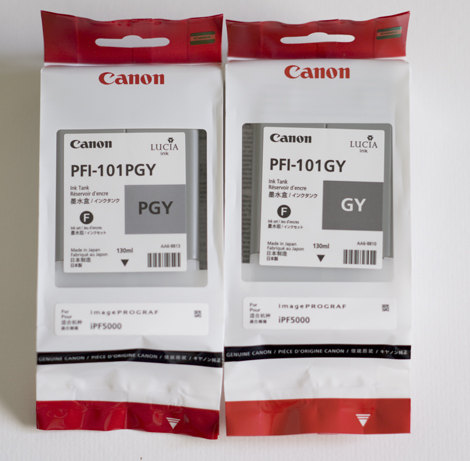
Ink tanks for iPF5000

Ink tanks for iPF5000 - Who wants them?

So if you have a Japanese Canon iPF5000 printer (ink tanks are chipped to only work with printers from the same country) then drop me a line and I’ll send you a late Christmas present.

As for my printer, once a final blue ink cartridge arrives it should be up and running. Apologies to those people who are  waiting for prints. I give Canon five stars for their product, but just one for customer service.