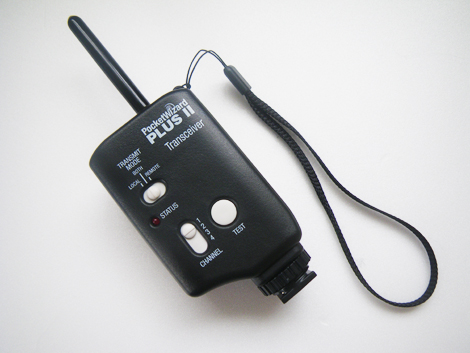
I got a set of PocketWizards recently and tested them out in the studio with fellow photographer Eboh. One PocketWizard was connected to the power pack. The second PocketWizard was attached to my camera via the x-sync socket as I don’t have a hot-shoe on the Pentax 67.
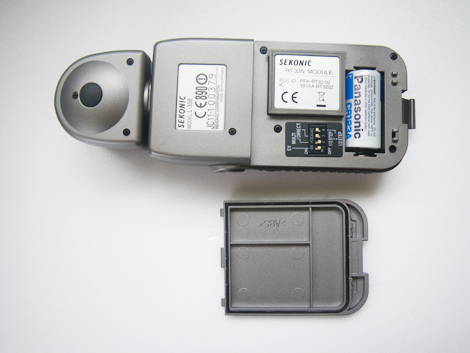
Sekonic L-358 light meter with RT-32 radio transmitter module
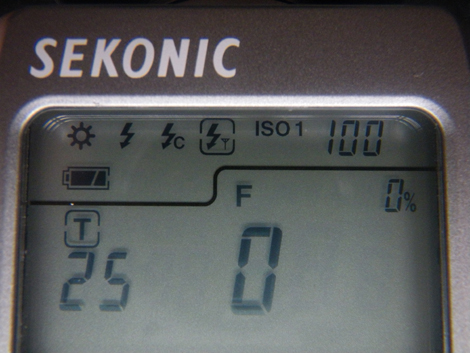
I put a Radio Triggering Module in the back of my light meter so that I could trigger the strobe when I took a light reading. Simply select the digital transmitter mode on the light meter and confirm both PocketWizards and light meter are on the same channel.
Sekonic L-358 in Wireless flash radio triggering mode
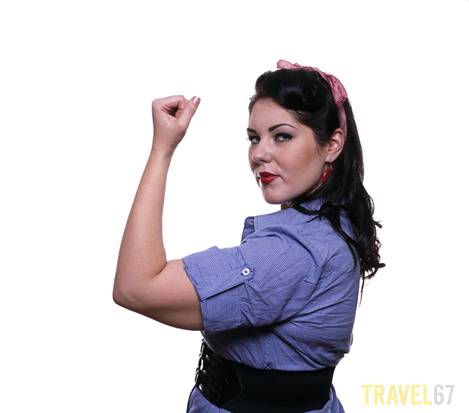
Make-up artist Kim Clay and Eboh’s wife Ursula then posed for some shots.
Make-up artist Kim Clay
Model Ursula Ajeroh
Overall the PocketWizards work really well in the studio. They remove many of the wires making things easier and safer. Their popularity with studio photographers is such that many power packs come with PocketWizard receivers built in. They’re not cheap, but they are a quality product.
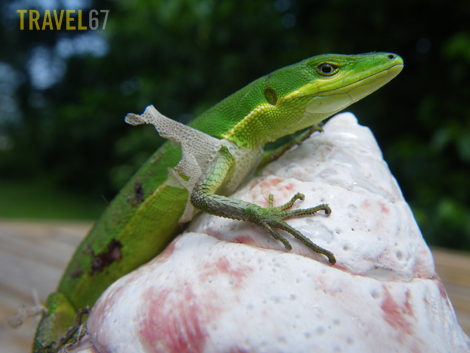
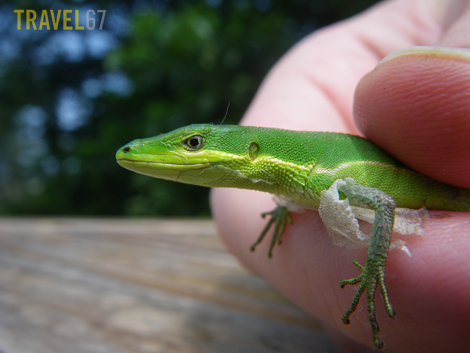
I found this little creature in the bathroom this morning. He was quite cold so easy to catch and happy to sunbathe while I took some photos. (In fact, once I had finished taking photos with my point & shoot I went back in the house got out my Pentax 67, changed lenses, attached a 1:1 macro adapter, inserted film, found light meter, and he was still relaxing on the shell when I came back.)
I have field guides for Japanese birds, and even a list of Okinawan dragonflies, I don’t however have a list of herps (This is where my friend Matt would step in when I lived in Peru ). Does anyone out there now what species this is?
Yesterday I watched an interview with Tom Hanks on The Colbert Report. Hanks discussed his latest project, the HBO miniseries titled The Pacific. Following on from the critically acclaimed Band of Brothers that was based on events in Europe during WWII, The Pacific will look at the Pacific Theater of Operations. Events in the series include the invasions of Peleliu, Iwo Jima and Okinawa.
I am very interested to see how the invasion of Okinawa is portrayed. The Battle of Okinawa, also known as the Typhoon of Steel was one of the most horrific events in history. Thousands of American and Japanese troops were killed, and along with them approximately 140,000 civilians. Some died during the air assault, others from malaria, starvation and forced mass suicides. Trapped between two warring powers, the Okinawans were killed by both sides.
Okinawans that survived the war, have told me that by remembering the events it will hopefully prevent a similar tragedy from ever happening again. Having heard some of their stories, it is hard to visit places like the cliffs of Cape Zampa without thinking about the Okinawan men, women and children forced into lines by Japanese soldiers then told to step off the edge.
(Still in the dark) Pentax 645D 40 megapixel medium format digital camera
With just a few days until the camera is revealed there has been a steady trickle of information released by email and on a special “new” section of the Pentax Japan website. For those who can’t read Japanese, as summary of the information so far is:
News Vol. 1 Sensor 1.7 times the size of full frame 35mm
News Vol. 2 Eight custom image functions
News Vol. 3 Dual SD/SDHC memory card slots.
News Vol. 4 40 megapixel sensor
News Vol. 5 44 x 33mm sensor
All very interesting. The rest of the details should be released on the 11th at the CP+ Camera & Photo Imaging Show in Yokohama.
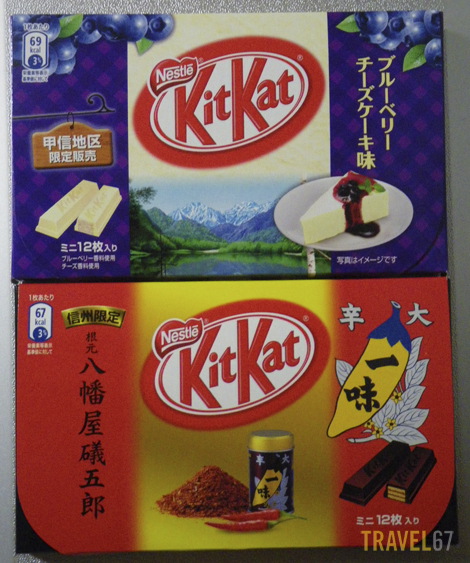
Omiyage are the presents that Japanese bring back to their family and colleagues when they have been away on a trip. Usually they are cookies, chocolates or senbei but I know some people that send boxes of fruit from Okinawa, and crab or salmon from Hokkaido.
Even the big name brands have products specifically produced for omiyage. Nearly every place I have been to in Japan has their own Hello Kitty doll, while KitKat produces flavors that are only available in certain prefectures. Here are a couple of boxes that are available in Nagano, Blueberry Cheesecake and Red Chili.
After a day with the snow monkeys we drove about 30 minutes north to Nozawa Onsen. We booked accommodation, rental gear and 1.5 day lift passes through Mark at Lodge Nagano . Although his lodges were full, Mark found us a place at Maruji Guesthouse just around the corner.
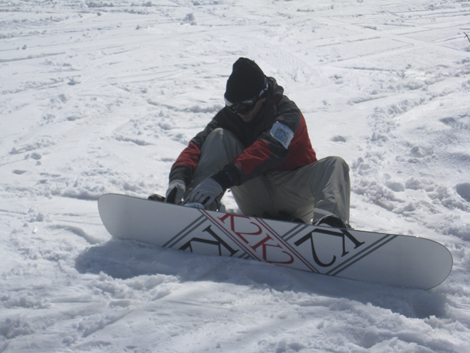
It was good to be back on the board if only for a couple of days. There hadn’t been any fresh snow for a while, but there were not really any bare patches on the mountain. Lower areas were a little choppy and slushy at times but you can’t be guaranteed of powder snow if you go at the end of February for just a couple of days.
Strapping in to a K2 162cm rental from Lodge Nagano.
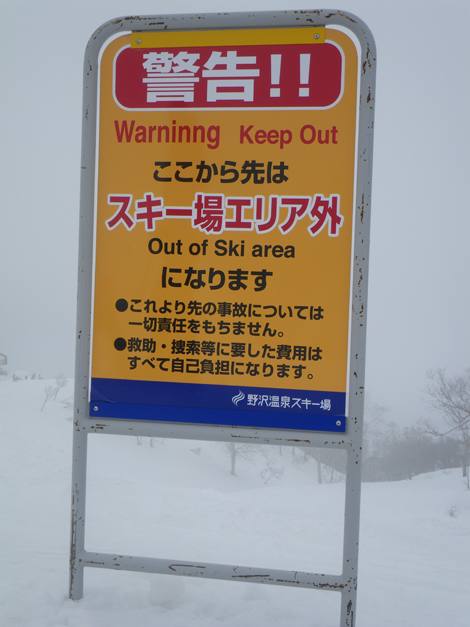
I liked the fact that at the top of the mountain there were areas that were “ski at own risk” rather than completely out of bounds. It is a sensible decision to provide some off piste areas, as by providing a relatively safe area it should reduce the chance of boarders going off exploring and finding themselves stuck on a cliff ledge or at the bottom of gully. The signs were a little confusing as to which were off piste and which were out of bounds but as with most things it’s a good idea to follow or at least ask a local.
Nozawa Onsen Ski Area - "Warninng"
And here’s another example why it’s nice to have a compact waterproof camera as well as a Gulliver sized behemoth. Set camera to video mode. Hold in glove. Snowboard down mountain. Post to You Tube.
It’s a little unfair to compare Nozawa Onsen to other ski areas having spent only a couple of days there in spring conditions. Niseko (Hokkaido) is still my favorite place for boarding in Japan, however Nozawa Onsen is just an overnight bus ride from Tokyo, or get the shinkansen to Nagano then the local train to Togari Nozawa Onsen. Well worth a visit.
(If you were wondering what my favorite resort in the world is check out Red Mountain, B.C., Canada. Spent three months there many years ago. Small mountain, steep slopes, lots and lots of snow.)
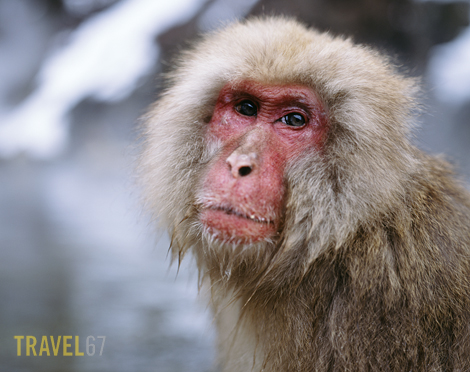
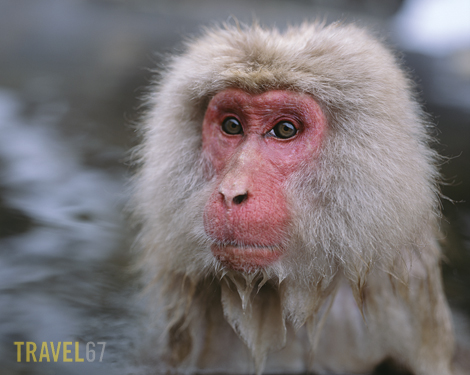
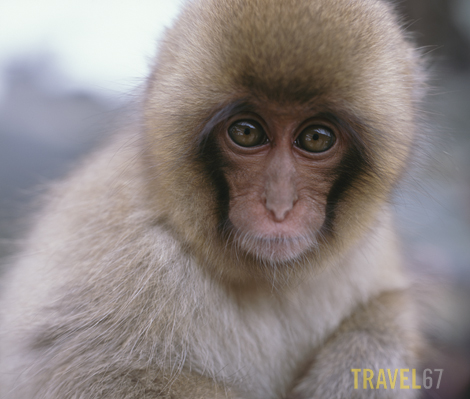
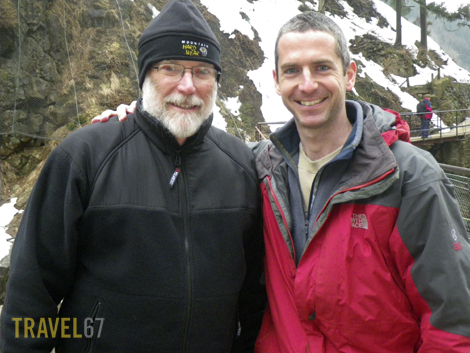
I happened to meet photographer John Shaw while at Jigokudani Onsen. John was leading a wildlife photography tour of Japan. They had just spent around 10 days in Hokkaido and were enjoying their last few days photographing the snow monkeys. John’s a really nice guy and great photographer. He has written numerous books on photography including John Shaw’s Nature Photography Field Guide, John Shaw’s Closeups in Nature and John Shaw’s Landscape Photography.


 that was based on events in Europe during WWII, The Pacific will look at the Pacific Theater of Operations. Events in the series include the invasions of Peleliu, Iwo Jima and Okinawa.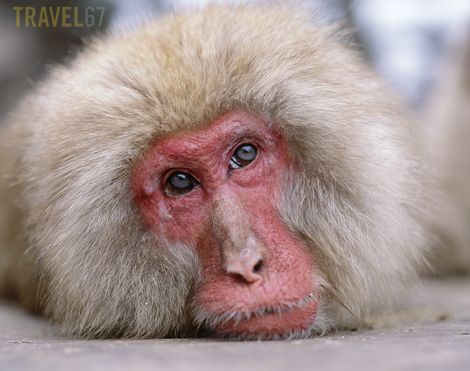

 with 10% Amazon points.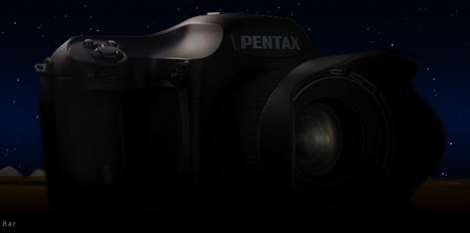
 ,
,  and
and  .
.
