Latest Posts

Hachinohe Enburi – Photographs (part 3)

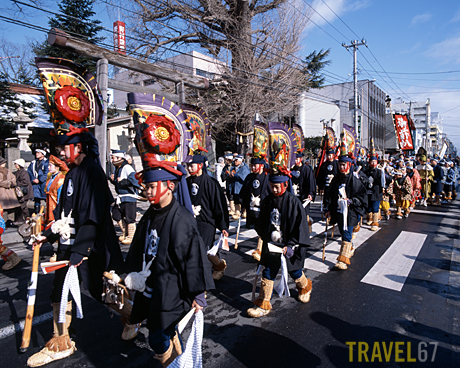
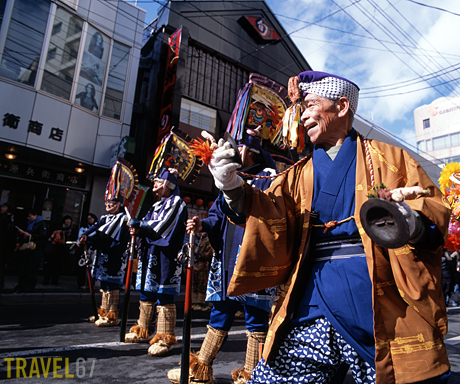
The parade wound it’s way through town. I tried to find a place with a background more interesting than a McDonald’s or a Mos Burger.

Hachinohe Enburi, Aomori

Hachinohe Enburi, Aomori

Switching to a wide lens allowed me to capture more of the action.

Hachinohe Enburi, Aomori

Hachinohe Enburi, Aomori

In the late afternoon and evening, the Oniwa Enburi took place in the garden of Koujoukaku, a historic building in the city where the dances were once performed for rich merchants.

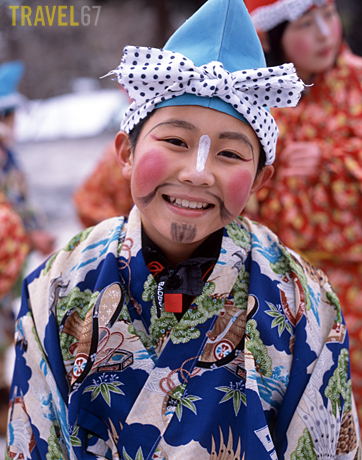
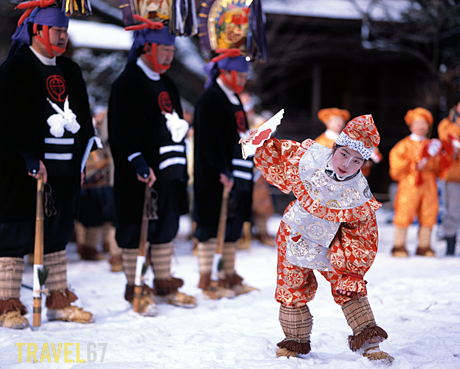
A young boy performed Ebisu-mai which celebrates the struggle and ultimate success of a fisherman.

Hachinohe Enburi, Aomori

Hachinohe Enburi, Aomori

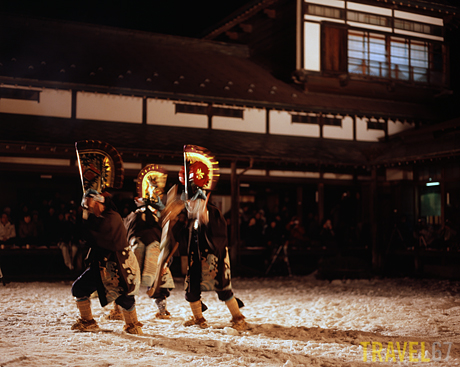
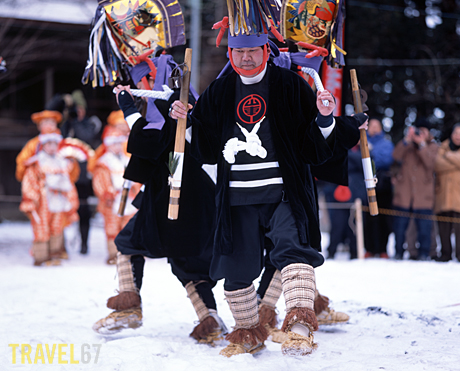
The final dances of the evening were performed in torchlight (and a few floodlights) these three men are performing Naga Enburi one of the oldest styles dating back 800 years.

Hachinohe Enburi, Aomori

Hachinohe Enburi, Aomori

Hachinohe Enburi – Photographs (part 2)

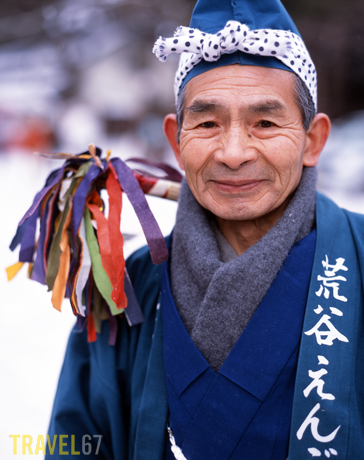
After the initial ceremony at the shrine, the participants of the festival gathered in the small park nearby, before starting the parade through the city. As I learned at Notting Hill Carnival a few years ago, these few minutes pre-parade are the perfect time to get some good portrait shots. Great costumes and smiles make the job of a photographer much easier.

Hachinohe Enburi, Aomori, Japan

Hachinohe Enburi, Aomori, Japan

Hachinohe Enburi, Aomori, Japan

Hachinohe Enburi, Aomori, Japan

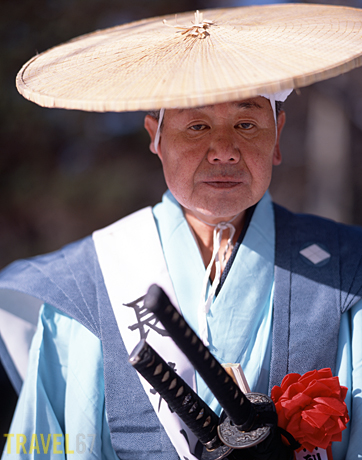
Not everyone smiles for the camera, but perhaps a grin would seem out of place with the pair of samurai swords.

Hachinohe Enburi, Aomori, Japan

Hachinohe Enburi, Aomori, Japan

Hachinohe Enburi – Photographs (part 1)

Nearly two weeks have gone by since my last post, and I am now back in Okinawa. I have started the slow task of scanning the transparencies and will post them to the blog over the next few days. 

Hachinohe Enburi, Aomori, Japan

Hachinohe Enburi, Aomori, Japan

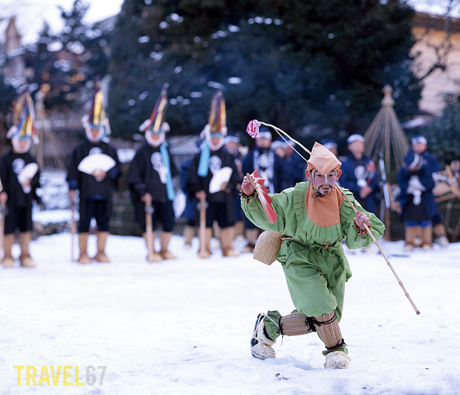
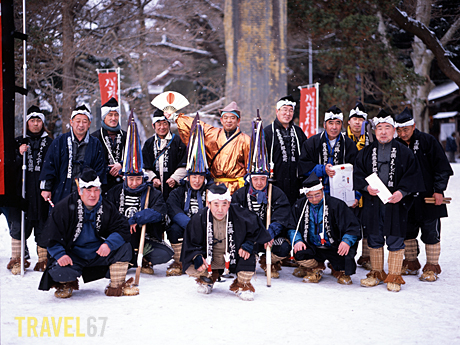
The festival began at 8 a.m. at Choujasan Shinra shrine. Groups of men wearing horse head inspired hats danced with various farming tools.

Hachinohe Enburi, Aomori, Japan

Hachinohe Enburi, Aomori, Japan

A young girl did a dance that I think had something to do with planting rice, and then as the snow began to fall again one of the groups of participants gathered for a group photo.

Hachinohe Enburi, Aomori, Japan

Hachinohe Enburi, Aomori, Japan

 On a technical note, photographing on snow without the aid of a digital screen to check exposure can lead to terribly unexposed photographs if you use auto settings. I didn’t have my handheld meter with me so I used the camera’s meter to first gauge the light off a mid tone building then manually set the exposure on the camera.

Hachinohe Enburi

On the road again…

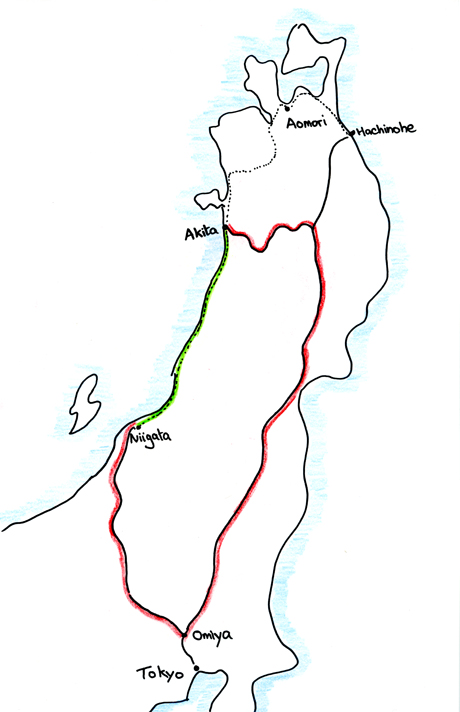
I’m standing in the lobby of the Aomori Toyoko Inn  using the complimentary internet service while my clothes churn away in the “coin-laundry.”  On Monday I flew from Okinawa to Tokyo then took the shinkansen bullet train to Hachinohe.  

Hachinohe is a city of limited charm and is, all in all, a rather desolate snow-blasted place. Maybe because of this the locals enjoy a good celebration and consequently have a big festival in both summer and winter.  On Tuesday I spent the day photographing the Hachinohe Enburi from the initial shrine ceremony at 8am through to an evening performance of the traditional dance.

The festival and dances are to ask the gods for a good harvest in the coming months, and to remind each other that they must work hard at tilling fields, planting crops and fishing to get enough food to see them through the winter.

  In this  modern age it would be appropriate to now post some photos of the event. I am, however, an analog man in a digital world, which means that the photographs are still on rolls of film in my bag, and won’t be processed until I get to Yodobashi Camera in Niigata tomorrow night. 

Clothes have finished churning.

“Kluso Akoustic” at Cotonoha Artspace & Cafe


Kluso Akoustic (Photo by Bill Anders)

Kluso Akoustic (Photo by Bill Anders)


Kluso is playing tonight at Cotonoha Artspace & Cafe in Uehara, Okinawa. I’ve intended to go to one of his concerts several times but something has always come up at that last moment. Tonight however, I will head down south and have a listen. Kluso plays acoustic guitar and his style is a blend of Americana combining folk, country and pop-rock. I will know more after the concert.  Admission is  2000 yen and this not only covers the concert but hors d’oeuvres and 1 drink is included. Cotonoha is a new gallery cafe run by an American guy Mitch who has done a fantastic job of creating a great new venue for art, music and dining. 


Kluso Akoustic (photo by Bill Anders)

Kluso Akoustic (photo by Bill Anders)


The song in my head : Boom de ya da!

And just in case you want to sing along too, here are the lyrics:

I love the mountains,
I love the clear blue skies
I love big bridges  
I love when great whites fly  
I love the whole world
And all its sights and sounds  
Boom de ya da, boom de ya da 

Boom de ya da, boom de ya da 


I love the oceans  
I love real dirty things
I love to go fast  
I love Egyptian kings  
I love the whole world  
And all its craziness
Boom de ya da, boom de ya da 

Boom de ya da, boom de ya da 


I love tornadoes 

I love arachnids  
I love hot magma  
I love the giant squids  
I love the whole world
It’s such a brilliant place

Boom de ya da, boom de ya da

Boom de ya da, boom de ya da


Shakuhachi


Man playing the shakuhachi

Man playing the shakuhachi

In readiness for some very long train rides next week, I was just uploading music and podcasts to the ipod I’m borrowing for my trip. One of the few songs I have bought through iTunes was Principles Of Lust: Sadeness from Enigma’s MCMXC A.D.album.  Back in 1991 the song managed to bring Gregorian chanting and French rapping to both the top 40 chart and the dance floors of Europe.  Another interesting thing about the song, and the reason I bought the track, was that the main instrument used is a shakuhachi or Japanese end-blown flute. I happened to meet the man in the picture above at Nagoya’s Honensai festival last year. I asked him what the name of his musical instrument was, as it sounded vaguely familiar. A quick google search revealed why I recognized it, not only was it used by Enigma it was also used in the Peter Gabriel’s fantastic song Sledgehammer. More recently it was even used by Linkin Park for the rap/rock track Nobody’s Listening on their album Meteora.  Of course, the shakuhachi has been used many times in movies to produce evocative background music for samurai movies, the  equivalent of bagpipes in Braveheart or Rob Roy.  The shakuhachi, a simple piece of bamboo and a Japanese musical icon.

Photographer Ben Simmons

Last week photographer Ben Simmons visited Okinawa and dropped by my house for coffee and a chat before exploring the island. It was fantastic to meet Ben and have a good discussion about photography, living in Japan, and the changes in both camera technology and the photography industry as a whole.


Japanscapes

Japanscapes


I also got some advice on places to shoot when I am in Tokyo for a few days later this month. Ben has published several books including Tokyo and Japanscapes: Three Cameras, Three Journeys.


Tokyo by Ben Simmons

Tokyo by Ben Simmons


What pleased me most of all was that after many decades of working as a professional photographer Ben still loves taking photographs. I think it is all to common for the realities of work to erode away the passion you have for something. I know SCUBA diving instructors who found that their dream career rapidly became more and more like a regular job. It gives me confidence that I will still love taking photographs for decades to come.


Chris, Seiko & Ben

Chris, Seiko & Ben

Around the World with TPN

The Travel Photographers Network is a community of travel photographers that aims to improve and promote the art of travel photography. A community only thrives through the actions of its members, and luckily TPN is packed with talented people who are willing to share their ideas, their experiences and their dreams with others.

Around the World with TPN

Around the World with TPN

Over the last year TPN has put together a book showcasing fantastic images by the community’s members. The book has just been published through Blurb and is available for purchase here.

Two of my photographs were selected for the book: Rising Sun and Monkey Hug. It is an honor to be part of a book created by  a group of individuals with a shared passion for travel photography.

Inspiration – Stephen Wiltshire

When I was around 11 years old I saw a TV programme about an extrodinary British boy just a year older than myself. His name is Stephen Wiltshire and he has not just a photographic memory, but the ability to then reproduce what he has seen on paper.

In May 2005 after a helicopter flight over Tokyo he drew a 10 meter long 360 degree panorama of the city over the following 8 days. Possibly the greatest feat of memory there has ever been.


Tokyo Panorama by Stephen Wiltshire

Tokyo Panorama by Stephen Wiltshire

See a larger version of the above panorama here

I love Stephen’s work, we have a shared interest in architecture and classic vehicles. Several years ago  I even bought a tiny sketch he had done of a New York taxi. It seems that  taxis have become one of his favorite things to draw, but for me his most awe-inspiring pictures are his cityscapes of London and New York. 


New York Taxi by Stephen Wiltshire

New York Taxi by Stephen Wiltshire

Next time I am in London I plan to visit his gallery, but until then I’ll continue to keep up to date with all his work at his website.