Latest Posts

Inspiration – Stephen Wiltshire

When I was around 11 years old I saw a TV programme about an extrodinary British boy just a year older than myself. His name is Stephen Wiltshire and he has not just a photographic memory, but the ability to then reproduce what he has seen on paper.

In May 2005 after a helicopter flight over Tokyo he drew a 10 meter long 360 degree panorama of the city over the following 8 days. Possibly the greatest feat of memory there has ever been.


Tokyo Panorama by Stephen Wiltshire

Tokyo Panorama by Stephen Wiltshire

See a larger version of the above panorama here

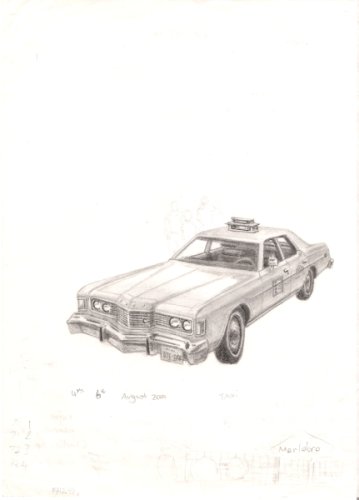
I love Stephen’s work, we have a shared interest in architecture and classic vehicles. Several years ago  I even bought a tiny sketch he had done of a New York taxi. It seems that  taxis have become one of his favorite things to draw, but for me his most awe-inspiring pictures are his cityscapes of London and New York. 


New York Taxi by Stephen Wiltshire

New York Taxi by Stephen Wiltshire

Next time I am in London I plan to visit his gallery, but until then I’ll continue to keep up to date with all his work at his website.

Mount Asama Eruption

Mount Asama, one of the volcanoes in central Japan erupted yesterday. Eruptions are not a rare event in Japan. Mount Sakurajima near Kagoshima regularly has a column of smoke rising from it. Mount Fuji, Japan’s highest mountain, is quite literally a time bomb waiting to explode.

At the start of 2000 I was living in Otaru, Hokkaido. On March 31st,  the morning TV news showed that the local volcano, Mount Usu, was smoking. (Note I saw the pictures on the screen, but didn’t understand what the newscaster was saying.) A couple of friends and I had the day off so we decided to go and have a look. We drove from Otaru to Lake Toya, but got a little lost on the way and ended up taking little back roads rather than the main highway. We arrived at Lake Toya to find it was very quiet and there was only a single news photographer standing  at the lake edge.

I took a few photographs of the Mount Usu erupting in front of us.
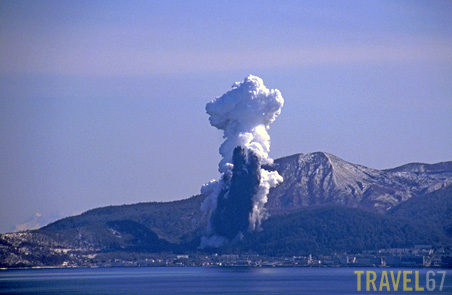
Mount Usu eruption in 2000

Mount Usu eruption in 2000

The news photographer then asked how we had got there. It turned out that the main road had been closed, 15,000 people had been evacuated, and the person on TV had been saying how dangerous it was. I asked if we were safe where we were on the opposite side of the lake to the volcano. The answer was no. If the volcano suddenly decided to vent under the lake it would send a tidal wave hurtling across the surface washing away everything along the lake edge. If you survived the surge of water, you’d still have to deal with a sky full of falling debris. At this point my friends and I decided it was probably a good idea to head home.
Seat of Power

Over the last month I have done my 40 km bicycle commute 4 times. My time dropped from close to 2 hours to 1 hour 38 minutes for the ride there, while my fastest ride home was 1 hour 30. (The university is at the top of a hill.)

I’ve learned some important things about riding:

  • When it’s cold, riding faster warms up your muscles but the wind chill means you are still freezing.
  • Most car and truck drivers are very considerate and give cyclists a wide berth. However it would only require one idiotic / sleepy / distracted driver  to make a real mess of your shiny bicycle and limbs. Defensive cycling is an necessity rather than an option.
  • Riding in the rain is fun the first time, but the novelty wears off fast.
  • There is an infinite number of varieties of asphalt, and a cyclist can feel every nuance through their bottom.
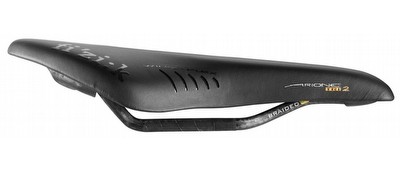
Fizik Arione Tri 2 saddle

Fizik Arione Tri 2 saddle

The stock seat that came with my bicycle had a rather annoying squeak, and was not specifically designed for a triathlon bike. I am now however the proud owner of a new seat that is lighter, more comfortable and squeak free. One other criteria was that I didn’t want any leather or suede on the seat. In the end I chose a Fizik Arione TRI 2 saddle, it felt good for a brief spin on the trainer, but I’ll get a better evaluation after a long ride.
On the bookshelf – Night & Low-Light Photography

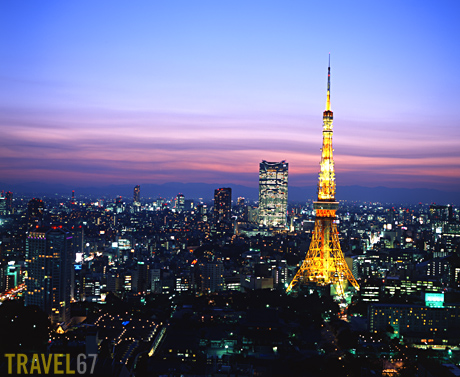
Twilight in Tokyo

Twilight in Tokyo

In my recent blog about tripods I mentioned that one of the uses of a tripod was for night shots. In reality most “night” shots are actually taken during twilight. The reds and purples or the sunset add some visual interest to the background, while the slightly lighter sky allows the building to be silhouettes rather than disappearing into the night.

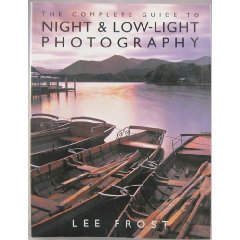
Lee Frost's The Complete Guide to Night and Low-Light Photography

Lee Frost's The Complete Guide to Night and Low-Light Photography

Lee Frost (a fellow Pentax 67 shooter ) gives a good introduction to shooting at night, dawn and twilight in his book The Complete Guide to Night and Low-Light Photography This is the book I have on my bookshelf, but there are numerous similar books available and many of the more recent ones are slanted far more toward digital users.
There is always the exception to the rule. Jason Hawkes doesn’t use a tripod for his night shots but as an aerial photographer prefers to use a giro-stabilizer attached to a helicopter. The results are fantastic, my favorite of which is this one here.

Japan Train Timetables

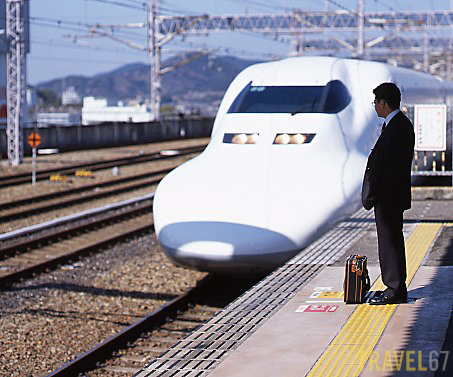
I’ve been sitting at my computer planning my next trip. I fly from Okinawa to Tokyo, but will travel by train from Tokyo to Hachinohe to Aomori to Niigata and then back to Tokyo. A decade ago figuring out the how, what, when and where of this journey would have been tricky even for a Japanese speaker. Now in the age of the internet, and with a growing appreciation of English speakers in Japan there is a solution, visit the website hyperdia  and simply enter your start point and destination. There are a few niggles in the system (It seems to assume Tokyo always mean Tokyo Disneyland) but overall I have found it a fantastic resource when planning trips.


Traveling Japan by Shinkansen

Traveling in Japan by shinkansen

Baraka

A couple of years ago I met up with Jeremy Sutton-Hibbert, a Tokyo based photographer who produces fantastic images for clients ranging from The Guardian to Greenpeace. During our conversation he asked which photographers I was inspired by. There was a rather embarrassing pause, followed by me admitting that I had always been inspired more by TV and movies than photographers.  The truth is it was the images from documentaries like The Trials of Life and movies such as Dances with Wolves and Braveheart that were truly awe-inspiring. There is one film above all others that really affected me  – Baraka.

Baraka on Blu-ray

Baraka is a fantastic journey through 24 countries with breathtaking cinematography.  I was amazed when I saw it 14 years ago as a university student, and it still inspires me. One wonderful thing is that I have now been to some of the places captured in the film. I have witnessed snow monkeys relaxing in their hot spring pools, and thousands of commuters surge through Tokyo’s stations.

In a previous post I talked about film size and the tradeoff between film size( and therefore image quality) with portability and cost. Just as my still camera uses film that is 56mm x 67mm to get higher image quality than 35mm film. Baraka was filmed in 70mm film rather than the standard 35mm motion picture film format (Lawrence of Arabia was also filmed in 70mm).  For a few years I have had Baraka on DVD but happily gave this copy to a friend as now Baraka on Blu-ray has been released.  The original 70mm film  was restored and rescanned at extremely high resolution to produce images that will once again inspire awe.

Don’t just take my word for it as an obvious fan. Film critic Roger Ebert said is was “the finest video disc I have ever viewed or ever imagined.”

Is it the greatest film ever made? Maybe. Perhaps, I shouldn’t feel so embarrassed that my inspiration comes from the moving pictures after all.

Do you use a tripod?

Short answer: Yes, most of the time.

Longer answer: As mentioned before the Pentax 67II is a big heavy camera. You can use it handheld, but it is both tiring and you don’t get the same level of sharpness you would with a steady base. I don’t use a tripod when I am moving around at festivals, as I am usually shooting portraits with a fast shutter speed. 90% of the time, however, when I fire the shutter I have the camera firmly mounted on the tripod. This is essential when you are taking night scenes, you are working in low light, or when you are shooting a landscape and want both the foreground and background in focus.

Even longer answer: There are several factors that determine what is a good tripod, but the importance of these individual factors will depend on the needs of the photographer so there is no one perfect tripod for all photographers, you have to find which works best for you. There are several factors you should consider.

Weight: A heavier tripod is a more stable tripod. The heavier your camera the heavier the tripod you need. However, a tripod is of no use at all if you don’t take it with you. Think realistically about whether it is something you want to carry around all day.

Stability: How well is it made. Do the legs flex or wobble. If legs extend, does each section lock securely.

Height: How tall do you want or need your tripod to be. Many tripods only allow you to raise the camera to waist height. Personally, I wanted a tripod that I could use to shoot over the top of other peoples’ heads and cameras. I chose a tripod that when the camera is mounted is close to 2 meters tall. (Again bigger tripods, tend to be heavier so be careful not to get something too ungainly) Remember that if the tripod has a center column it is for minor adjustments not for adding height. Cranking the center column all the way up produces a monopod attached to a tripod.

Attachment system: How will the camera attach to the tripod. Is the attachment secure, and how long does it take to mount.

Cost: A good tripod is an excellent investment. Higher end models are designed to take a lifetime of use / abuse. Unlike a digital camera which may lose half it’s value in a year a tripod is a much more stable purchase 😉   Do remember that if you spend a lot of money on a tripod it is another thing  to worry about when traveling. I am constantly reminding myself when I get off trains or leave stores to check I still have my tripod with me. ( I have also attached an “If found….” sticker)

So what do you use?

Gitzo Mountaineer Mk2 G1348 Tripod legs

Gitzo Mountaineer Mk2 G1348 Tripod legs

Gitzo Mountaineer Mk2 G1348 Tripod

Strong, reliable, no center column.

The latest version of this tripod is the Gitzo GT3542LS


Arca-Swiss B1 Ball Head

Arca-Swiss B1 Ball Head

Arca-Swiss B1 Monoball Ball Head

These are great solid dependable ball heads that keep the weight of the camera directly over the centre of the tripod. The clamp allows the camera to be quickly mounted and removed. (BUT ALWAYS CHECK THE CLAMP IS TIGHT) The  Z1 has superseded the B1 and is said to be stronger and lighter but as my B1 is perfectly fine I haven’t tried it out.


Really Right Stuff Base Plate for Pentax 67II

Really Right Stuff Base Plate for Pentax 67II

Really Right Stuff Base Plate for Pentax 67II

This is attached to the base of the camera and slots into the clamp on the head of the tripod. Base plates are designed to be an exact fit with a particular model of camera.

Really Right Stuff

Childhood Inspiration


Tony Hart

Tony Hart

There are a few really memorable people from when I was growing up. Family not included, these people tended to inhabit the grey box in the corner of the living room.  

This morning I saw on the news that one of my TV heroes, Tony Hart, had died. He inspired a generation of kids to draw and paint through his show Take Hart on the BBC.  As a child I used to watch in amazement at he chatted to Morph, his animated plasticine sidekick. There was also something strangely calming about “The Gallery” when you stared at the creations kids from all over the country had sent into him while a mezmerizing jingle played in the background.


Morph

Morph


Both Tony Hart and Morph will always be a wonderful part of my childhood, and I am sure the feeling is shared by thousands if not millions more.

Police Performance

Mitsubishi Evolution X police car in South Yorkshire

Mitsubishi Evolution X police car in South Yorkshire

The South Yorkshire police recently acquired a new pursuit car in the form of a Mitsubishi Lancer Evolution X. British police have for several years used Mitsubishi Evo’s and Subaru Imprezas which have helped catch numerous wayward motorist and provided a steady stream of exciting chases for shows like the BBC’s Car Wars

The main police car in Japan is the Toyota Crown (rebranded in the US as a Lexus) but they also have a few special cars including a Godzilla…

Nissan Skyline R34 GTR, Japanese police car

Nissan Skyline R34 GTR, Japanese police car

and a wonderful, yet somewhat impractical, Honda NSX.

Honda NSX - Japanese police car

Honda NSX - Japanese police car

Pudding goes for a swim / paddle.

Beautiful warm sunny day today. Ran my second 10 km, this time in 1 hour 2 minutes with an average bpm of 169. Took the dogs to the beach so they could swim. Bear happily sprinted out into the water, but Pudding was quite content with just paddling around in the shallows. 

Pudding goes for a paddle.

Pudding goes for a paddle.