Latest Posts

Edy & Free Flights with ANA

Flying around Japan is expensive. There are no discount airlines offering ridiculously cheap fares. For the most part, there are just two options ANA or JAL, and neither are cheap. You can save some money if you fly around your birthday with the special birthday tickets offers, or by buying tickets more than a month in advance. Another option, which is very popular with Japanese, is to get a hotel flight package from a local travel agent.  The cheapest way to fly, however, is to use an airline’s mileage programme and get tickets for free. Both ANA and JAL have a mileage club, and both are affiliated with numerous other airlines to help you build up miles.


ANA mileage club card (with Edy)

ANA mileage club card (with Edy)


Last summer when I flew back to the UK the cheapest flight was with Qatar Airways. The flight was good, and as a bonus the mileage from Qatar Airways could be put onto my ANA Mileage Club card. At the start of December I checked my mileage balance and saw I had  10,400 miles. Unfortunately, I needed 11,000 to get a return flight from Okinawa to Haneda (Tokyo). The problem was compounded by the fact that after February the mileage required to fly from Okinawa to Tokyo will increase to 14,000,  18,000, or even 21,00 miles. However, there was a solution to quickly get the extra miles.

Edy logo

Edy logo

The ANA mileage card can also operate as an Edy prepaid smart card. You charge the card with cash and can then use it at various stores. You get one mile for every 200 yen you spend. So, for the last six weeks, everywhere I go I’ve been paying with Edy: gas stations, convenience stores, the pet store, I even paid with Edy at Capricciosa, the local generic Italian restaurant. The dogs and I now have enough food stashed away to survive a seige, and this morning my mileage balance tipped the scale at 11,048.

Skeptical that the special offer might suddenly disappear I immediately booked flights from Okinawa to Tokyo on February 16th and Tokyo to Okinawa on the 27th. 

My plan is to do a mini tour of northern Japan. Tokyo – Hachinohe – Aomori – Niigata – Tokyo. Some good photo opportunities, and hopefully the chance to get back on a snowboard for the first time in 6 years. Exciting stuff.

Tokyo Intersections

Tokyo has several iconic intersections. They turn up again and again in movies whenever cinematographers want to show a dazzling display of neon lights, traffic, pedestrians and undecipherable kanji. You’ve probably seen them in Lost in Translation, The Fast and the Furious – Tokyo Drift and most recently in Jumper

I’ve taken photographs at the same intersections. Here’s one of Ginza yon-chome

Ginza Yon-chome

Ginza Yon-chome

and one of Shinjuku

Shinjuku

Shinjuku

Perhaps the most famous intersection is the one in Shibuya known as Hachiko Square Crossing (named for the nearby statue of the dog Hachiko)

Shibuya Hachiko Square Crossing

Shibuya Hachiko Square Crossing

Akihabara intersection is at the heart of the electronics district but rather than show a photo I thought I would post a video by fellow Japan blogger Danny Choo who likes to spend his time free time bringing a smile to the faces of tired salarymen and office ladies.

First 10 km run.

Yesterday I went out on my bike and, using the bike’s odometer to measure the distance, rode up the coast  for 5 kilometers. This morning I put on my old sneakers and my new Polar heart rate monitor (thank you little brother for my X-mas present) and jogged the 5 kilometers up the coast and back again. My first ever 10 km run.

Not sure if you're dead? Get at heart rate monitor.My heart rate monitor gave me my total time as 1 hr 4 mins with an average heart rate of 165 bpm. Now I am sure that taking over an hour to run 10 kilometers is not a good time, but this just leaves me a lot of room for improvement. One thing I do need to sort out is that my heart rate monitor seemed to suggest that I should be training with a heart rate of  between 140 and 160 bpm. Unfortunately, for almost the entire run my heart insisted on beating at around 166 bpm. This resulted in the watch continually flashing and beeping a warning signal, the watch equivalent of Scotty shouting “I’m giving it all she’s got captain if I push it any harder the whole thing will blow.”

Perhaps a quick browse through the manual is a good idea.

Sapporo Snow Festival

One frustration I have with some travel blogs is that you usually hear about exciting events after they have happened. Several times I have read about a fantastic festival, and wish that I’d known about it previously. So here’s one that’s coming up.

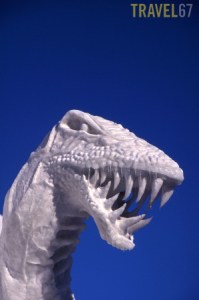
A snowy T-rex with beads of frozen saliva.

A snowy T-rex with beads of frozen saliva.

The 2009 Sapporo Snow Festival ( Sapporo Yuki Matsuri ) will be held February 5 through February 11. You can read more details about visiting Hokkaido in winter here.  

This photograph brings back a lot of memories for me as it came from the first roll of film I put in my first SLR camera way back in February 2000.

The joys of a “waterproof” camera.

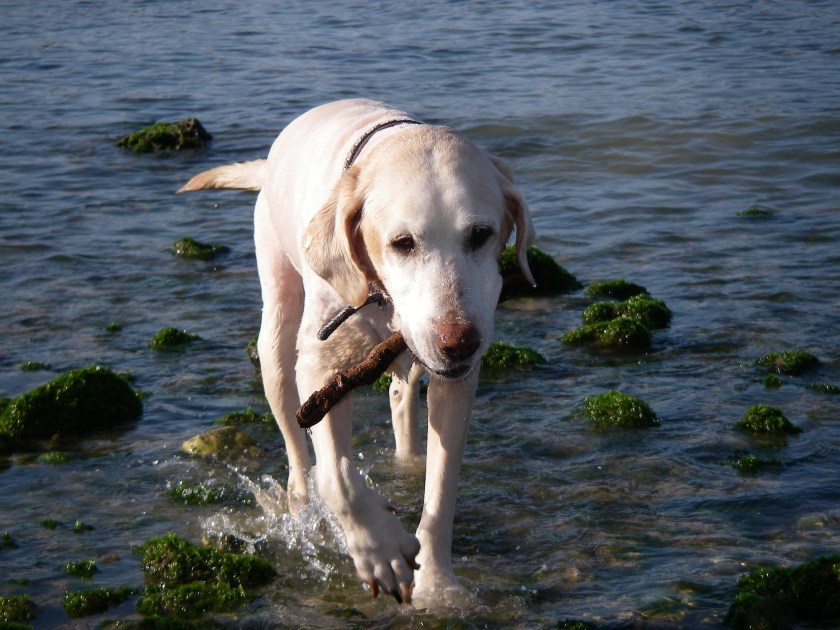
The photograph of Pudding and I playing fetch the stick reminded me about the joys of a “waterproof” camera. A few years ago Pentax came out with a point and shoot digital camera called the w10 that was waterproof to 1.5 meters. My girlfriend, Seiko, got one thinking it would be a great thing to take to the beach or even snorkeling and it has been really fun to use. 


Myself, Kim and Seb

Myself, Kim and Seb

Of course the picture quality is not as good as a larger digital SLR (or higher-end compact digital cameras), however, it’s a camera you simply don’t have to worry about. Use it and abuse it. Leave it in you jacket pocket when it rains, let the dog slobber on it, throw it in the bag full of sandy wet clothes, or simply forget to take it out of your pocket when you jump in the ocean.  I recommended the camera  first to my sister and later my dad so we now have a range of models and colors in my family.  The latest model the Pentax Optio W60 has higher resolution and is even waterproof to 4 meters.

If you live an active life and you are looking for a hassle-free way of documenting events it’s a great camera. 

Why put waterproof in speech marks? If you want to take photos while SCUBA diving this isn’t the camera for you. To take a camera diving you need a separate acrylic housing which are available for  many compact cameras (0r SLRs) and are usually rated to 40 meters.

(In the photo we were all meant to be squirting water at the camera. Unfortunately Seb and Kim look to be just dribbling while I appear to be channelling Zoolander.)

Pudding makes it into 2009

Pudding is our 13 year old cream coloured Labrador. When my girlfriend, Seiko,  moved from Hokkaido to live with me in Okinawa  she brought Pudding with her.  Pudding’s favorite thing about Okinawa is getting to go in the ocean regularly. In summer, both Pudding and I could go for a swim together  although this tended to result in me being covered in scratches. 


Playing fetch with Pudding

Playing fetch with Pudding

Over the last year Pudding has being sleeping more and more. She is quite happy to relax on the sofa all day while Bear explores the house / sink  / trash cans / laundry basket.  A few months ago we found a lump on her elbow. For a while we didn’t have it removed to avoid an operation on an elderly dog, but when the lump had grown to the size of an egg, it was excised and diagnosed as Synovial sarcoma. Pudding has recovered from the operation and after a few weeks was back to her normal sleepy self. 

On around the 30th of December, Pudding seemed to get very old very quickly. She didn’t want to walk and was sometimes panting or shaking. The vets were all closed on the 31st and it was a worrying day watching her acting strangely. When the new year arrived Seiko and I were both pleased that Pudding had made it into 2009. Happily, Pudding slowly began to recover. On the 3rd the vet gave her some medicine and suggested that she’d had a bad reaction to a shot she’d been given a few days before. One week later Pudding seems to have made a full recovery.  On the next warm day, hopefully she will get to go for her first swim of 2009.

Where the Hell is Matt?

It started as a regular guy (Matt) using his digital camera to take videos of himself doing funny little dances while on his travels around the world. His dances became a You Tube phenomenon and now he travels to more and more places doing his funny little dances. 

Looking for something to make you smile? Here it is…

Why the “67” in Travel 67?

The short answer: 67  refers to the frame size of the film my Pentax 67II camera uses.

The much longer answer:  Just as digital cameras have different sizes of sensor, film cameras use varying sizes of film. The vast majority of film cameras use 35mm film. One step larger than 35mm are the medium format cameras that use roll film. Roll film always has the same width (56mm), but different medium format cameras vary in how much of the roll they use in each frame. The most popular medium format cameras are 6×4.5, 6×6 and 6×7. The image below shows how the frame sizes compare.

      35mm
    24x36mm
   864 sq.mm

            6×4.5
          56x42mm

        2352 sq.mm
   (2.7x as large as 35mm         format)

               6×7
           56x67mm

        3752 sq. mm.
 (4.3x as large as 35mm format;            1.6x larger than 6×4.5)


Why use larger film?

Capturing an image on a larger piece of film has many advantages. It allows you to record more detail, there are better gradations in tone and they require less enlarging when printing. In the past 35mm was fine for smaller prints but 2 page spreads in magazines or commercial work for advertising, portraits or even weddings was done with medium format cameras. You could go one stage further and use large format cameras for even finer detail. (These are the bohemoths that take single sheets of film 4 by 5 inches or even 8 x10 inches in size. These cameras were mainly used by landscape photographers who loved the detail and the special shifts and tilts that could be made.)

There are, however, disadvantages to using bigger pieces of film including size, weight, availability, practicality and cost. A bigger piece of film requires a bigger camera. Bigger cameras need bigger lenses, which then means you need a bigger tripod and end up with a bigger, heavier camera bag.  The cameras and lenses also tend to be more expensive to buy, but more importantly is the cost of film and processing. On my camera each click of the shutter costs more than a dollar in film and processing.

Photographers using film therefore had to weigh the advantages against the disadvantages for their particular situation. News photographers tended to use 35mm while studio photographers tended to use medium format. As a travel photographer a smaller camera will mean you are less conspicuous, it’s less intimidating, you can walk around all day without backache, you have more shots on each roll of film and you have the advantages being able to use autofocus or metering if you need them.

 Back in 2002, I checked what the submission requirements were for various travel magazines and noticed that many preferred medium format slides, stock agencies likewise preferred the larger transparencies. My goal was to take the highest quality photographs I could get while traveling. To be able to offer photo editors the best images I could produce.  I looked at various possible cameras, but in the end chose the Pentax 67II.


Pentax 67II

Pentax 67II

The Pentax 67II is a 6×7 camera so the film size is 4.3 times that of 35mm.

The camera does, however, operate very much like a traditional manual 35mm SLR with the film advance lever, shutter release button, prism etc all where you expect them to be. The biggest difference is the size of the camera which leads to its nickname in Japan – Gulliver. The camera body with meter weighs 1.66 kilos while the lenses I use range from around 700 grams to a back destroying 3.7 kilos.

So back to the short answer.  67  refers to the  frame size of the film my Pentax 67II camera uses. Why include this in the title of my website? Because it’s not just about taking travel photographs, but pushing myself to get the best  images possible.

Shuri Castle New Year Festival

From the 1st to the 3rd of January you can see the Shuri Castle New Year Festival in Naha, Okinawa. Shuri Castle is a UNESCO World Heritage Site and an interesting place to visit on a normal day, but it is spectacular with hundreds of people dressed in traditional costumes. Here are some photographs from previous years. The second photograph of the Ryukyu Queen was taken backstage when I was one of the events official photographers. 


Shuri Castle New Year Festival, Okinawa, Japan

Shuri Castle New Year Festival, Okinawa, Japan


Ryukyu Queen at Shuri Castle New Year Festival, Okinawa, Japan

Ryukyu Queen at Shuri Castle New Year Festival, Okinawa, Japan


Ryukyu dancers, Shuri Castle New Year Festival, Okinawa, Japan

Ryukyu dancers, Shuri Castle New Year Festival, Okinawa, Japan

Veyron v Euro Fighter

Top Gear is a British car show that is hated with gusto by a large section of the British public. Its reviews of cars are biased and often ridiculous. Jeremy Clarkson’s hatred of vegetarians, the environment and subtlety are almost legendary. The show is, however, one of the best programmes on television. The reasons are several: Opinions  and hyperboles are more interesting than facts. The three presenters have a fantastic chemistry between them. The show understands that it is just as much about entertainment as documentary. The camera, sound, lighting and editing work are done to a standard normally associated with movies rather than TV. And finally, a fan base of loyal viewers who love the show just as much as others hate it.  

When reviewing a supercar such as the Bugatti Veyron it would be too easy to simply race it around a track or compare it to another ludicrously priced sports car. Top Gear takes the matter a stage further…