Latest Posts

Okinawa Churaumi Aquarium

Okinawa Churaumi Aquarium is the second largest aquarium in the world, and has the world’s largest aquarium window measuring 8.2 by 22.5 meters. I have been many times but usually without my camera as I was showing friends or relatives around the island. (The issue of being a good photographer versus a good travel companion will have to wait for a future post.) What this meant was that I didn’t have any really good images of the main tank which is a real oversight when the aquarium is one of Japan’s top tourist attractions.

So a few weeks ago I went along and took some shots with my main Pentax 67II camera. I used Fuji Provia 100F film and pushed it two stops to ISO 400 as it is so dark inside. The film was processed but there was still too much motion blur in the shots from the slow shutter speeds. I ordered some faster film on-line and last week went back again and shot a second roll. This time I used Fuji Provia 400F pushed to ISO1600 and the results were much better. (It must make digital users smile however to see me have to wait a couple of weeks to change to a higher film speed when they can do it in a matter of seconds.)

First a shot from the side….


Okinawa Churaumi Aquarium

Okinawa Churaumi Aquarium

And then one straight on…


Okinawa Churaumi Aquarium

Okinawa Churaumi Aquarium

There are actually three whale sharks in the tank. I had to wait a while until two of the sharks were passing by directly in front of the main window. I could have waited around all day to see if I could have got all three sharks into the same shot, but I had already finished the roll and I have to leave something for another day.
Another new beginning (part 2)

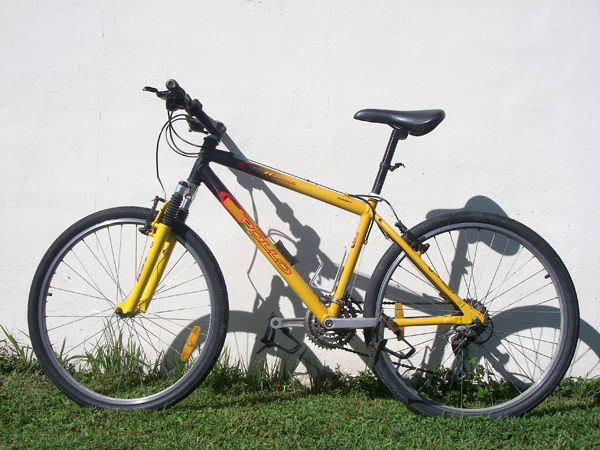
Back in October I started teaching a couple of days a week at Meio University. It’s about 40 kilometers from my house to university and using the toll road expressway it takes 45-50 minutes door to door. The drive isn’t bad, but it’s a lot of time to be spending in the car, and quite an expensive commute. I decided that it might be possible to do the commute at least once a week by bicycle. I would save the money I normally spend on fuel and toll charges and I would get fit at the same time. So one sunny day, my friend Ken and I decided to ride from my house to Meio and back. I road on my beat up old mountain bike.


The old bike - an Australian Hedgehog ladies mountain bike

The old bike - a 12kg Australian Apollo Himalaya ladies mountain bike

We peddled at a slow but steady pace and took several brief stops at convenience stores along the way. It took 3 hours 15 minutes to get to Meio and 2 hours 45 minutes to get home. At this point it looked like the commute would be unfeasible.

The idea of doing triathlons, however,  was still in the back of my mind, particularly the bike stage.  A road or triathlon bike would reduce my commute time to a realistic amount, improve my fitness and just as importantly give me experience riding a bicycle unlike the mountain bikes I have ridden previously. I started to browse the internet looking at possible bikes. Most modern road bikes and nearly all triathlon bikes seem to be made of carbon fiber which makes them light and strong. The only problem is that the science behind carbon fiber structures is still advancing rapidly, while the criteria for determining the quality of carbon fiber frames is decidedly fuzzy. In the end I went with the old fashioned option of a metal frame but chose a very modern material – titanium. There are only a few companies that make titanium bike frames, but one company Litespeed and two of their bikes the Blade and the Saber seemed to appear again and again with fantastic reviews. ( In 1999,  Lance Armstrong, although a Trek sponsored rider, rode a Litespeed Blade re-decaled as a Trek bike for the Tour de France time trial stages – all of which he won.) Eventually I decided on the exact bike and frame size I wanted and then patiently waited for a used bike to appear on Ebay. In the end I bought a ex-demo model from the Cycle Smithy bike shop in Chicago and had it shipped over to Okinawa.

The new bike - 55cm 2007 Litespeed Saber

The new bike - an 8kg 55cm 2007 Litespeed Saber

Last thursday was my first ride to work on the new bike. I got up at 6.00 left the house at 6.15 arrived at work at 8.15 took a shower and was teaching classes at 9.00. The ride home was even faster taking only 1 hour 45 minutes. (Meio University is situated at the top of a hill) 

Riding the bike is great although I am not comfortable / competent enough to spend much time in the aero position yet. Slowly my fitness will improve and my legs will begin to push the larger gears. The annual Tour de Okinawa takes place next November which gives me a first goal. Beyond that who knows, but maybe in three or four years time it will be me standing on the beach in Miyako about take part in my first ever Ironman.

Another new beginning (part 1)

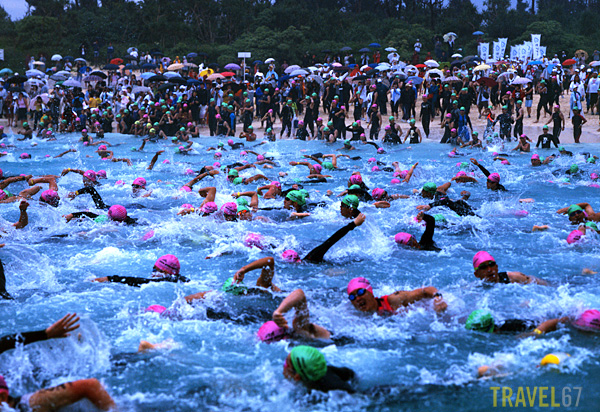
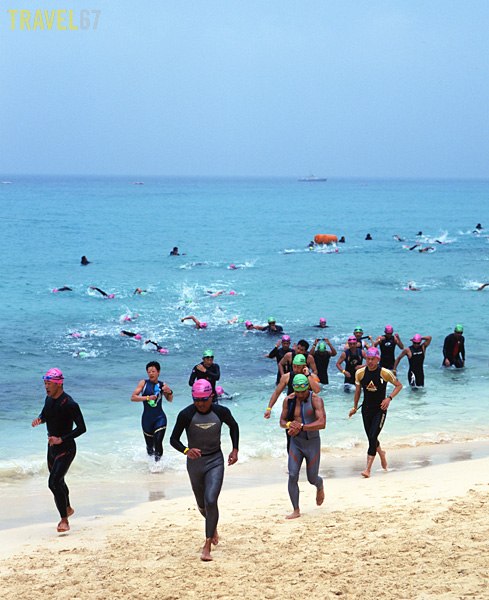
In April 2006 I went to Miyako Island to take photographs of the  Strongman Triathlon. I had no deep interest in triathlons myself, but as it is the island’s largest annual event I thought that I should get some images ready so I would be able to illustrate any future articles about visiting Miyako. A few of my Okinawan friends took part in the triathlon and I was impressed, if not amazed, by their strength, fitness and determination. This was a full strongman triathlon. Which means….

3 kilometer swim during which you are hit  / kicked  / partially drowned by 1500 other swimmers.

Miyako Triathlon Swim

Miyako Triathlon Swim

Exit the water, rip off your wetsuit and stagger up the beach.


Miyako Triathlon transition

Miyako Triathlon transition

Jump on your bike and cycle 155 kilometers around the island while locals wave you on.

Miyako Triathlon Bike

Miyako Triathlon Bike

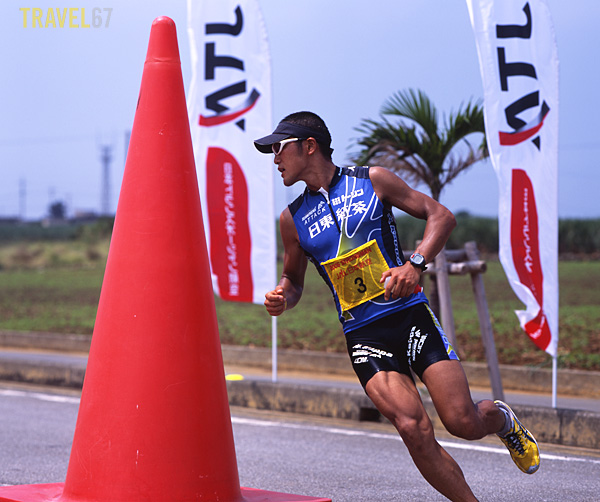
Get off the bike and run a full marathon.


Miyako Triathlon Run

Miyako Triathlon Run

Arrive at the goal to cheering crowds and wave triumphantly ( or collapse / vomit / seek medical help )


Miyako Triathlon finish!

Miyako Triathlon finish!

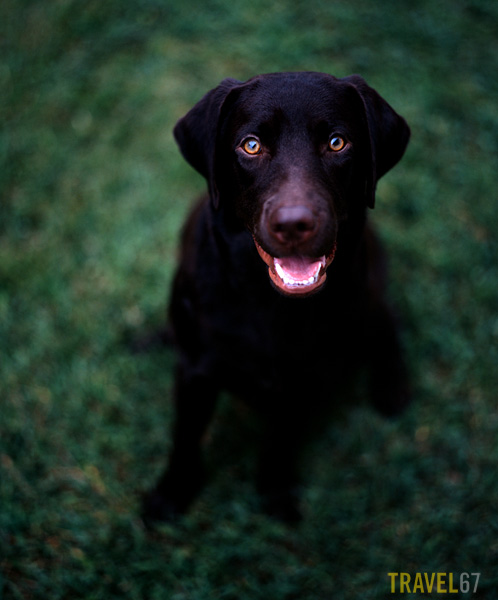
Time passed by but the triathlon remained in the back of my mind. Then this summer I realized I was already swimming a couple of kilometers each time I went for a snorkel at Cape Maeda (with a mask and snorkel and fins) I was still cycling around town on my rusty old mountain bike, and I was even jogging on most days trying to exhaust Bear my one year old chocolate lab. Doing a triathlon would simply be putting all three things together…

The joys of overtaking

This week it was announced that Honda is ending its Formula 1 racing programme. It’s a shame that they are leaving the sport, but when the majority of their cars are sensible compacts and 660cc kei cars maybe they no longer feel the need to associate themselves with a motorsport that requires millions to shave mere hundredths of a second off lap times.

Or maybe it’s that Forumla 1 was just getting boring. After the first couple of corners some races appear to be little more than a procession, albeit a very fast one. What Forumla 1 needs is more overtaking. 

Something like the following…


On the bookshelf

My fascination with photography  began  in 1999 when I arrived in Japan. I bought my first SLR camera, put in some film and started taking pictures. I didn’t have any photographer friends, know of any photography clubs or really have any clear idea of what I was doing. For the first few months my new camera remained in the auto everything mode, but slowly I started experimenting seeing what all the other buttons did and working my way through the camera’s manual.

Taking more and more photographs is a great way to improve, but I still didn’t have anyone that could offer me advice on subjects like which lenses to use or the best way to shoot a portrait. It turned out however that there were hundreds of fantastic mentors out there who had distilled their wisdom into books. It didn’t matter that I was living in a snowdrift in northern Japan as those magical brown cardboard boxes from Amazon always managed to get through. And so in a country where I can’t even read the children’s books I gradually began to build up my own modest library that offered both guidance and inspiration. 

So what are the books on my shelf? 

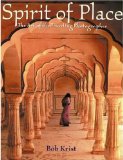
I thought I would start with one closest to my own passion – Bob Krist’s Spirit of Place : The Art of the Traveling Photographer. Its a book written by a man with a dream job: assignments by magazines like National Geographic to exotic locations across the world. It’s easy to read with lots of useful information, but not overly technical. The photographs do however have the useful data such as shutter speeds, aperture and camera/film that give you a better idea of how he took the picture. 

Spirit of Place

One interesting feature of the book is that there are several mini photo essays in the book. If you want to work as a professional travel photographer you usually need to think about getting a series of shots rather than just a single photograph. If you are telling the story of a city you need to have a selection of images that show all its different faces.

Overall a good book from a man with a fantastic job.

Check it out out your local library or bookshop or if  you want you can get it from Amazon.com here:

Spirit of Place: The Art of the Traveling Photographer

New York Times assignment


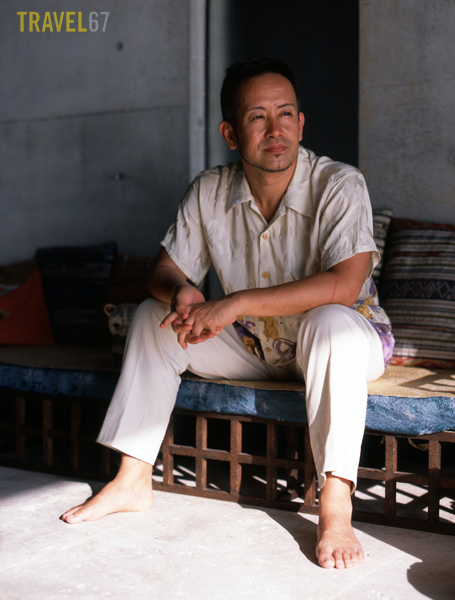
Amon Miyamoto at home in Okinawa

Amon Miyamoto at home in Okinawa

In early September I took photographs of the Okinawan home of Japanese theater producer Amon Miyamoto for The New York Times. It was the first time I had worked for them and both a fascinating but challenging experience. Normally when doing travel photography I am happily working at my own pace and I can wait until the conditions are perfect. On this assignment I had only a couple of hours to shoot five rolls of 220 film and get a decent selection of shots of the house’s interior, exterior and some portraits of Amon Miyamoto. The house was constructed from concrete and had a minimalist design. The photos are now online at the New York Times website you can see them here:


The New York Times – In Okinawa, Staging the View

Connect Magazine assignment

Most of the articles I have written about Japan have been based on a particular city or region. However recently I did a feature titled “Ultimate Guide: Japan” for CONNECT the business travel magazine of Carlson Wagonlit Travel. It was interesting trying to condense a whole county into just a few pages, but it meant that many great places to visit had to be left unmentioned. 

You can see the article here: Ultimate Guide: Japan

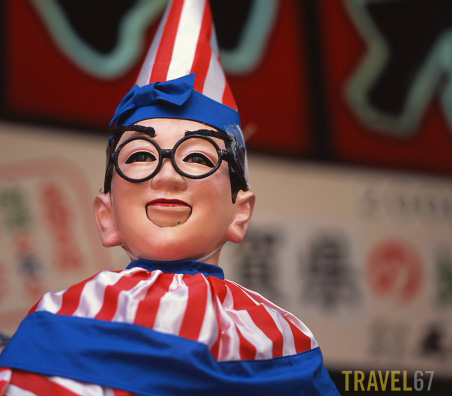
I also wrote the city guides for Tokyo, Osaka, Hiroshima, Kyoto and Fukuoka that are later on in the magazine. One of the interesting things I learned while writing the piece was that since my last visit a year ago Osaka’s most famous restaurant Kuiadore has closed down however Kuidaore’s iconic clown figure that used to stand outside the restaurant will continue to live on albeit at a new location outside the C’est la vie SQUARE Nakaza Building.


Kuidaore Taro, Namba, Osaka

Kuidaore Taro, Namba, Osaka