Another fun shoot testing out the Pentax K-1 and the 28-105 lens in the studio.

Thanks to Amelia for modeling and makeup. Great working with you.

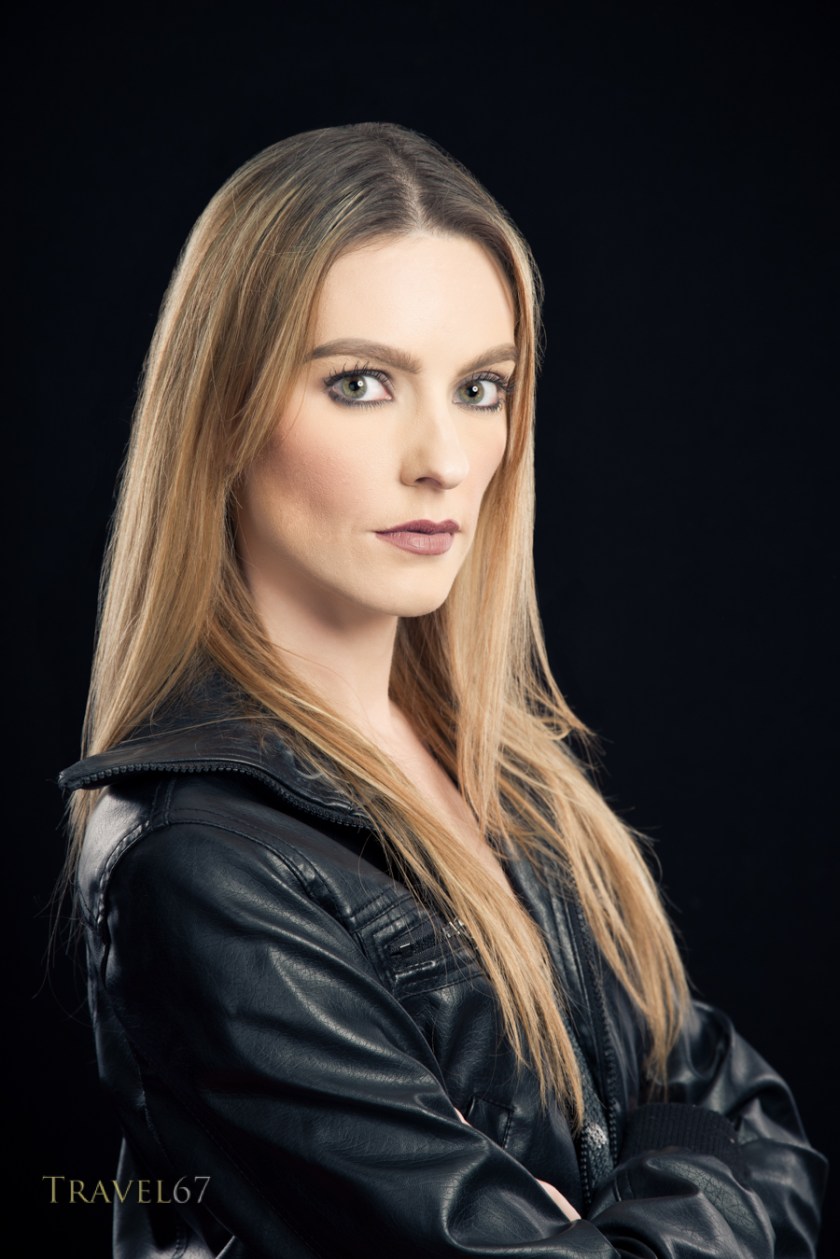
Another fun shoot testing out the Pentax K-1 and the 28-105 lens in the studio.
Thanks to Amelia for modeling and makeup. Great working with you.
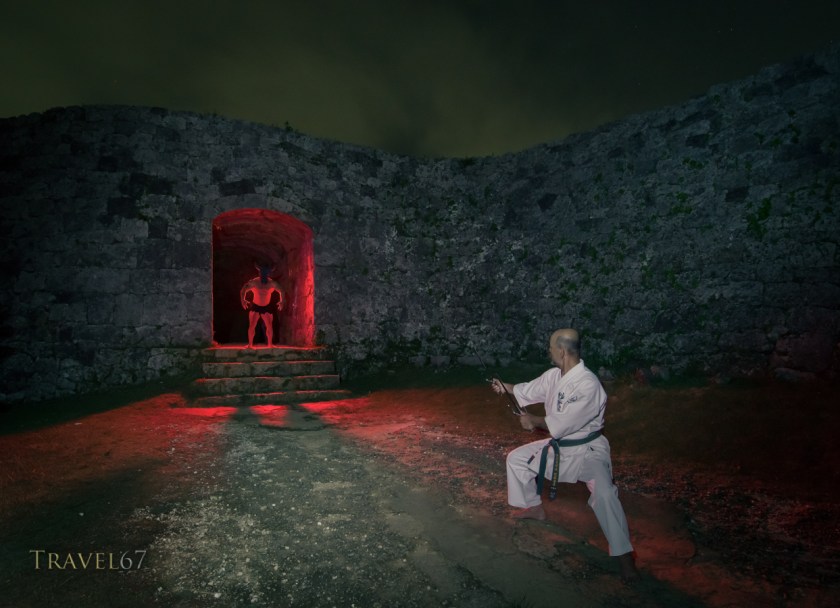
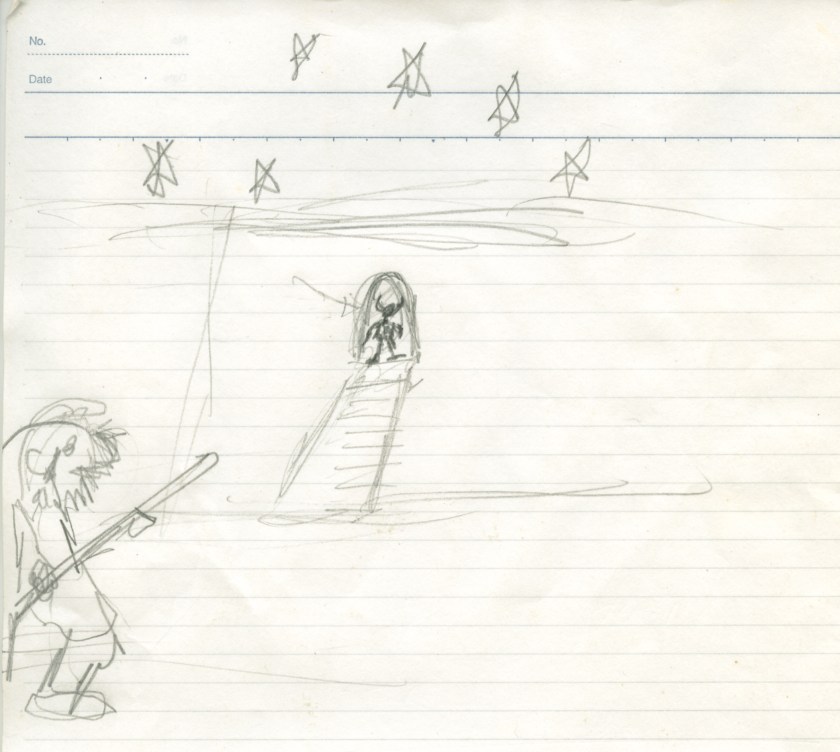
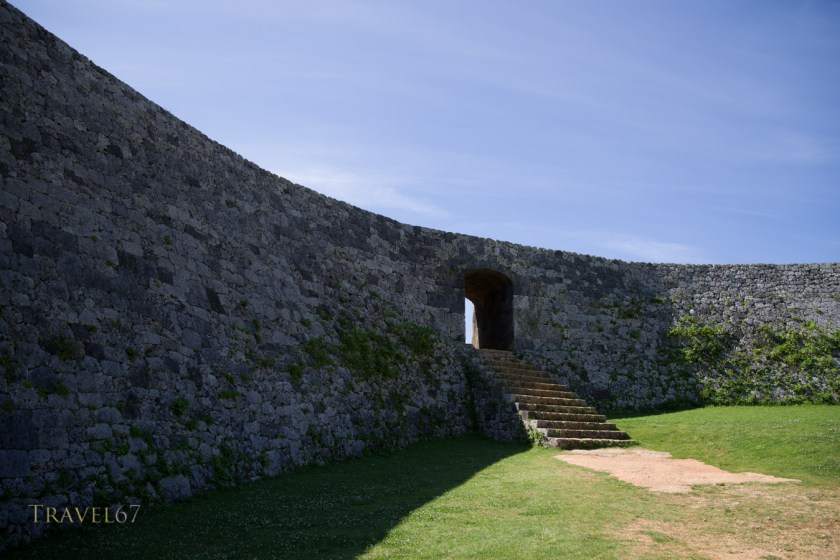
Last week I was chatting with Mark Thorpe about his upcoming time-lapse workshop. He mentioned that Sunday 5th of June was a new moon and possibly the best day of the year for photographing the Milky Way. Mark would be heading out to Mount Fuji, but I thought I’d head over to Zakimi Castle in Yomitan. I doodled the castle and stars on a piece of paper. Then continued to doodle adding a minotaur into the doorway.
I actually have two animal masks sitting in my office. One is a hippo and the other a bull. They hippo has been used for a few rather bizarre photo shoots.
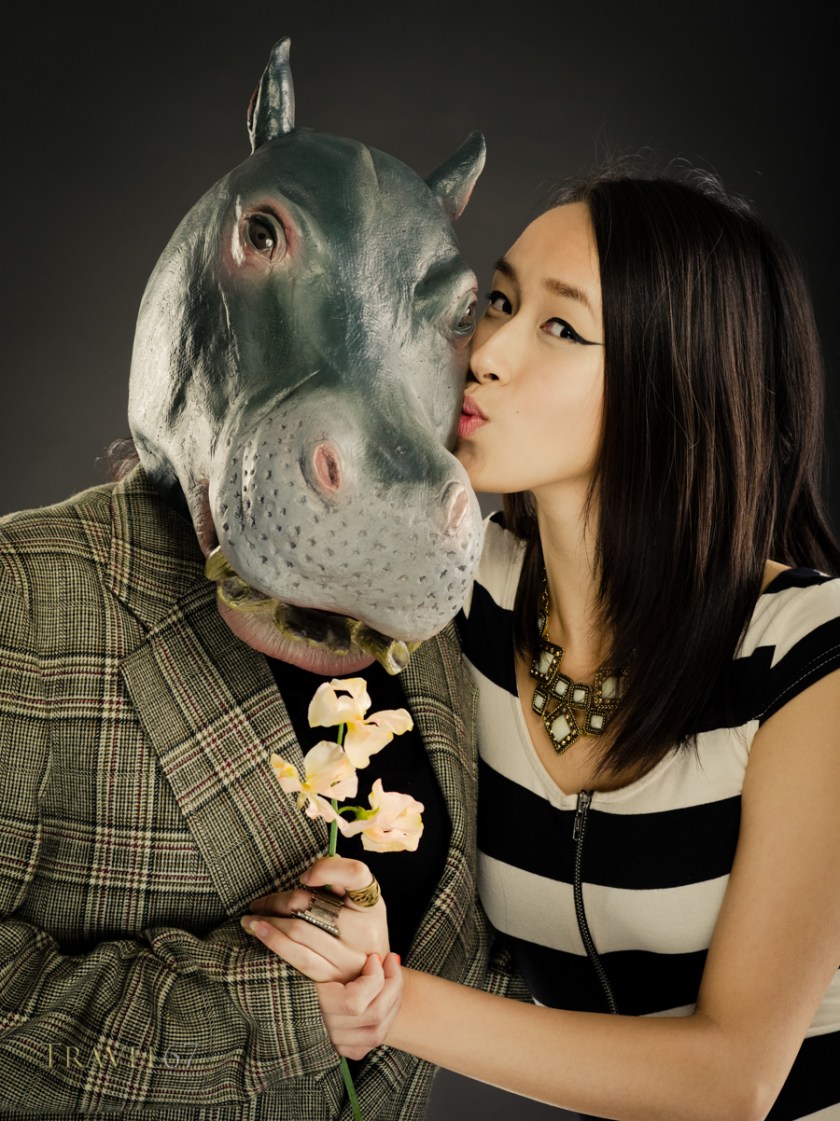
I realized that to create a minotaur all I’d need is the bull mask and a suitable torso. Luckily my mate Adam has both the right physique and was free on the Sunday night.

Still doodling on my piece of paper, the image was lacking a foreground subject and could use a hero. I’d previously photographed 8th-dan karate master Masaharu Higa at Zakimi Castle and knew he lived locally. I could always give him a call and see if he was around on Sunday night.
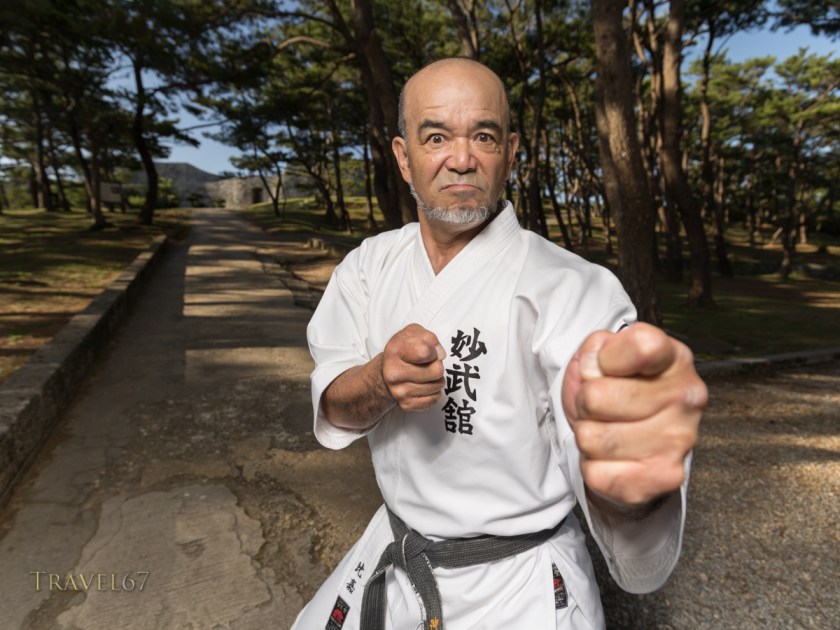
Yuki and I arrived at Zakimi at 8PM and it was obvious we weren’t going to a clear star-filled sky. Adam however was already in the car park, and another friend Jamie had come to assist. I put a red gel in front of a Profoto B1 strobe then Yuki held it behind Adam in the castle doorway. Jamie stood where Higa sensei would need to be in the final shot. It took a few minutes to adjust positions, focus and lighting until everything looked reasonable.
At 9PM Higa sensei arrived with his gi and a pair of sai. He moved to where Jamie had been standing, and I took a 15 second exposure. The strobe was triggered by the shutter, then I manually fired a speedlight illuminating Higa sensei before painting in the walls of the castle with a flashlight.
And there we have it. From doodle to photograph with a lot of help from my friends. Thanks to Mark Thorpe for getting the ball rolling, to Trevor Williams for being my light painting guru, to Yuki and Jamie for assisting, and most importantly to Adam “the minotaur” Burns and karate master Masaharu Higa.

Studio shoot with model Samantha Armistead. 3 different looks: business, beauty and street. Makeup and hair by Audra Pesicka.
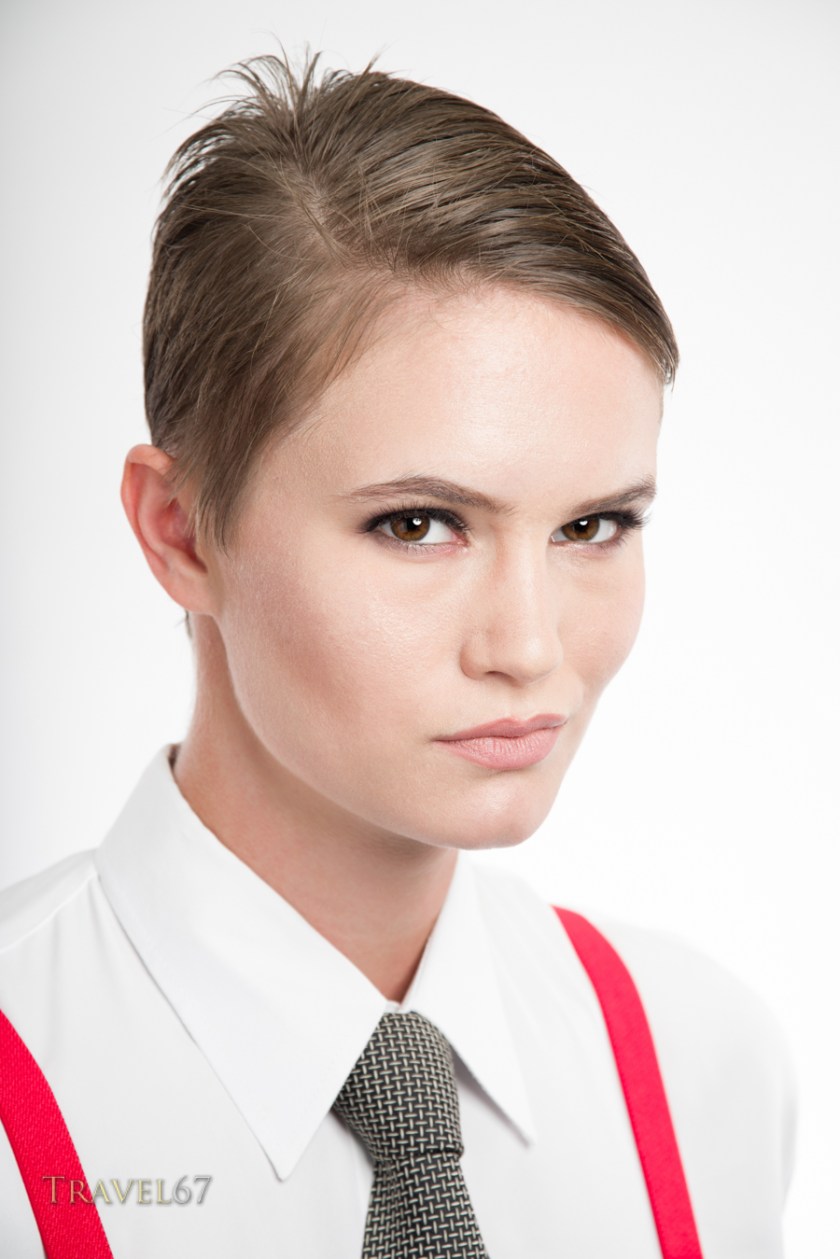
Shot using the Pentax 645Z and K-1.
Lighting: Beauty dish camera right, Softbox camera left for fill. Two rectangular softboxes behind the model for edge lighting.

Really pleased with the images, Sam has a fantastic look and was a pleasure to work with. Audra was a real professional, quickly creating 3 different looks that transitioned from one to the other.
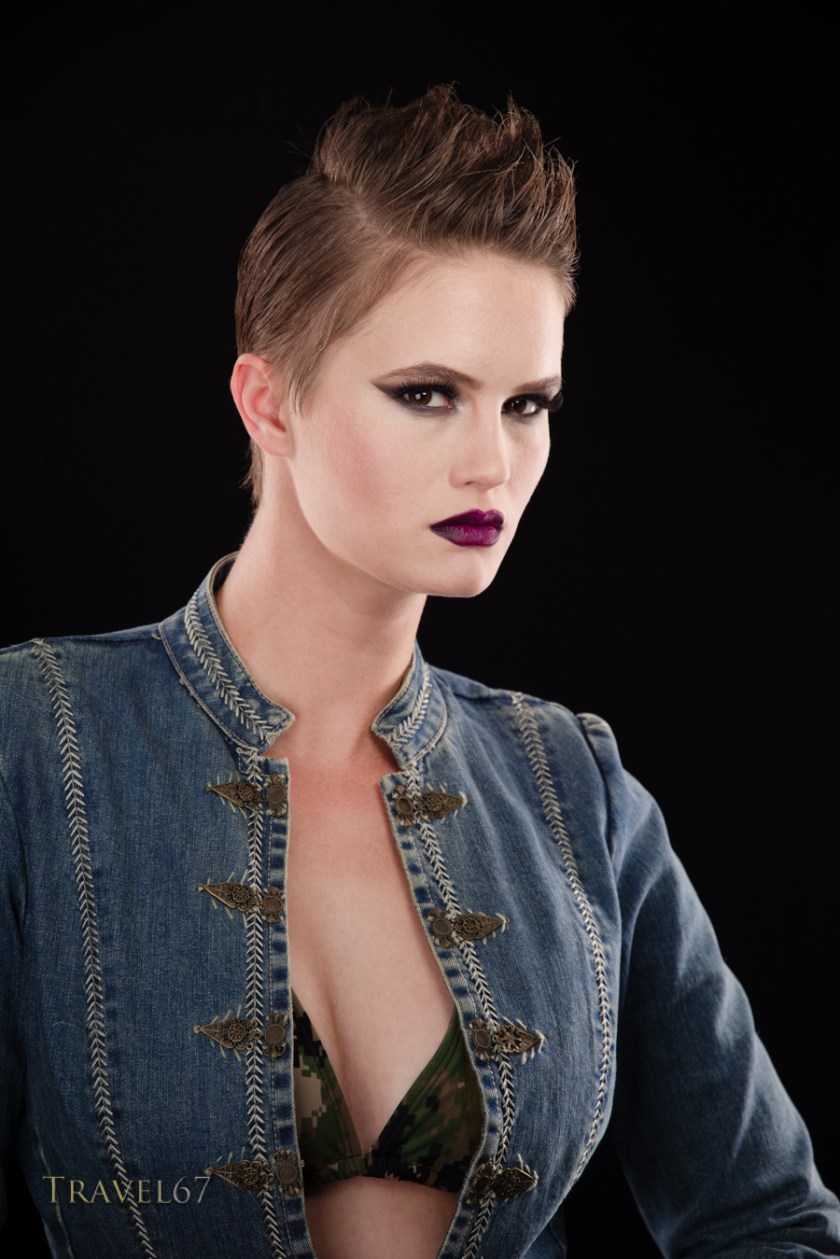
For more information on model portfolio sessions. Click here!


Hannah Hooper Yoga、Okinawa, Japan
Early Saturday morning I was out at the beach in Nakijin Village shooting some promotional images for Hannah Hooper Yoga. Hannah wanted some simple clean shots she can use as illustrations and backgrounds for her new website.

Hannah Hooper Yoga、Okinawa, Japan
I used both the 645Z and the K-1 and a Priolite HotSync Flash to add light removing the harsh shadows on Hannah.

Hannah Hooper Yoga、Okinawa, Japan
We also took a few portraits with some softer lighting. Finally we moved to a beach in Motobu that has beautiful rocky walls.

Hannah Hooper Yoga、Okinawa, Japan

Hannah Hooper Yoga、Okinawa, Japan
A great morning out in the sun. If you’re ever looking for a yogi, check out Hannah Hooper Yoga. 🙂

Hannah Hooper Yoga、Okinawa, Japan

The Off Camera Flash workshop went really well yesterday. My buddy Pete Leong and I taught the class, and we had 3 great students Adam, Anna and Liesa.
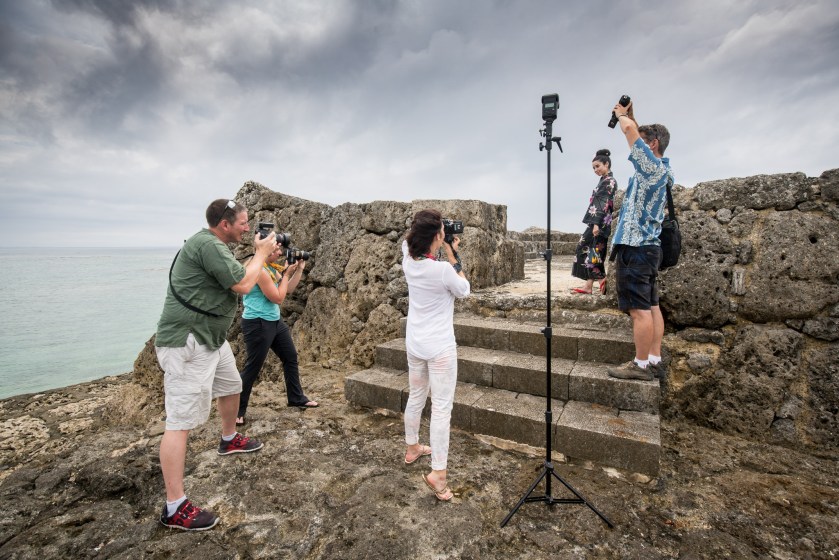
We discussed the various different types of strobes and modifiers before getting out there and practicing taking some pics around Yomitan.
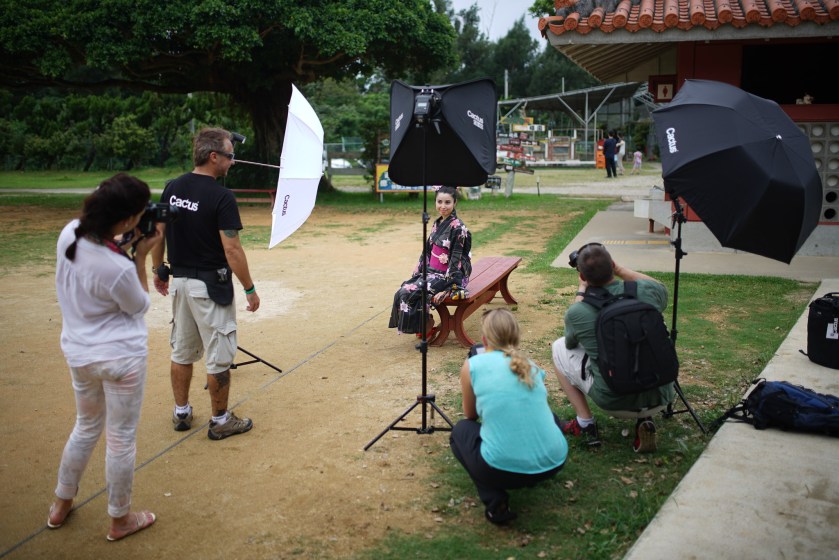
We finished the class down at the beach. I took a pic of Yuki to demonstrate using shutter speeds below the max sync speed. A great day.

The next workshops are:
June 4 & 5, 2016 – Photography Fundamentals Workshop with Chris Willson

It’s rainy season in Okinawa, but yesterday morning we had a dry spell long enough to capture Ben and Antonio practicing capoeira at Araha Beach.
Gear: Pentax K-1, 28-105mm lens, Priolite M-Pack 1000 HotSync strobe
Using the Priolite HotSync system meant I was freezing the action with the shutter speed rather than the flash duration. This removes the issues you get with ambient light blur when shooting motion with strobes outdoors.
ISO 400, f4.5 1/3200 sec

This was my first time shooting Capoeira so it was tough to anticipate the action. With two subjects performing different moves at the same time it is also tricky to get images where they are both mid air, correctly illuminated, and in focus.

Back flips and kicks are so fast to the naked eye it all happens in such a blur. It’s fascinating to check out the images and see them frozen in time. In some shots they looked like skydivers free falling.
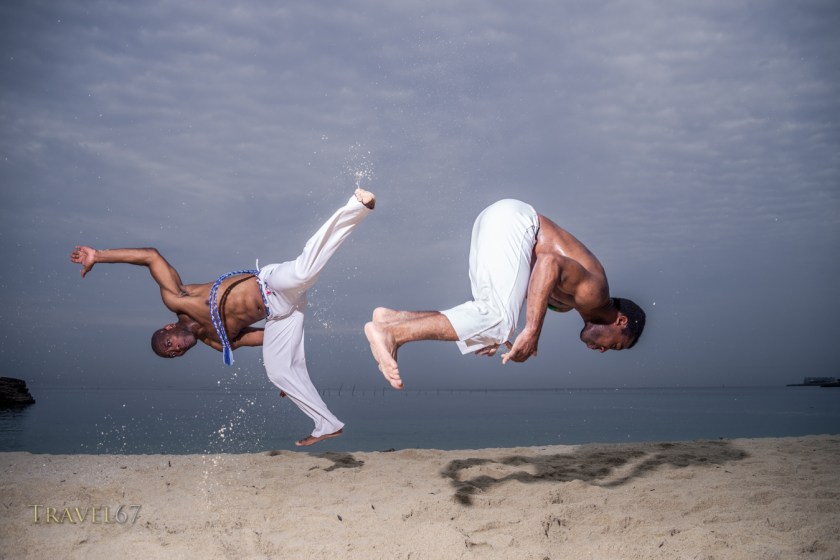
I’d also like to try this on a bright sunny day where the strobe would act more as fill rather than the key light. It would also let me push the shutter speed further to 1/8000 second.
A huge thanks to Ben and Antonio of Capoeira Academy Okinawa. Looking forward to working with you again!


A visit by friend Mike Lynch is always a great photo opportunity because he looks fantastic and tolerates my crazy ideas. Ideas such as making him stand outside on a bright sunny day wearing a sou’wester and bring sprayed with water.
Gear used:
Pentax K1 with 28-105mm lens at 105mm 1/4000 sec f6.3 ISO 100
Priolite M-Pack 1000 HotSync strobe with white beauty dish full power
In most cases when shooting with strobes your shutter speed is restricted to the maximum sync speed of the camera. This is usually around 1/200 sec or 1/125 sec. In turn this then forces you to shoot at small apertures or with dark neutral density filters to control the amount of light. The Priolite system however has a long enough flash duration that you can sync with fast shutter speeds such as 1/4000 second.
With a standard strobe the water droplets would be frozen by the very short duration of the flash, with the Priolite system they are frozen by the short duration of the shutter.
Thanks to Mike for being the fisherman, to Keith for being the voice activated light stand and to Yuki for being the bringer of rain.
And here are a couple of pics from last time Mike visited 🙂


The Pentax K1 is the first 35mm full-frame digital camera by Pentax / Ricoh. For many years Pentax focused on producing great APS sensor cameras such as the K-5 and K-3, or the medium format flagships the 645D and 645Z.
The main features of the K-1 are a 36.4 MP sensor and 5-Axis in-camera shake reduction. These provide high resolution images and minimize motion blur. As with other Pentax cameras you get great build quality and weather sealing. Dual SD card slots and the same lithium battery I use with the K-3 and 645Z means it should be a dependable workhorse.
Pentax Japan kindly sent me a K-1 and the new FF 28-105 lens to shoot some images for a Tokyo exhibition later in the year. First, however, I thought I’d just put in a couple of memory cards and a battery and take it with me during Sunday’s workshop in Yomitan.
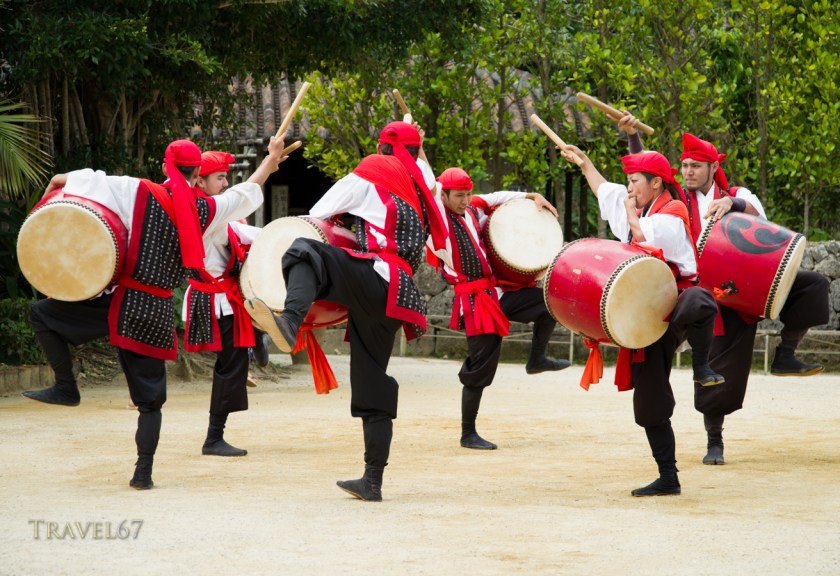

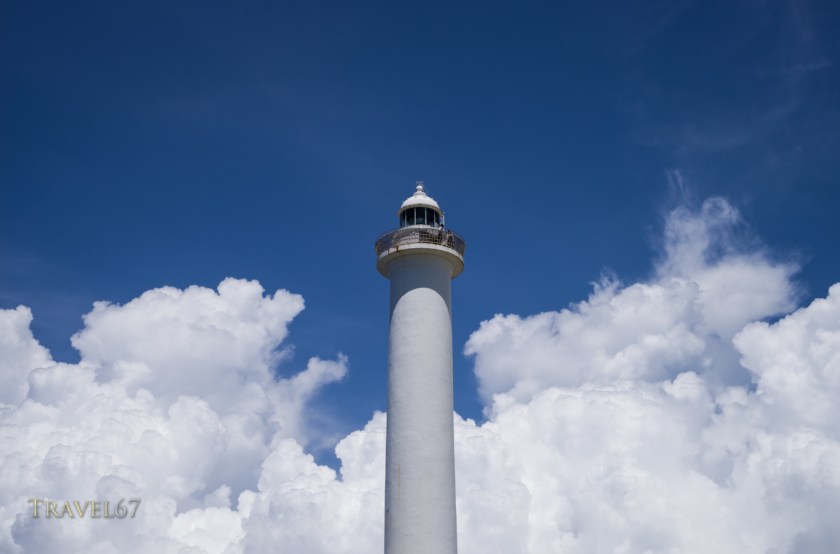

A few things I immediately noticed. The articulated monitor is clear, and has adjustable brightness. On sunny days such as yesterday you can set the screen to “Outdoor View Setting” +2 and you can still easily review your images. There’s a Smart Function dial which allows you to set the role of another control dial. At the moment I’ll probably have this set at ISO or exposure compensation. This means you can have a dedicated physical dial for ISO rather than via a button or menu.
There are many new features that I have yet to try out including the Astrotracer mode, Wi-Fi, or the “Pixel Shift Resolution System.”
The 28-105 lens is compact, sharp and weather resistant. With a maximum aperture range of 3.5-5.6 it’s darker and slower than the lenses I’m used to using for portraits, but a solid bit of kit.
Will put up more information, and hopefully a video as I continue using the camera over the coming weeks and months.
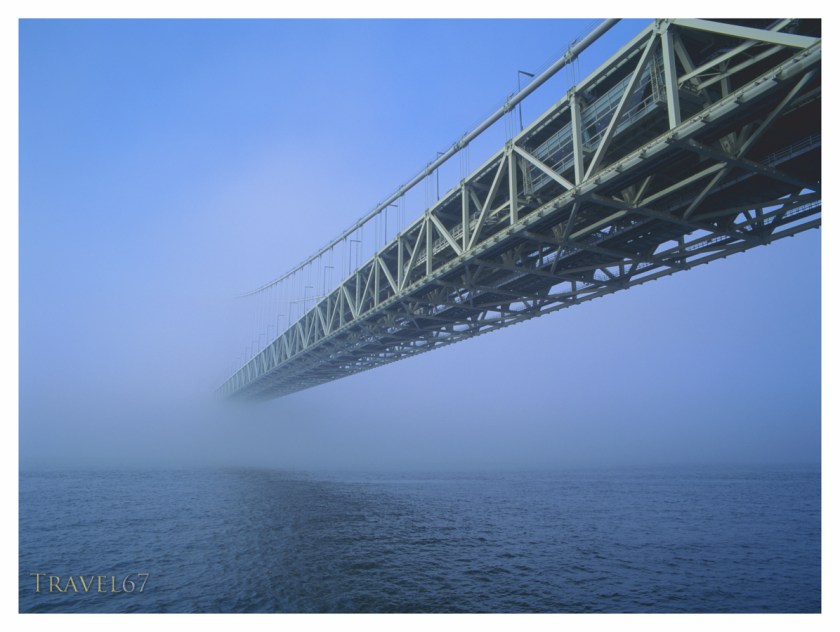


From the initial choice of film to the production of the final print we strive for the best at every stage of the artistic process. The latest professional printer technology along with Hahnemühle fine art paper has allowed us to produce giclée prints with vibrant colors and fine details. Using the highest quality archival materials also means that our prints have the longevity to provide a lifetime of viewing pleasure.
Prints are available in two sizes A3 (30 x 42cm; 12″ x 17″) and A2 (42 x 60cm; 17″ x 24″). These are the approximate dimensions of the paper, actual image size will be slightly smaller as the prints are created with a white border in readiness for framing. The border is about 15mm (1/2 inch) around the image.
Prints are not matted or framed. This gives you the flexibility to find a frame that will best compliment your home or office interior.
The Travel 67 watermark that appears on the screen images for copyright protection will not be on the final print.
Smaller prints, and matted prints are available at exhibitions, the AAFES bazaars, and directly from my studio in Motobu. Contact Chris@travel67.com to arrange a viewing.
These A2 and A3 sized prints are only available as limited editions. They are restricted to just 100 A3 prints and 50 A2 prints. In the bottom right corner, just below the image, each print is captioned with the location, signed by Chris Willson, and given its number within the series.
| Size | Edition | Price |
| A2 (17″x 24″) | 50 | JPY ¥33,000 |
| A3 (12″ x 17″) | 100 | JPY ¥22,000 |
Once you’ve chosen your print please email us at Chris@travel67.com with the print, size and your shipping address. We will send you a PAYPAL request for payment.
Prices include insured and traceable international express airmail shipping. Images are dispatched within one week of ordering and delivery usually takes around 4 to 6 days.
Your packages may be subject to the customs fees and import duties of the country to which you have your order shipped. These charges would be the recipient’s responsibility.
As we use both archival quality inks and paper, we guarantee that our prints are fade-free for the lifetime of the owner when displayed in standard conditions (not in direct sunlight). We will replace at no charge any prints which have faded during the lifetime of the original owner.
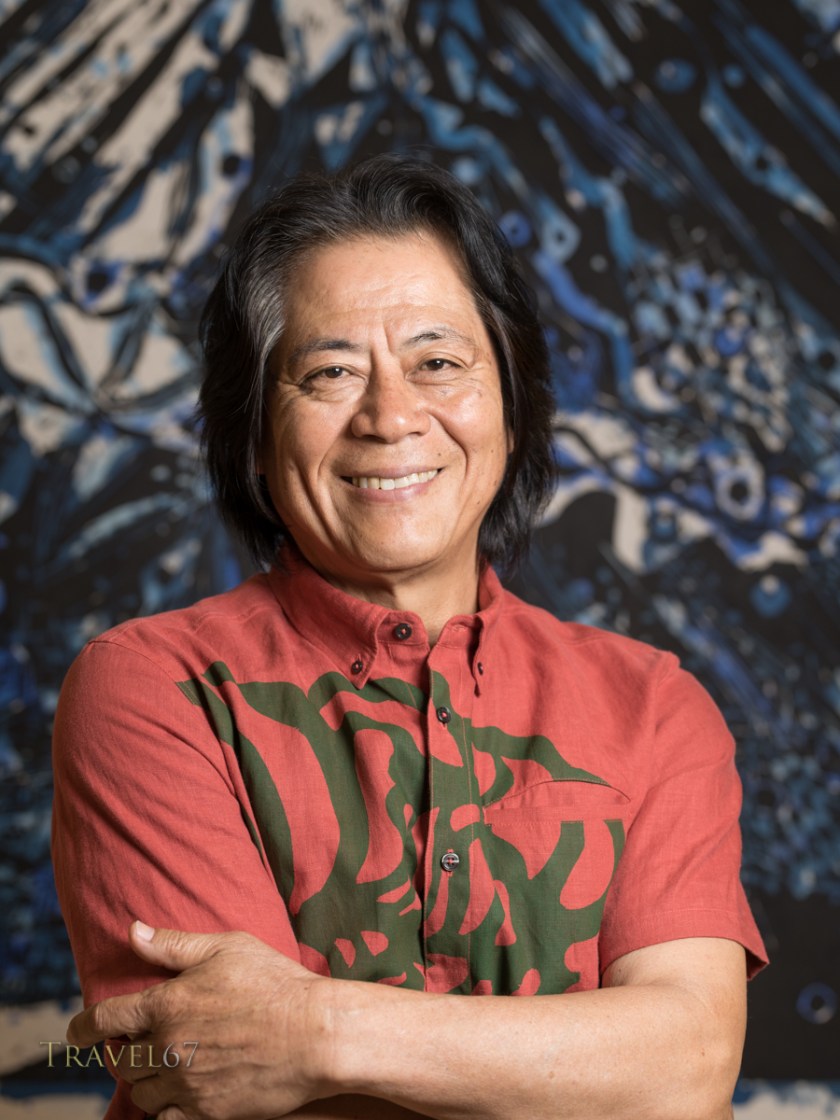
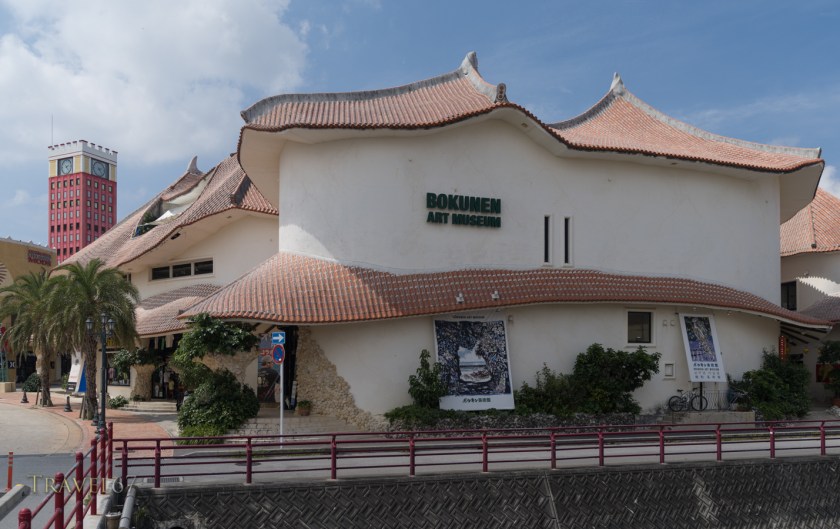
Bokunen Art Museum, Chatan, Okinawa
It’s been 10 years since I last photographed Naka Bokunen, and his star has continued to rise. In 2006, I interviewed him at his small gallery on Route 58. In 2016, I meet him at the beautiful Bokunen Art Museum at the heart of Depot Island in American Village.
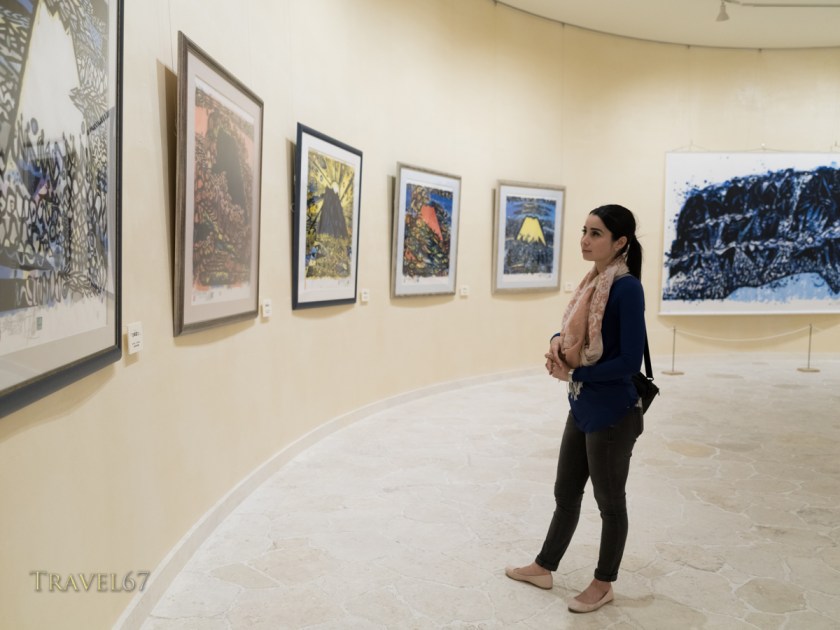
Bokunen Art Museum – Mountains Exhibition.
On this occasion all I needed was a couple of quick images for a client, but it was great to see his new mountain exhibition at the gallery.
Here’s the original interview from Okinawa Living Magazine.
Island Icon – Naka Bokunen
Bokunen was born on the small Okinawan island of Izena in 1953. As a child, he always carried a sketchbook, and drew pictures of the island’s creatures and landscapes. At that time, he never imagined a career as an artist, and thought he would become either a fisherman or a carpenter. His talent, however, did not go unnoticed. One of his teachers recommended that he attend an art-based high school on the main island of Okinawa. After graduation, Bokunen became a graphic designer and set up his own design production company, Project Core.
It is his skills as a woodblock artist that have gained him them most recognition. His colorful, dream-like prints were used for the Kyoto Climate Conference in 1997, the G8 Summit in 2000, and in numerous exhibitions across Japan.
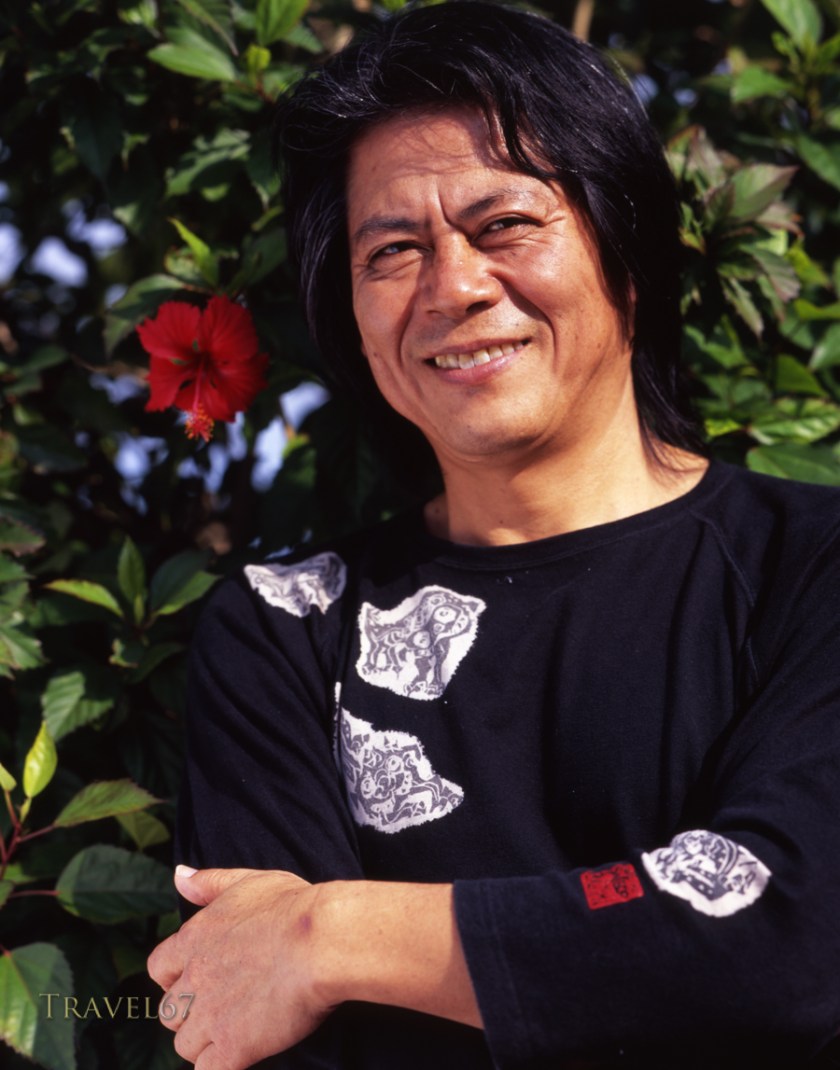
Naka Bokunen 2006
What process do you go through to create the prints?
“I begin with a vague idea of what the image will be like, but as soon as I start to carve the wood, things change. The whole process is very fluid, almost like someone is working through me. I’m not creating the image directly on the paper, but in the wood which I’ll then print from. Because of this, I feel the process has an almost spiritual quality. You’re never quite sure what’s going to happen.
Once the woodblock is finished, I spread black ink on the surface of the wood, and then press it against the paper. The black and white print is a mirror image of the carving in the wood. I then turn the paper over and paint in the colors on the back of the paper. This reverse coloring technique gives the process its name: uratesaishoku. Traditional woodblock prints, such as the tsunami by Katsushika Hokusai, use another technique called ukiyo-e. Ukiyo-e uses a different woodblock for each color and all are applied to the front of the paper. Painting from the back keeps the blacks dark and vivid, and gives my prints their distinctive style.”
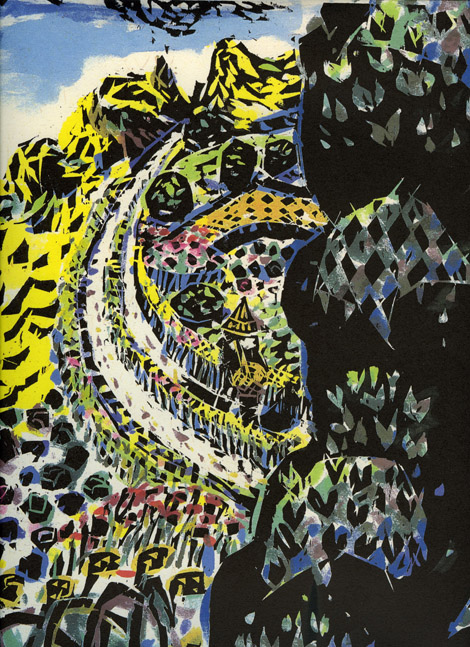
Naka Bokunen’s Cartway and Fukugi Tree 1997
Do you now work exclusively with woodblocks?
“Not at all. I sometimes do sculptures such as the bronze mermaid at Moon Beach. I also do pen and ink designs, which I print as lithographs then paint with watercolors. Woodblocks, though, are my favorite method. I love the process of carving the image; it’s unlike anything else.”
What are your main artistic influences?
“The greatest influence comes from the things around me: Okinawa’s plants, animals, people, ocean and mountains. I also want to do more traveling, as whenever you make a connection with a place or a person, you get inspired, and it is this inspiration I can then channel into my work
I like the paintings of Van Gogh and Picasso. Some people say that my prints remind them of Chagall because the women in my pictures seem to be flying through the sky.
The other person who has inspired me is Shiko Munakata. He was the first to use the uratesaishoku technique in Japan, and was one of this country’s great 20th century artists.”
As nature is you main inspiration, do you worry about the future of the environment?
“Of course. I believe that the power of life lies hand in hand with the power of nature. I do not directly campaign for environmental protection, but I hope that, through my work, people will see the beauty of Okinawa, and not want to lose it.”
A lot of your creations include images of women or mermaids, but there don’t seem to be any men?
“I think that women are the spiritual heart of life. In Okinawa, they also have the special roles of kaminchu and yuta, priestess and shaman. To some this female power is known as Gaia, others call it Mother Nature. When I begin to draw or carve, the images just come naturally from my subconscious. Maybe, I just spend more time thinking about women than I do about men.”
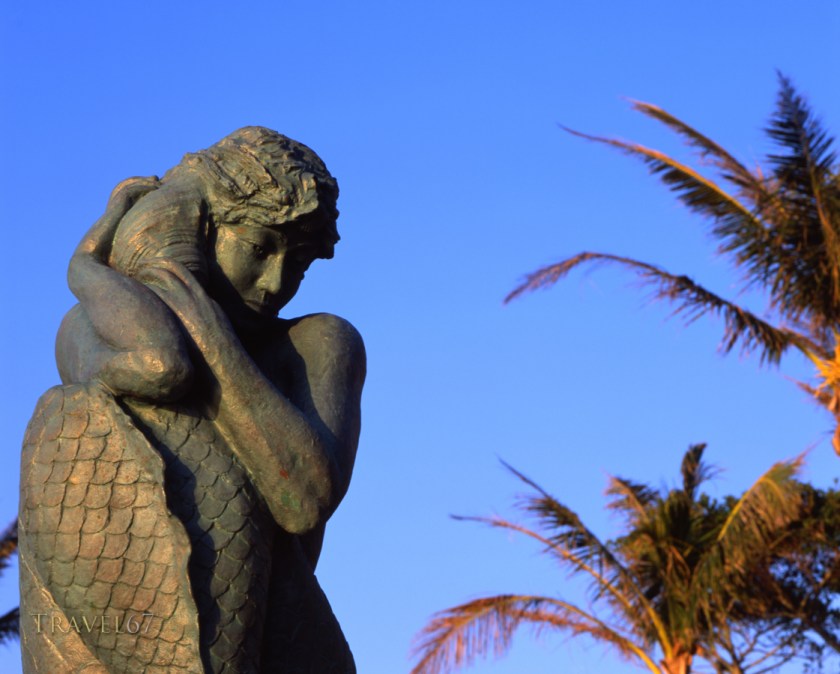
Bronze Mermaid by Naka Bokunen at Moon Beach, Okinawa

