All posts filed under: Japan

Koichi Nakasone 9th Dan Ryukyu Kingdom Sui-di Bujutsu

Yesterday I made the short drive over to Nakijin Village to the home of Koichi Nakasone, 9th Dan Ryukyu Kingdom Sui-di Bujutsu. He is the 76th sensei to be photographed for the Karate Masters Portrait Project. James Pankiewicz, Becka Tedder, and I sat down for a chat in the traditional wooden house that Nakasone sensei had recently built by himself. He told us a few stories about his karate training, and the three months he spent in the USA traveling from dojo to dojo, challenging the members to fight. (Known in Japanese as dojo yaburi.) After our chat, we set up the black background on the side of the house and took the portraits. (Pentax 645Z with 90mm lens. Profoto B1 with white softlight reflector.) We then drove a couple of minutes to beautiful Nagahama Beach for some more location shots. I switched lenses to the 25mm wide-angle and removed the softlight reflector as we needed as much power as possible to try and fill in shadows. Becka held the light, while James put on his …

Coconut Crabs of Okinawa

Coconut crabs, Birgus latro, are the world’s largest land-living arthropods. Okinawa is the northernmost habitat for the species. They hibernate during the winter, and are nocturnal, so many Okinawans have never seen one. The crabs can grow up to 3 kilos, and have large powerful claws. They are scavengers and usually eat fallen fruit from trees such as the adan (Pandanus odoratissimus), but they will nibble on the occasional dead animal. Coconut crabs grow very slowly and can live for up to 60 years. As sexual maturity doesn’t occur until 5 years old, predation of larger crabs by animals or humans can lead to a population being unable to recover. Researchers such as marine biologist Shin-ichiro Oka monitor the coconut crabs in Okinawa. Crabs are measured, photographed, tagged, and have their position logged. Other interesting aspects of coconut crab biology have been studied including their grip strength. Oka explains that a large coconut crab has a grip strength similar to the jaws of a lion. Thank you to Shin-ichiro Oka for letting me tag along …

Dino Park in Nago, Okinawa

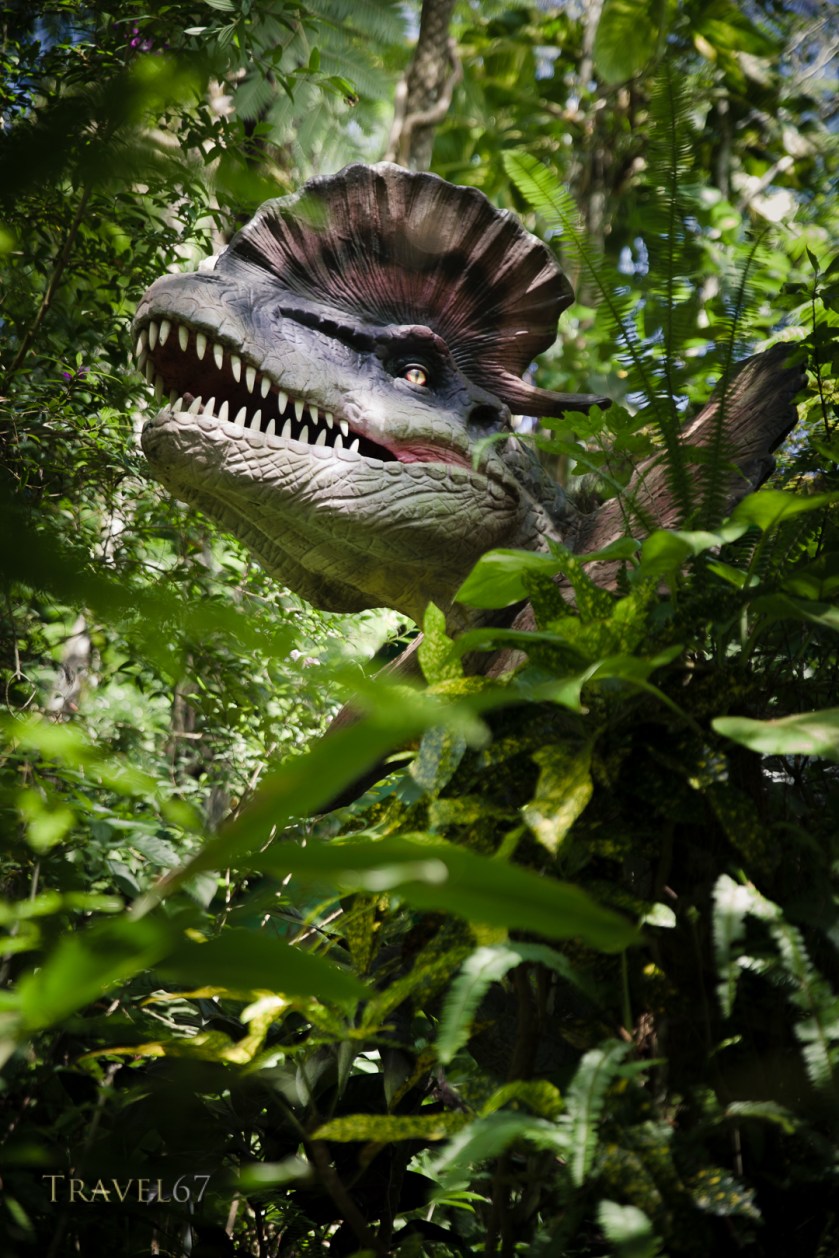
Visitors to the Nature Park Yanbaru Subtropical Forest could quietly stroll along a short paved trail among the trees looking at various types of vegetation including palms and orchids. Unfortunately, the tourists didn’t really come. In 2016, the addition of around 50 dinosaurs many of which have basic animatronics and sound, has transformed the nature park into “Dino Park” a far more popular sightseeing destination. The new additions do fit in well with the subtropical forest setting and several are quite impressive. The dinosaurs are reasonably realistic and vary in the level of animatronics from static models to automatons with jointed necks, jaws, tails and eyelids.  They do not surge forwards out of the undergrowth, and there are no fully mobile dinosaurs so they probably won’t terrify many children.  The outdoor speakers that give the dinosaurs voices are also a little small and lack any bass, so although you hear the roar of the T-Rex you don’t feel it in your body. The Nago Dino Park  is located on route 85, the winding mountain road …

Goat Wrestling on Sesoko Island

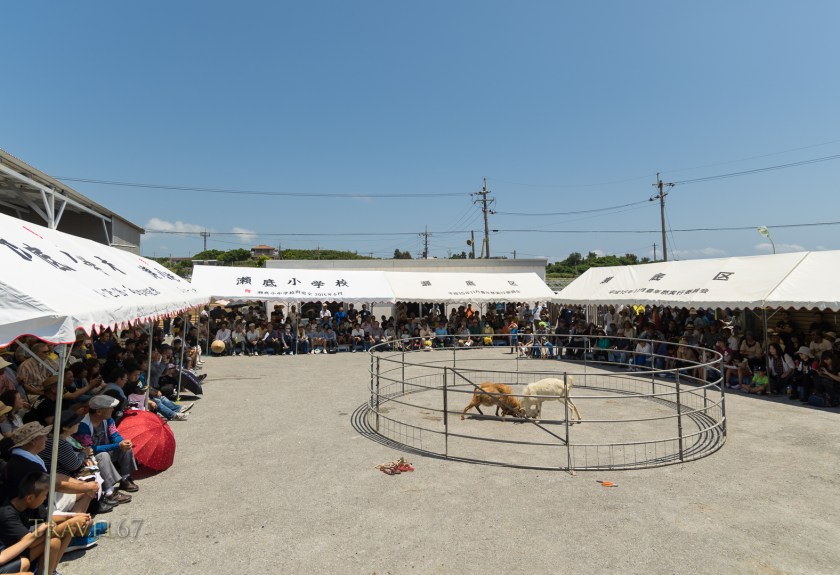
  Goat wrestling is an annual event on Sesoko Island in Motobu, Okinawa.  Two male goats are placed in a ring, and then do what comes naturally. If they are evenly matched they will butt heads until one turns in submission. If they are unevenly matched, or uninterested they ignore each other, or the weaker goat wanders straight back to the gate often sticking its head through the railings. The goats seem to be unaffected by the occasional headbutt. Sportingly, they never tried to headbutt their opponent anywhere except the head. The curved horns also seemed to avoid any puncture wounds or lacerations. The only goat that came off badly at the whole event was the young goat that was given away as 1st prize in the raffle. The winner was asked what he was going to do with the goat. He replied, “eat it.” The video was shot with the Sony A7SII camera with a 16-35mm lens on a CAME-TV Single gimbal.   The video was shot and uploaded to YouTube in 4K.

Camera Test – Fujifilm EPX-4440HD

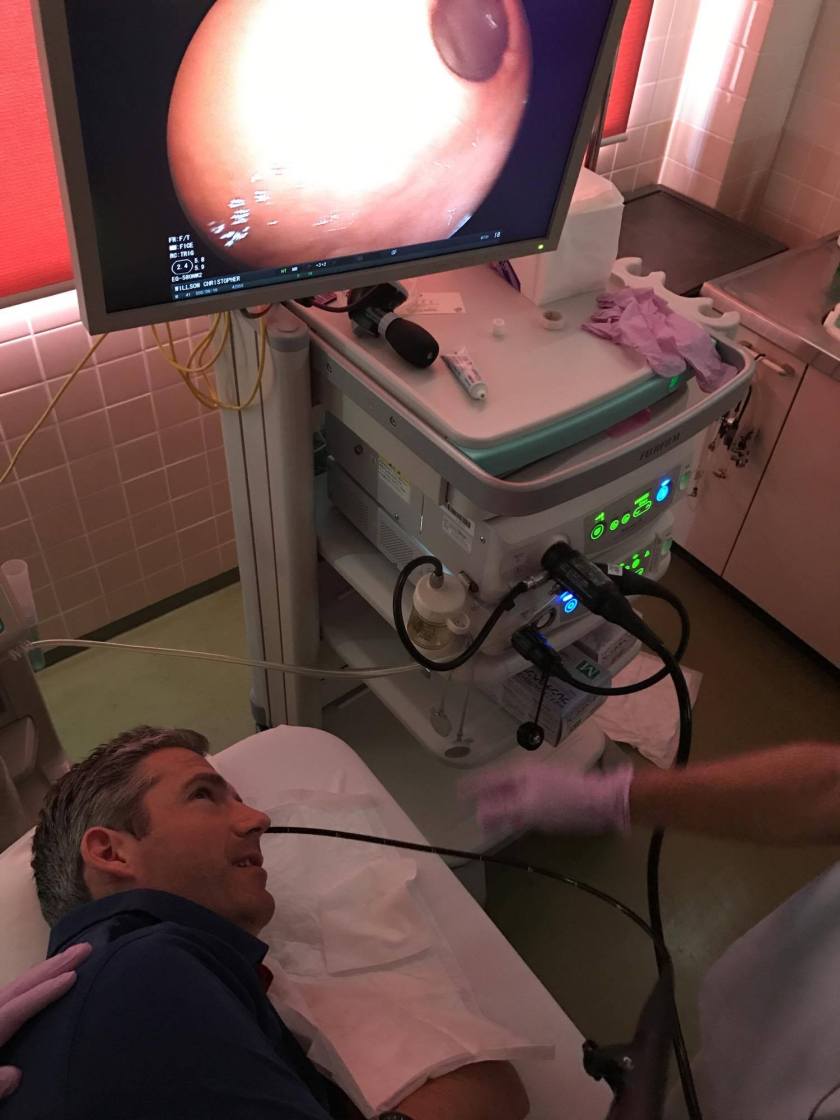
Photographers looking for lightweight portable imaging devices often give rave reviews of  mirrorless Fuji cameras. So this week I decided to test out one of the latest cameras in the Fujifilm line, the EPX-4440HD. Positive points about this camera include “User-friendly menus” and “Advanced image technology” it also offers an “anti-blur function  that allows an optimal image to be extracted from multiple images.” A great option for those with less steady hands. Portability is a little restricted. Although the camera is small, it does require a cart for the processing system and monitor. Photographers accustomed to tethered systems in the studio will probably be the most familiar with this setup. Wedding photographers and fashion photographers may find the range of angles a little limiting. Those with an interest in macro photography will enjoy the camera’s ability to focus at short distances while the “300 watt xenon primary light source” brings illumination to the most restricted of shooting locations. For portrait photographers the camera offers new possibilities beyond your basic profile, full face, and three-quarter view. This may be a way for …

Serendipity

A final post from the Kyoto workshop. One evening we had a memorable few minutes that resulted from being in the right place at the right time, and a fair amount of luck.  The featured image at the top of the post may be my favorite of the trip. It is nice to get a shot that captures several  aspects of Kyoto life in a single frame. Why luck? Because a maiko or geisha will prebook a taxi then wait for it to arrive.  You usually get a brief glimpse of them as they dart from a doorway into the taxi. On this occasion, however,  a geiko and a maiko were stood waiting on the sidewalk for their taxi. Close by another geiko was talking into a mobile phone.  For three or four minutes they stood on the street, and unsurprisingly, drew stares from locals and tourists. Finally the taxi arrived and the two geikos, followed by the maiko, got in and were whisked away. Another memorable moment from a great Kyoto workshop. A big …

Gatekeepers

During the Kyoto 2017 Workshop we jumped on the bullet train to visit Himeji City and the finest example of a Japanese castle.   I didn’t get any new shots of the castle itself, but did get a few snaps of the guards. A short BTS video taken by Tech Ninja Patrick. And here are few shots of the castle from 2016 in case you were wondering which one is Himeji. For movie fans, it’s the castle used to train the elite fighting force in James Bond’s. “You Only Live Twice.”

Karate Seminar at the Karate Kaikan

Last Saturday I photographed a special 1-day seminar at the Karate Kaikan taught by 4 masters of different styles. In the morning there was a demonstration and class by Isao Yagi, 9th -dan of Ryuku Royal Family Martial Arts Bu Mai Moidi Motobu ryu Gassen Tuidi school. In the afternoon the first class was given by Yoshio Kuba 10th Goju ryu karate and followed by Tetsuhiro Hokama 10th-dan Goju ryu karate. At the end of the day, the event organizer Terry Wingrove 9th-dan karate jutsu gave a final class focused on the efficacy of techniques. The seminar was a clear reminder that Okinawan karate goes a lot further than simple punches, kicks and blocks. Although not covered in sanitized sport karate, there are plethora of different ways to incapacitate an attacker’s body and  mind. Along with documenting the seminar, I brought a long a black background and strobe to take a few portraits for Terry Wingrove. At 75-years old he’s still a fearsome man.  

Off Camera Flash with the Profoto B2

During the 2017 Kyoto Workshop it was great that I could introduce new pieces of equipment and techniques to others in the group.  One of these was the Profoto B2 Off Camera Flash System. This strobe allows me to add light to my images to make the subject pop a little more and add catchlights to the eyes. I also use it to fill in shadows. In the featured image taken at Fushimi Inari Shrine I used the Profoto B2 with no modifier, while the image taken at the Philosopher’s walk below (right) was with a shoot-through umbrella. The system works really well. Dividing the head and the battery pack makes life for the assistant easier as holding a B1 light on the end of a pole can be top heavy. The option to use the pack with two lights is useful, and also gives you redundancy if a flash bulb stops working.  I used the Profoto Air Remote triggers with my Pentax cameras, as there is still no Pentax TTL/HSS trigger (unlike Canon, Nikon …

Tea with a maiko

One of the highlights of the Kyoto Photography Workshop was tea with a maiko in Gion. The maiko we met was Kanohiro-san who is just 18 years old.  After her years of training she will become a geiko (Kyoto geisha).  We took photos and asked her many questions with Yuki interpreting for the group. Kanohiro san was very happy that we were so excited to met her. She gave us tea, performed a traditional dance, then posed for individual and group photographs. A really memorable experience with a lovely young lady.