Latest Posts

Visions of Japan on You Tube

A couple of years ago I held a small exhibition at Cotonoha Art Space + Cafe. It’s a great place run by American expat Daryl “Michi” Mitchell, and well worth visiting. Hideki, one of  Michi’s friends,  asked if he could make a mini documentary about the event, and it was finally uploaded to You Tube a few weeks ago.

I’m aware that my name isn’t spelt correctly at times, but it’s a great reminder of a fun event. A big thanks to Keith Gordon of Ryukyu Underground for the use of his tracks as background music. More thanks to both Michi and Hideki for helping me put on the exhibition and creating the video.

You can see more images from my exhibitions in the following video. Music by Eduardo Terre.

Prints from the exhibitions are currently available through the website or at Kadena Gift Corner.

Dojo Bar, Naha

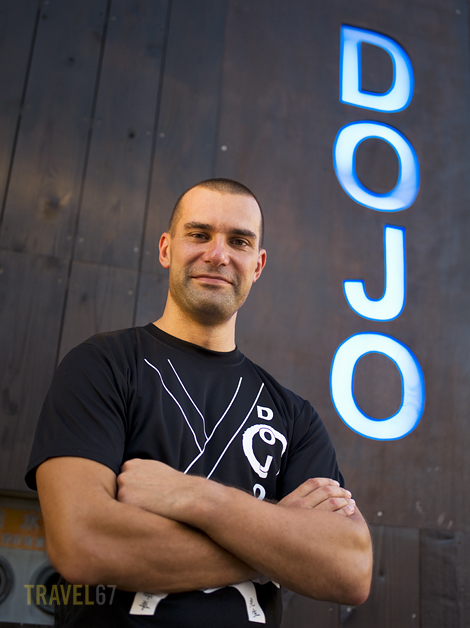
No need for bouncers - James outside his new bar

This weekend was the official opening of Dojo a new bar in Naha aimed at the karate fraternity on the island. Brit, black belt, and all round nice guy, James Pankiewicz set up the bar with the hope that it can be a meeting point for karateka of all styles and nationalities.

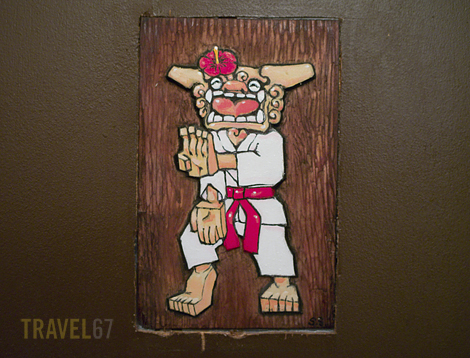
In Okinawa even karate can be かわいい

On Saturday’s opening night half a dozen karate masters were sitting around one of the tables drinking together. It was the equivalent of setting up a soccer themed bar, glancing over and seeing Pele ordering beers for Maradona, Beckenbauer, Cruyff and Charlton.

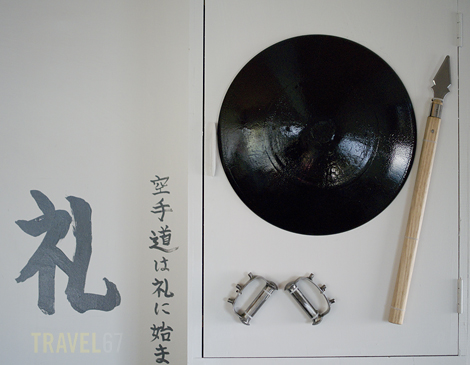
Kobudo weapons on the wall of the Dojo bar.

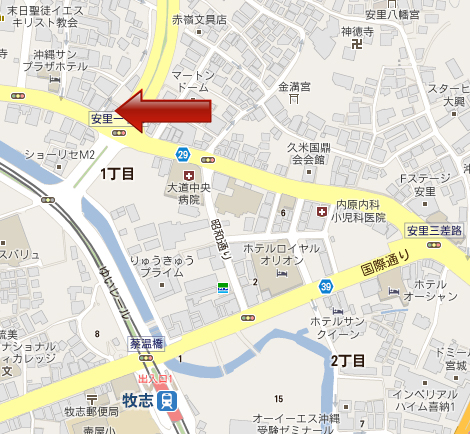
Dojo bar is located a couple of hundred meters from the Makishi monorail station (north end of Kokusai street). Open 18.00 to 00.00, closed Tuesdays.

Dojo Bar, Naha, Okinawa

See more of images of James training in the Arakaki dojo and on the beach.

Photography 101 Workshop – August 13th & 14th.

PHOTOGRAPHY 101

Weekend Workshop August 13th & 14th.

Who is the course for?

The beginner or novice photographer who has a digital SLR  and wishes to progress beyond the green fully auto mode. People who want to take better photographs of their friends and family rather than point, shoot and hope for the best.

What do I need to bring?

Your digital  SLR camera, lens, your camera manual, memory card, battery and charger. If you have a digital compact rather than a digital SLR camera then I can lend you a digital SLR for the course. You don’t need a particular brand of camera or lens.

What does the course cover?

Equipment – The anatomy of cameras, lenses, memory cards, filters and tripods.

Exposure – Aperture, Shutter Speed, ISO, Camera Modes, Metering

Composition – Angles, Repetition, Rules, Lines, Simplicity

Data Management – Sorting, storing and protecting your images.

This is a fun workshop rather than a lecture. As we cover new topics we will be taking photographs, reviewing the images, and discussing the results.  You’ll be learning by practicing each new skill rather than just reading about it.

Number of Students in the Class? Maximum of 4

Time and Place? 10.00 to 18.00 on August 13th & 14th. Class takes places at my home in Ishikawa (Uruma City), and surrounding locations. The workshop takes place both indoors and outdoors. It could be sunny or rainy so bring suntan cream and umbrellas! Bring some cash for the lunch breaks on both days.

What is the course fee? US$250 or ¥21,000

Who do I contact? To reserve a place send an email to chris@travel67.com (please write WORKSHOP RESERVATION on the subject line) Please state the name and date workshop you wish to book  A 50 dollar deposit is required. I’ll send a paypal request for the deposit to those who are booking the course.
Hamaori-sai, Chigasaki, Tokyo (Part 3)

Hamaori-sai

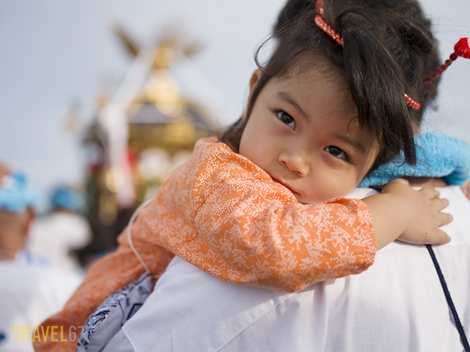
The early start was all a bit too much for this little girl.

Hamaori-sai

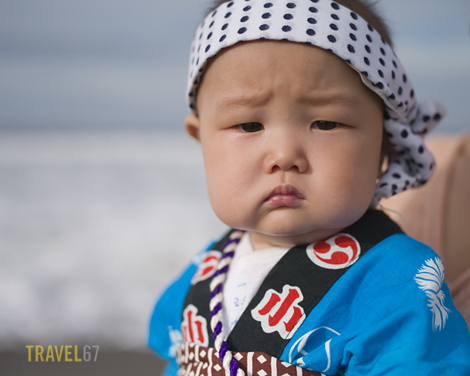
This baby was equally unimpressed.

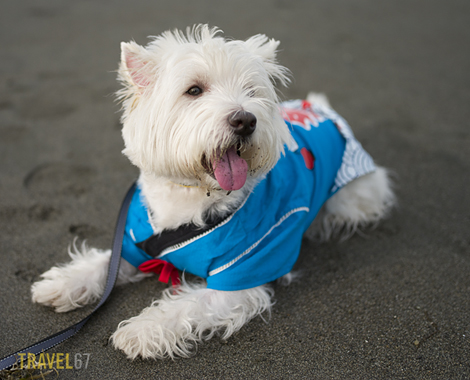
Hamaori-sai "Happi Dog!"

I did however find a happi dog. (This is a hilarious pun.The short sleeved jacket the dog is wearing is called a Happi. Please roll around on the floor with laughter.)

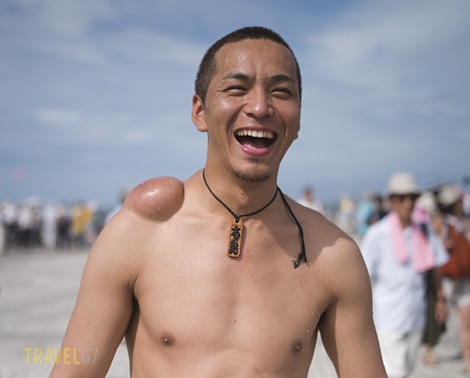
Mikoshi bearer with mikoshi-dako callous.

The man above is a katsugite (担ぎ手) or mikoshi carrier. The huge callous on his shoulder tells you that he always carries the mikoshi on his right shoulder and he does it a lot. I presume he take part in festivals all over Japan, it’s not something that would appear after just a single morning down at the beach.

Hamaori-sai, Chigasaki, Tokyo (Part 2)

Hamaori-sai

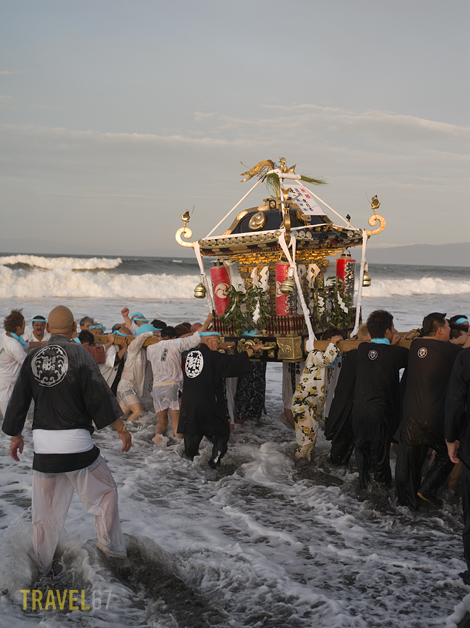
Fellow photographer Damon warned me that to get decent shots you would need to follow the mikoshi out into the sea. The waves caused the height of the water to surge from ankle deep to waist deep in a few seconds.

Hamaori-sai

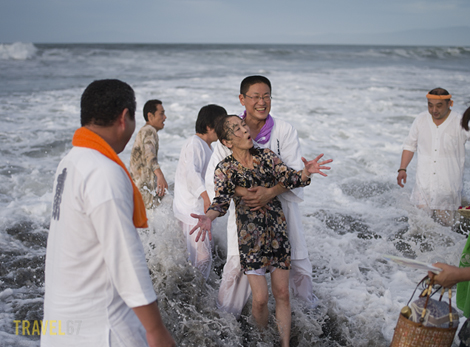
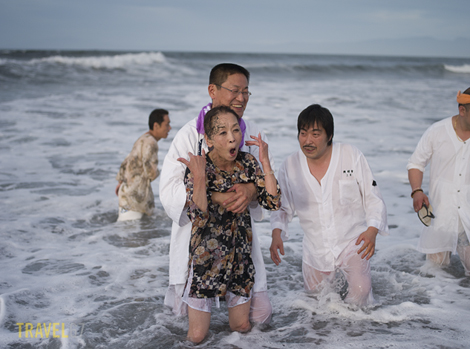
I kept a firm grip on the camera, and lifted it above my head when the waves broke to avoid water droplets hitting the lens. The real danger though was the strong undertow. It pulled at my sneakers and khakis trying to sweep me off the feet. Several of the participants were sent tumbling and then sucked ten or twenty feet out into the surf before being grabbed. This lady found her unexpected dunking to be hysterical.

Elderly lady delighted with her morning dip

Hamaori-sai

then realizes her iPhone's in her pocket

The key in situations like this is to have good camera insurance. I knew the chances that I would end up swimming were slim, but there was no way I’d have taken the risk without comprehensive cover.

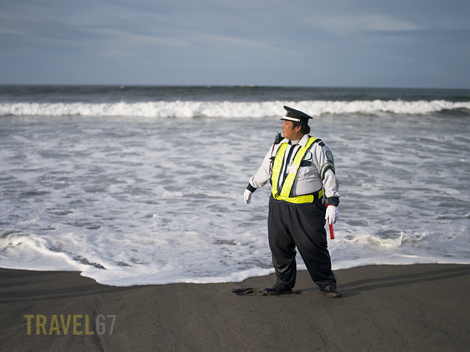
One thought provoking thing about this year’s festival was that on previous occasions when the waves had been of similar size the police had roped off the beach and stopped the mikoshi from entering the water. This year there were three security guards and two lifeguards, but no visible police presence. One of the locals explained that it was because most of the city’s police were up in Tohoku dealing with the aftermath of the earthquake and tsunami.

Hamaori-sai - Ocean Bouncer

Hamaori-sai, Chigasaki, Tokyo (Part 1)

4.30AM

After spending the night drinking coffee in a Gusto restaurant Damon, Lily and I joined the worshipers as they arrived at the beach.

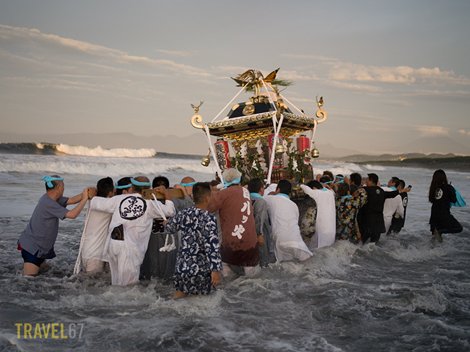
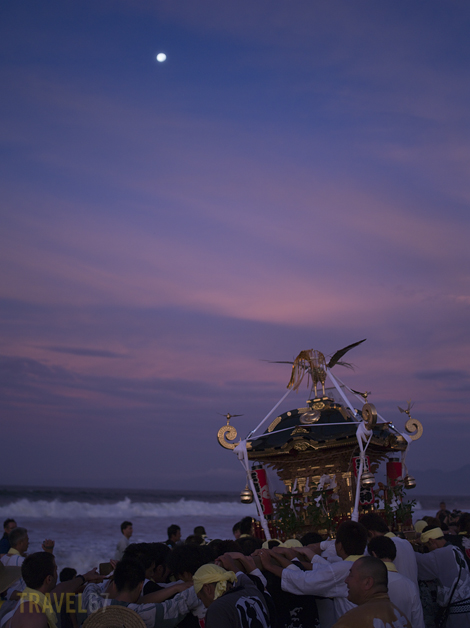
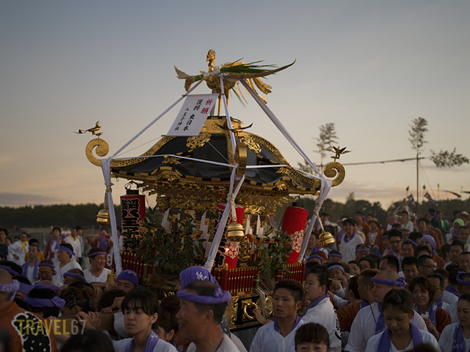
Hamaori-sai takes place each year on Marine Day, in the city of Chigasaki. Mikoshi (portable shrines) are carried down to the beach and into the ocean. Large waves, a strong undertow, and a lack of sleep made the event even more memorable.

Hamaori-sai Chigasaki (1)

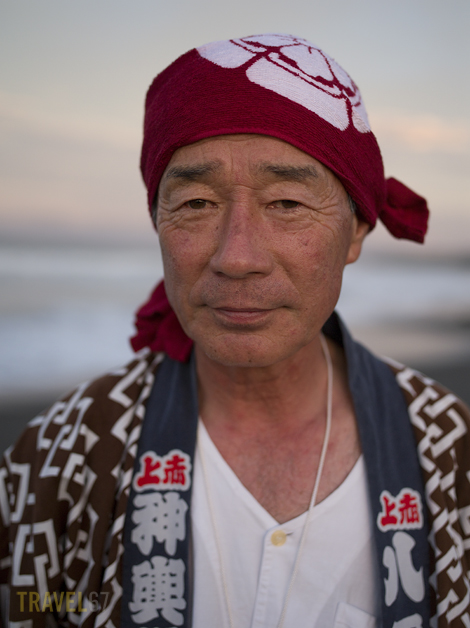
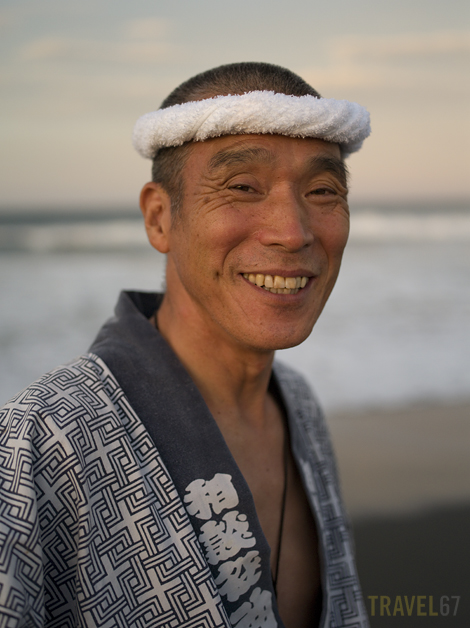
First portrait of the day, and it’s not even 5AM 🙂

Hamaori-sai Chigasaki (2)

The sun’s rays begin to creep over the horizon while more mikoshi make their way to the ocean.

Hamaori-sai Chigasaki (3)

Love shooting portraits at festivals. Someone told me recently that I’m a face collector. Sounds creepy, but it’s true 🙂

Hamaori-sai Chigasaki (4)

Pentax – Exhibitions, Cameras and the Future

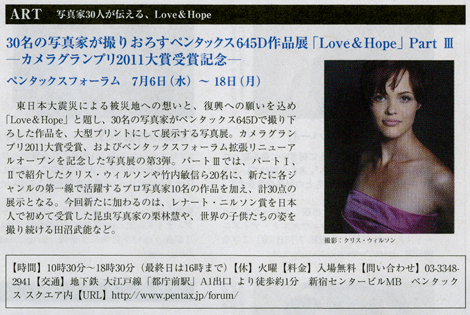
Love & Hope Exhibition discussed in the Tokyo Headline newspaper.

I was up in Tokyo last weekend to catch the end of the Love & Hope exhibition at the Pentax Forum, and to photograph the Hamaori-sai festival in Chigasaki. It was good to see the huge print of my image on the wall of the gallery, and then as a bonus find out that Pentax had also chosen it to promote the exhibition in a Tokyo newspaper.

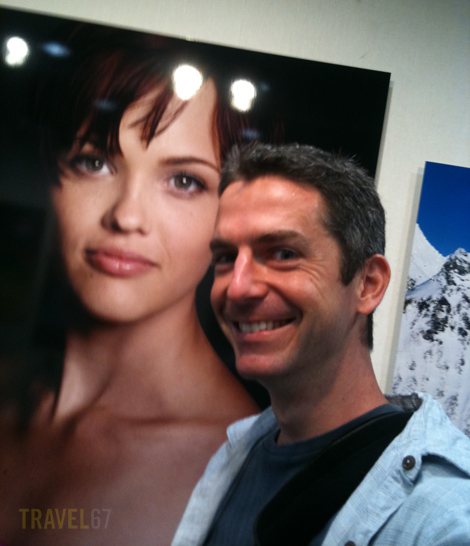
Self portrait of a mad man. Taken with my iPhone

Had a good chat with the staff at the forum. They had the special edition Pentax 645D with a traditional laquerware body on sale at a mere 1,200,000 yen. (The perfect thing for the person who loves to collect cameras and then leave them in a hermetically sealed cabinet.) I also got to have a quick play with a preproduction version of the tiny, mirrorless Pentax Q camera. Not sure what I think of the Q. It is the world’s smallest camera with interchangeable lenses, but it will be interesting to see if it can compete with the likes of the Sony NEX-C3, the Olympus PEN or the current belle of the miniature ball the Fuji X100.

Hopefully I will have a solo exhibition of my festival images at the Pentax gallery sometime in the next couple of years.  With that in mind, it was time to meet up with a couple of photographer friends and head out of the city to Chigasaki.

Fugu Chef’s License

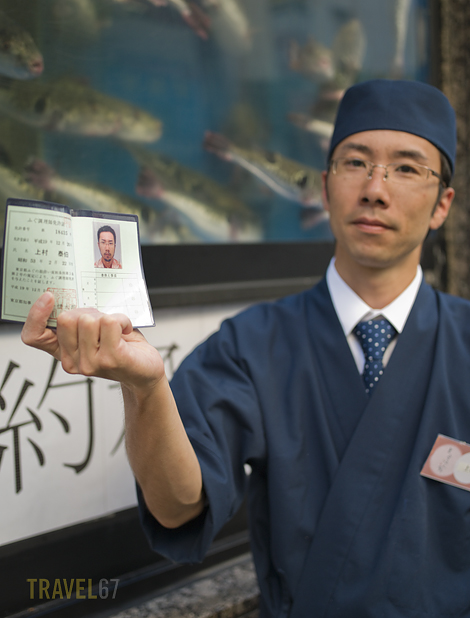
A kabuki-cho fugu chef shows his license.

Fugu the dish that can quite literally take your breath away.

To avoid poisonings fugu chefs are required by law to have a fugu license. The license was introduced after WWII as many starving Japanese died having eaten improperly prepared fugu, or discarded food waste which contained fugu liver or skin.

This image was shot in Kabuki-cho, Shinjuku. The fish in the background are fugu unaware of their impending doom.