Latest Posts

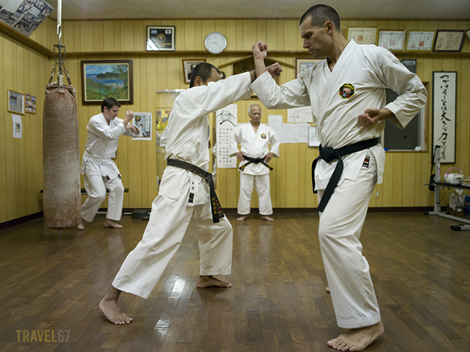
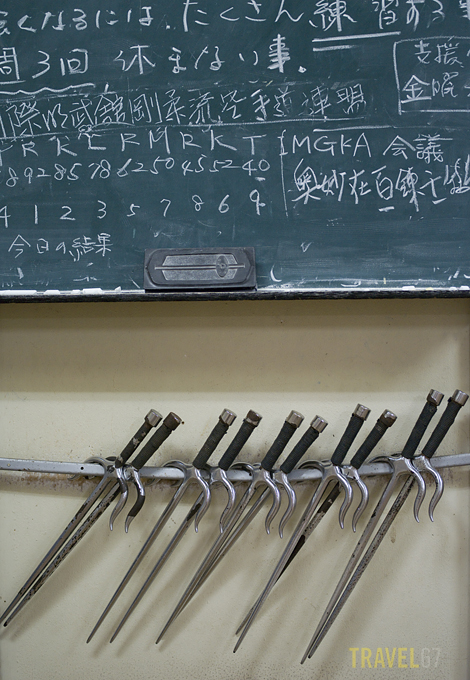
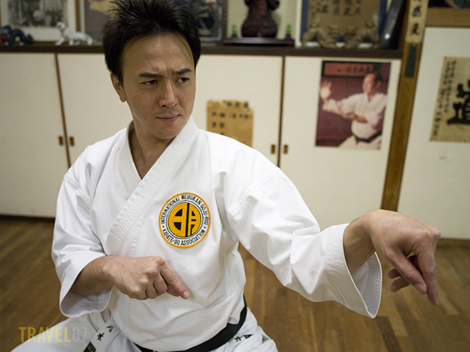
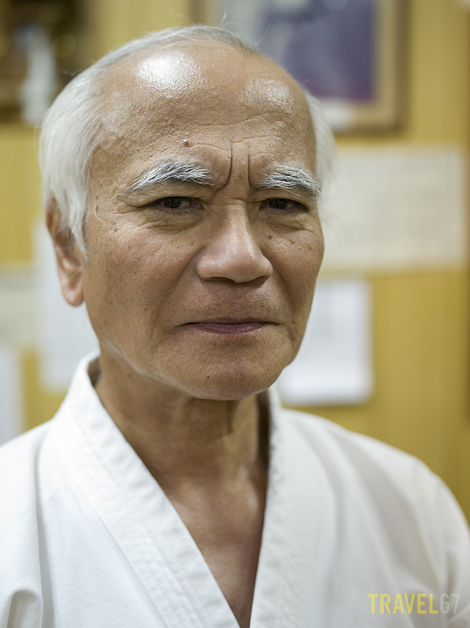
Matsubayashi-ryu Toshimitsu Arakaki Dojo

Matsubayashi-ryu Karate 10th Dan - Toshimitsu Arakaki

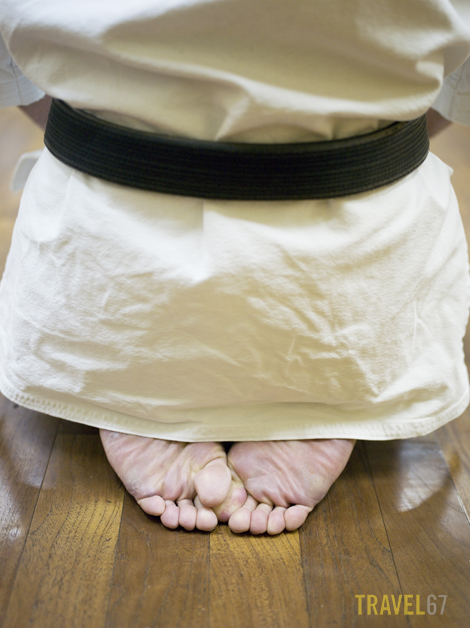
Ready to Begin

Warm Up

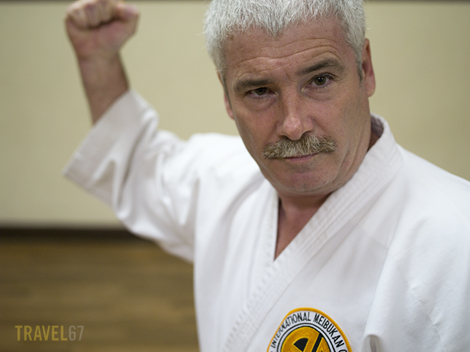
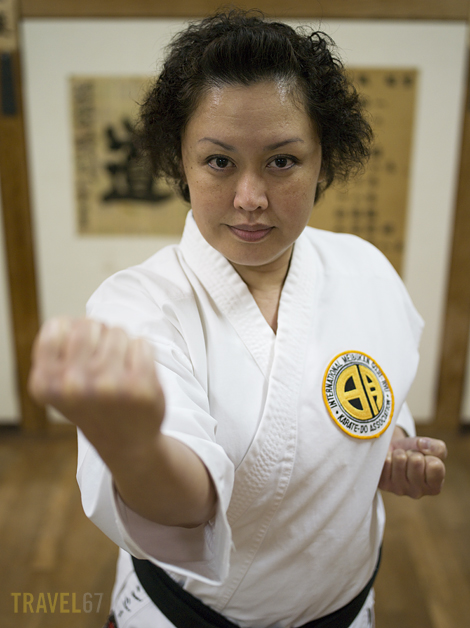
Arakaki sensei watches over his class

I used the 35mm wide angle for images 3 and 4. It allowed me to be right in amongst the action and have a good depth of field  even at a large aperture. This was another instance that I would have struggled to shoot wih film. I had to use ISO 1000 and shoot quite a number of frames to get the images.

On the Bookshelf – With the Old Breed by E. B. Sledge

With the Old Breed by E. B. Sledge

With the Old Breed by E. B. Sledge

Last year I watched the Hanks / Spielberg mini-series “The Pacific” that was based on the experiences of American Marines in the Pacific Theater. The series focused on three men, one of which was Eugene B. Sledge, a young Marine who witnessed the horrors of Peleliu and Okinawa.  These secret notes Sledge made during combat would later become  the book “With the Old Breed” which was then adapted to become the mini-series “The Pacific.”

I just started Sledge’s book. I’m not sure it’s going to be one I enjoy, and I should probably avoid reading it before going to bed. It is however an important account of war, particularly for those who have connections with Okinawa. Glancing through the pages I see maps with names I recognize. The Ishikawa Isthmus is where I live, Sugar Loaf Hill is beside Main Place shopping center and the landing beaches are where I dive. The elderly residents of this island lived through the Battle of Okinawa, for the rest of us its important to be aware of what happened, and hope nothing like it ever happens again.

If anyone else want to read along with me, I’d love to hear your comments. You can get the book from Amazon.comAmazon.co.uk and Amazon.co.jp

Photography Workshops in Okinawa

Starting this month I shall be holding some weekend photography workshops on Okinawa. I’ll be starting off with “Photography 101” courses for beginners, and then later will be offering more advanced classes including studio work and night photography. I’ll be teaching most of the courses, but I also intend to bring in specialists in their particular field from mainland Japan. (Light Painter Trevor Williams is already on board as one of the visiting instructors, see his work in action on Japanese News!)

So here’s the info on the first class

PHOTOGRAPHY 101

Weekend Workshop April 23 & 24 2011


Who is the course for?

The beginner or novice photographer who has a digital SLR  and wishes to progress beyond the green fully auto mode. People who want to take better photographs of their friends and family rather than point, shoot and hope for the best.


What do I need to bring?

Your digital  SLR camera, lens, your camera manual, memory card, battery and charger. If you have a digital compact rather than a digital SLR camera then I can lend you a digital SLR for the course. You don’t need a particular brand of camera or lens.


What does the course cover?

Equipment – The anatomy of cameras, lenses, memory cards, filters and tripods.

Exposure – Aperture, Shutter Speed, ISO, Camera Modes, Metering

Composition – Angles, Repetition, Rules, Lines, Simplicity

Data Management – Sorting, storing and protecting your images.

This is a fun workshop rather than a lecture. As we cover new topics we will be taking photographs, reviewing the images, and discussing the results.  You’ll be learning by practicing each new skill rather than just reading about it.


Number of Students in the Class? Maximum of 4


Time and Place? 9.00 to 17.00 on April 23 & 24th. Class takes places at my home in Ishikawa (Uruma City), and surrounding locations. The workshop takes place both indoors and outdoors. It could be sunny or rainy so bring suntan cream and umbrellas! Bring some cash for the lunch breaks on both days.


What is the course fee? US$250 (A $50 deposit is required to book a place on the course.)


Who do I contact? You can email me at   chris@travel67.com or call 090 1367 9198 to reserve a place or ask questions.
Taxes

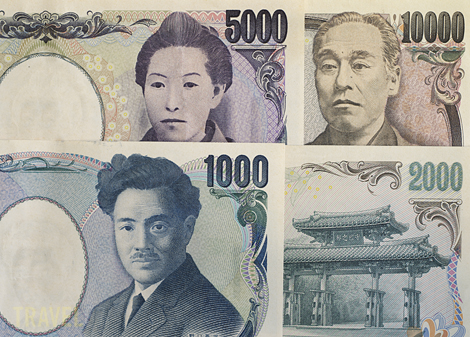
Is photographing money a crime... (or would I have to start printing it to get into trouble)

In a previous post I talked about some books that discussed working as a professional photographer. One bit of information that was repeated in all the books was that as a professional you have to treat the photography business as a business. This means that as well as taking pictures, you need to have clear ideas about goals, marketing, clients, income, expenditure and taxes.

How to organize your taxes will vary between individuals. Every country has different regulations, and if you get things wrong you may find yourself either paying more money than necessary getting an unexpected bill for unpaid taxes. (Try and cheat the system and you may find yourself following a similar path to Al Capone or Wesley Snipes.)

Obviously, you need to keep records of both expenditure and income. As a photographer this includes my major photography purchases ( bodies, lenses, lights, computers) expendables ( film, processing, ink, paper), maintenance of gear, insurance, marketing (website hosting, updates, exhibitions, mailings), communication (internet, phone), transportation (flights, hotels, trains) and various other expenses. In my case, income comes from a diverse range of sources from print sales to commissions from magazines, the key is to make sure it is all carefully recorded.

Once you have all the information, you can then take it to an accountant or try and work out  taxes yourself. For me, as foreign residents in Japan,  the website GaijinTax.com is very useful. All my income earned in Japan had 10% tax automatically deducted by the employer. However, if your overall income is not great (or your expenditures are high) then this will be more than you need to pay. In my case, after calculating income then deducting expenditure, the taxes I’d already paid were greater than necessary so I was due a refund. (If I hadn’t done the paperwork and applied I  would not have got any money back.)

The irony seems to be that those starting out in business are probably the most in need of financial advice and yet are the least likely to have access to it. (Trying to do this in a foreign language, makes things that little bit more incomprehensible.) Luckily I figured things out just in time. Not only was I able to get tax back for this year, but also for 3 previous years.  The money appeared in my account a couple of weeks ago, and has since been spent. The cost of a new lens and a flash generator for the studio have been duly recorded and filed away.

Ursula on Grace

Ursula on Grace (1)

Ursula on Grace (2)

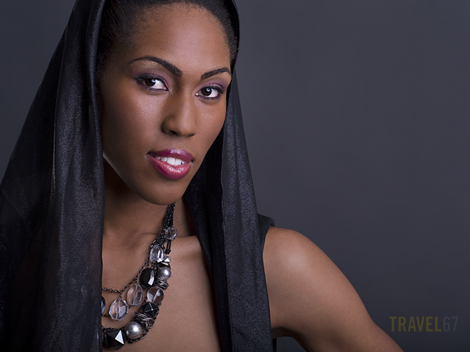
A couple of shots of Ursula channeling the spirit of Grace Jones (I am aware that Ms. Jones is not actually dead). It became clear in this shoot why Profoto describe their equipment as light shaping tools. By using a zoom reflector with a grid for  the hair light (positioned behind the model)  I could shape the light until it created the highlights on the neck and jaw. (Of course you can do this with any lighting brand, Profoto just have the cleverest tagline.)

Going Wide

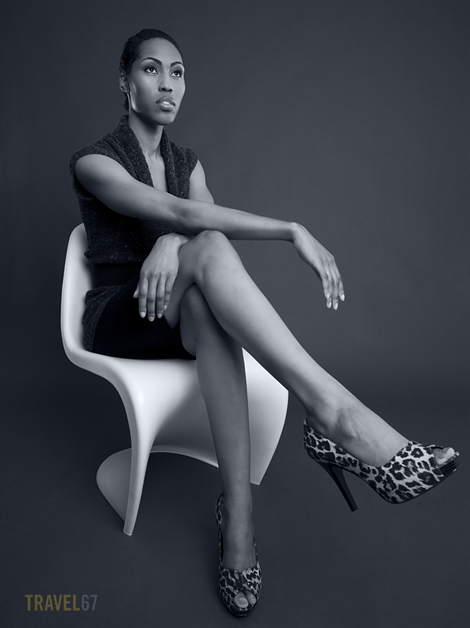
Ursula & Chair - Pentax 645D with FA645 35mm

Having sold off a few of the lenses I wasn’t using regularly, I just acquired the 35mm wide angle  for my 645D. After really regretting not having this lens at the Okayama Hadaka Matsuri  it had become a priority purchase. Although not a super wide angle  (it’s field of view on the 645D is equivalent to around 27mm on a FF 35mm camera),  it does allow you to be quite creative.

Normally you don’t use wide angles for fashion or portraits, as they can easily have a House of Mirrors effect on people. Occasionally, however, they can be used to good effect to accentuate a model’s physique.

I shot the above image with a new lighting set up, and a Panton chair I got for 75% off on Amazon Japan. More info on the lights in a future blog. Big thanks to Ursula for modeling in this shot.